“The Black Land: Matty Dunn’s Story” by MJ Wesolowski

0

As much as a review, this is a bit of information regarding “The Black Land”: a novella of coastal terror by MJ Wesolowski (My review here). The author has written a short story, available to read on his website, telling the story of one of its minor characters.Black Land picIt’s been several months, but the baleful atmosphere of “The Black Land” is still very much with me, and that doesn’t let up here.

Matty Dunn is the local fisherman who sails Martin, the troubled protagonist, to the grim island of Blamenholm. We find out about his upbringing, schooldays, and memories of his dying grandfather in his weatherbeaten bungalow. Not to mention the menace of the castle, almost personified in the form of a stone that young Matty stole from school.

“That stone; he couldn’t get it out of his mind. Miss McKay left it on the edge of her desk and it sat there, coiled and grotesquely ready, like a bony fist.”

“Matty’s Story” is a must for those who enjoyed “The Black Land” The change of POV adds authenticity through using local dialect, and the tale ties up neatly with the novella that inspired it. Apparently, this story came to be after a plot device involving a gun became too logistically difficult, and I’m glad. This is a far more elegant and chilling way to deal with it.

Read Matty’s story with authorial introduction here:

Part One

Part Two

Review – “The Sleeping Dead” by Richard Farren Barber

0

Despite what the title and cover suggests, this novella from DarkFuse isn’t a zombie story. It has a similar anticipatory aura at the outset, but rather than delivering adrenaline and the undead, this tale brings a haunting and disturbed take on the apocalypse.The Sleeping DeadJackson Smith has a job interview, but notices during his bus journey into the city that something is askew. People seem distracted or silently adrift, and upon a bridge that becomes the scene of a suicide, Jackson finds himself succumbing to the dreamlike haze, entranced by the dark river that claimed the body.

He makes it to his interview up on the 8th floor of an office building, but after a series of increasingly gruesome deaths – and a sinister and enticing voice that has begun in his head – he realises that the city is gripped by some kind of suicide plague.

Trying to ignore the suggestions of his subconscious, Jackson latches on to the vague hope of finding his girlfriend Donna and ventures out into the burning city to find her.

This novella is superbly written, snaring us immediately with the author’s vision of an ordinary day turned to hell. Richard Farren Barber never tells us anything but simply lets us realise, and it’s always nice to be seamlessly informed yet unpatronised by an author.

Jackson himself is a normal and generally decent fellow, perhaps even rather bland, but this only accentuates the horror that intrudes into the urban mundanity. His reactions to the unpleasant events are very human, as is the way he grasps at a tangible goal – his girlfriend waiting for him – to try and bring cohesion and focus to the madness.

I particularly liked the novella’s pervading sense of nightmare. It begins subtly with a rocking man on the bus whom Jackson believes to be mentally ill, cranks up the unease through the silent witnessing of the suicide, and then really puts us on edge during the interview when one of the panel starts rocking and angrily mumbling to himself. I actually enjoyed this rollercoaster hill-climb more than when the city finally capsized.

But that’s not to say the apocalypse is a disappointment. It’s beautifully painted, full of grim and heartbreaking images of the oddly gentle carnage. Some people kill themselves, others slip into catatonia where they sit, presumably lost to their own whispering psyches. Jackson is left to battle himself as he wanders the city with Susan, a woman whose suicide he managed to avert, and they’re a pleasingly awkward team. Bound by circumstance and clinging to rationality, their relationship is suitably strained and soporific as both struggle to stay afloat.

I did find the second half slightly overlong and a more fleshed-out conclusion or an extra plot device or two might have assuaged its length for me. But this might also have distracted from the mood, not to mention Jackson’s internal voice. This is the essence of the scourge, and the most effective of villains: inescapable, parasitic and very creepy.

There’s little action, so if the cover had you hoping for scrabbling hordes and white-knuckle bloodshed, then you’ll be disappointed. Nor is it for those who prefer neat concrete packages with all their questions answered. But I loved the lingering menace of “The Sleeping Dead” and was left restless and bothered without quite being able to say why. Which is exactly how Jackson Smith’s day began…

Review – “Mother’s Boys” by Daniel I Russell

0

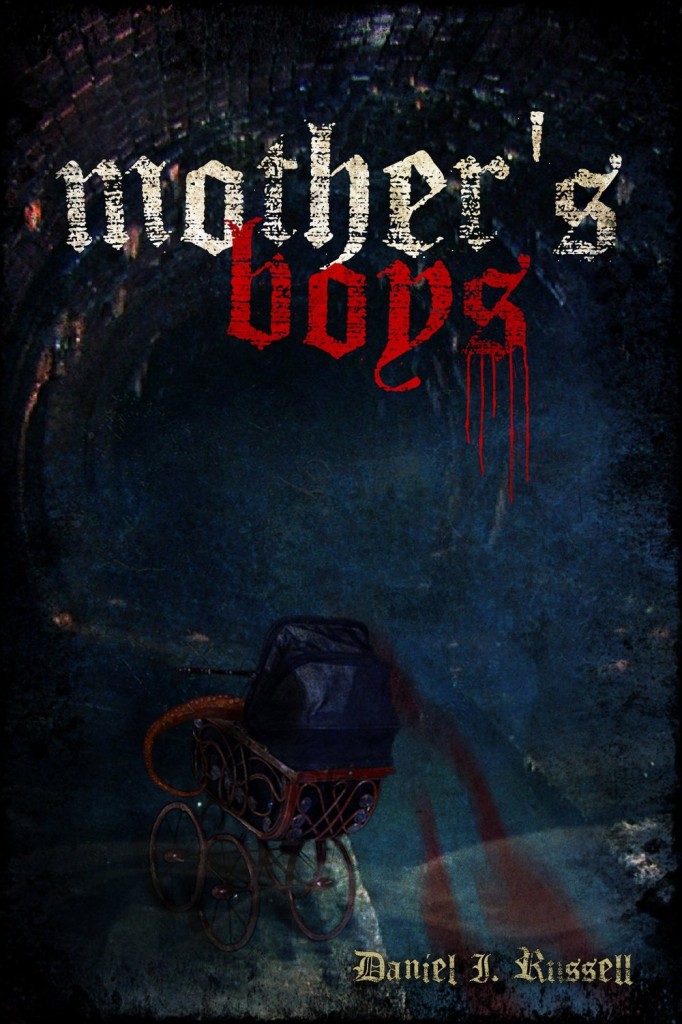
I hadn’t read a novel by Daniel I Russell before, and “Mother’s Boys” from Blood Bound Books was certainly a startling place to start. Full of high-octane horror, this is for those who like a bit of moral ambiguity to keep them on their toes.Mother's BoysWe meet Nat, a young woman with punk and goth tendencies who strives to be different from the crowd. Despite her subversive attitude, she lives an ordinary life, treading water in a dull restaurant job during which she looks forward to spending time with her boyfriend, Simon.
But one night outside a rough back-street pub, she witnesses some of Simon’s old friends attack a woman and starts to wonder about his past. She’s soon drawn into a battle between her boyfriend’s vicious ex-crew and a dangerous family that live in the sprawling sewer network beneath the streets. But choosing a side is far from easy, and Nat finds both her loyalties and her sense of right and wrong tested, not to mention learning the true nature of the outcast.

Nat is a solid character to drive this tale. She’s pleasant, sharp and generally sensible, but also harbours an impulsive naivety that lands her in trouble from time to time. Her familiar normality also helps to contrast the other main players, who are anything but.

Simon’s old gang are proper bastards. Johan, the leader, is a creatively misogynistic psychopath who has issues with OCD and rage, and you know it’s never going to be boring when him and his croneys turn up. They put me in mind of Alex and his droogs from “A Clockwork Orange” : the charismatic evil leader and his 3 lesser but tempestuous charges.

And as for the family of sewer dwellers, they’re a mixed bag of the monstrous and the humane. After an introduction in which they seem to be genre-conventional cannibalistic predators, we slowly realise that there’s depth to the family too, and become curious regarding the fraternal compassion and intelligence that keeps them alive down in the putrid darkness.

In fact, it’s the layers that make all the characters in this novel work. We learn more about them all through several reveals, and this is how they play with our loyalties. Will Simon fall back into his shadowed ways of yore? How far will Nat and the sewer family go to protect themselves? Whether driven by revenge, survival or love, there’s a pleasing ambivalence all round and any character investment in “Mother’s Boys” is far from clear-cut. Once the boundaries have been blurred, it’s easy to spend much of this book bouncing around and wondering who the monsters really are.

With a knack for atmosphere, this author takes us into the heart of the crumbling alleyways, bars and sewers of the city, and also writes action very well. When you’ve got multiple characters fighting in dark, enclosed spaces, this kind of scenario can get confusing – not to mention dull – but I was with it all the way.

As well as plenty of seamless action, there are nightmarish moments down in the sewers, and some shocking images that linger long after reading. A scene of appalling sexual torture from Johan in the opening chapters made me realise that Mr Russell isn’t scared to throw a screaming taboo in our faces, and ensured I kept my guard up for the rest of the book. This novel should appeal to fans of Richard Laymon and Bryan Smith, carrying a similar vibe in character, theme and the matter-of-fact prose, though perhaps without quite that heady level of violent lust.

There’s a degree of substance here too. The plight and the treatment of the homeless is touched upon, and also what it means to be truly different. Realistic dialogue and complex relationships between the characters – especially Nat and Simon – keep the human drama elements moving along nicely.

Being picky, I have a couple of buts regarding character motivation. Too often, Nat wandered around the menacing streets alone and got herself into terrible trouble. While I understand that she has a spontaneous and headstrong nature, it just didn’t quite add up for somebody generally in possession of common sense.

Another perplexing why? moment occurs when the sewer is being invaded. One of the more astute but physically vulnerable family members reveals himself to the gang for no apparent reason other than theatre, and pointlessly places himself in mortal peril. There’s also a strange lack of respect for the danger of firearms on more than one occassion.

But “Mother’s Boys” is an entertaining read, and once it kicks off, is difficult to put down. Greyzone morality stops us from relaxing too much, and humanity comes from where one might not expect it. The breathless showdown is a whopping 80 pages and I’m not going to let on as to whether it’s happy, bleak or finishes on a wry punchline. I tried to guess and was wrong, so I suggest you have fun doing the same.

Although I wouldn’t classify this book as extreme, the moments of ugly sadism mean it’s not for everybody. I’ll certainly never look at a cheesegrater the same way again. But it’s a tightly crafted story and if you like a bit of internal conflict with your subterranean violence, I think you’ll enjoy it.

Review – “Drive” by Mark West

1

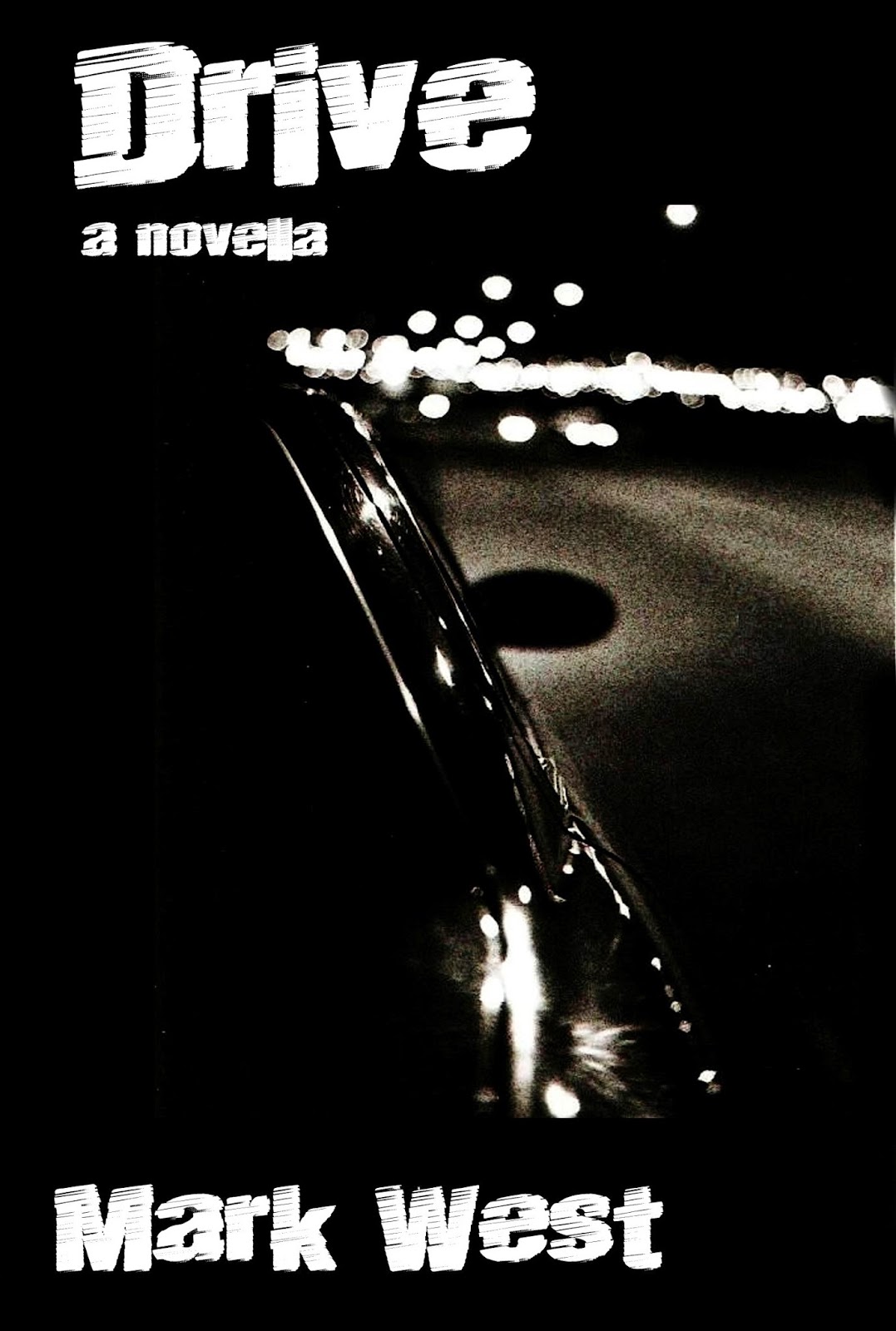
I’ve been enjoying Mark West’s fiction for several years now, and his brand of atmospheric, uneasy horror always has me coming back for more. He is one of those authors that brings such investable humanity and resonance to his fiction that genre is rendered almost irrelevant. I was therefore delighted to discover that with this new novella from Pendragon Press, he wanders outside his usual discomfort zone into white-knuckle territory, but still manages to deliver his most terrifying piece to date.DriveDavid Moore is a finance manager, away from his wife and home on a work-related course. Attempting to assuage the lonely boredom of an evening in the hotel, he grudgingly attends a house party held by a local course-mate. Here he meets Nat, a friendly divorcee, and as the night grows late, he offers her a lift home. But a black Audi full of drug-fuelled hoodies is terrorising the local population, and when David and Nat become their target on the lamp-lit, unfamiliar streets, things are all set for a breath-taking game of cat and mouse.

David is the perfect lead character for this story. It needed an unlikely hero, and as he is sensible, pleasant and tends towards gentlemanliness, we instantly invest. The same goes for Nat, who brings fire and intelligence to her classic role as “damsel in distress”. David’s courage is also amplified by his understandable fear and initial hesitation to act, so by the time the story has really got into gear, I was firmly in their corner.

In true Mark West style, he initially engages the reader through deft evocation of normal scenarios with which we can identify, then injects teasers of menace to draw us further in. And in this story, the menace is immense. The men in the black Audi are thoroughly nasty and dangerous, indiscriminate with their sadistic cruelty, and this threat is cranked up page by page. A particularly pleasing device is that their arrival is always heralded by pounding bass music from the car – the familiar epitome of anti-social aggression – which is used to great effect. It conjures an ominous and cinematic dread in the same way clanking chains precede the arrival of the cenobites in the Hellraiser films, or the slow, ground-shaking footfalls of an approaching T-Rex in Jurassic Park.

“Drive” is a simple chase story with a classic set-up. But it becomes so much more than the sum of its parts through superb writing and – once it kicks off – an adrenaline-soaked pace that doesn’t take its foot off the pedal for a second. The tension and fear are so palpable that there is nothing to take you out of the moment, right up until the intense finale. There are no clues as to how it will all pan out, or as to why David and Nat have been singled out as prey, forcing you to find out for yourself. And I wouldn’t dream of giving anything away.

Another element I loved is that despite the urban sprawl, David and Nat have nowhere to turn. This isn’t the traditional rural or isolated setting for such a tale – they are in the heart of civilisation – but the dark streets, petrol stations, and even the police offer no sanctuary as it becomes a matter of life and death. They are on their own, and this is skilfully achieved without any suspension of disbelief.

The moments of violence are stark and sometimes shocking. And these aren’t “fun” shocks either, like the gleeful scares of ghosts, deranged serial killers or monsters in the closet. This is bitter-tasting street violence of the kind that may well be lurking in an alleyway outside your house with a flick-knife and an erection.

If you can handle the darker stuff, I would recommend “Drive” regardless of your usual genre preference. Just be sure you have no plans for an hour or two, because you aren’t putting this rollercoaster of a novella down for anything. Except perhaps the arrival of a black Audi with pounding bass…

Highly recommended.