Review: “To See Too Much” by Mark West

0

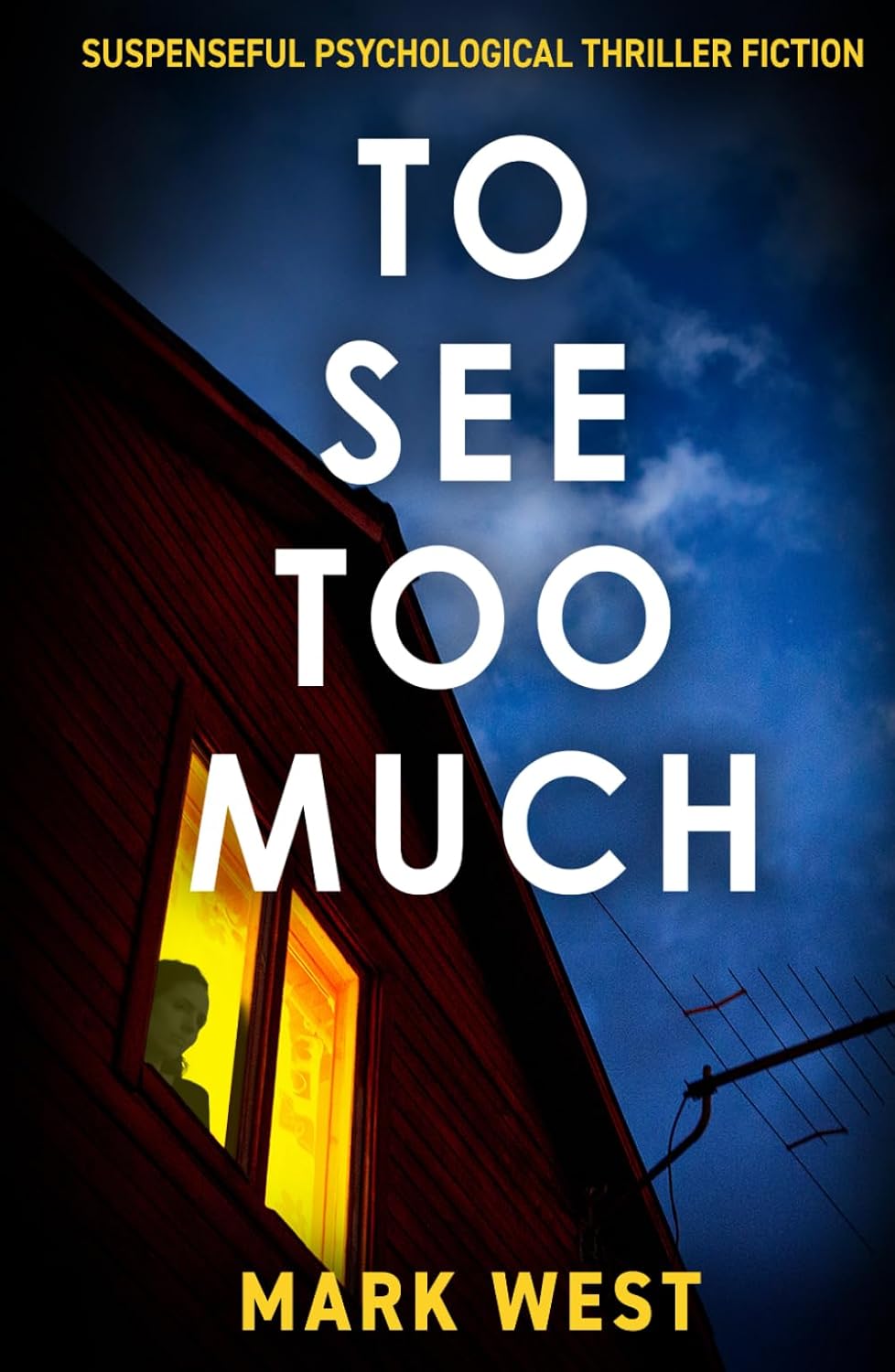
I’ve recently read all of Mark West’s dark thrillers from The Book Folks, and was happy to discover that his latest novel “To See Too Much” is up there with the best of them.


It’s narrated by Carrie: a social worker recovering from a heart attack. She heads to Miller’s Point – a small cluster of quaint cottages on the coast – to convalesce, planning a gentle time of sea air and walks on the beach, but the other residents turn out to be an intriguing and unsettling bunch.

She accidentally overhears a couple of heated exchanges, and somewhat bored and restless, becomes drawn into watching the lives of her temporary neighbours. Discovering broken marriages and professional scandals along the way, Carrie soon realises that Miller’s Point is full of tension and dark secrets. And some people are not happy with her watchful presence.

When a local woman goes missing and a corpse turns up on the beach nearby, Carrie realises that she’d be better off well away from all this, but feels bound to do the right thing and help some of the new acquaintances she has made.

Carrie is a great narrator: pleasant, strong and intelligent (like many of Mark West’s previous protagonists) so it’s easy to invest. Her social work background means she is an astute reader of the human condition, and also instinctive when it comes to perceiving threat. And she certainly sees plenty of that as we are carried along by her sharp curiosity and suspicions.

The author is a master of building menace and that is perfectly escalated here. The story begins with occasional and subtle moments of unease – the odd glance or awkward exchange – then slowly cranks the apprehension as unpleasant things start to happen.

The narrated prose is clean and effortless to read, dappled with lovely turns of phrase, and the dialogue always feels real. There’s a depth and fragility to the characters, and I love the way everyone has secrets and is a bit weird, broken or hard work in some way. Because, aren’t we all? The character dynamics and interactions are convincing and full of deft touches, which is a good job because “To See Too Much” is very much a character driven piece.

Miller’s Point is part of the traditional but faded British seaside resort of Seagrave: a fictional location of the author’s that has featured in several of his previous novels. Although I was pleased at the prospect of a revisit, it’s a little different this time. We don’t see much of the town, the tale concentrating upon the dysfunctional microcosm of Miller’s Point, and the book is all the better for this tight and somewhat claustrophobic focus.

There’s fun whodunitry to be had should you wish to try and deduce the real villains of the piece, and it all builds to a gripping, violent and satisfying finale that had me glued to the page as everything fell into place.

One of the many things I love about this author’s novels is that I can relax in the knowledge that I’m not going to be disappointed or feel cheated in any way. With touches of Rear Window, “To See Too Much” is a page-turner that requires no cheap shot fireworks to keep us hooked and I eagerly look forward to Mark West’s next work.

Mark West

The Book Folks

Review: “The Price of Piety” and “No Hook for a Hood” by DB Rook

0

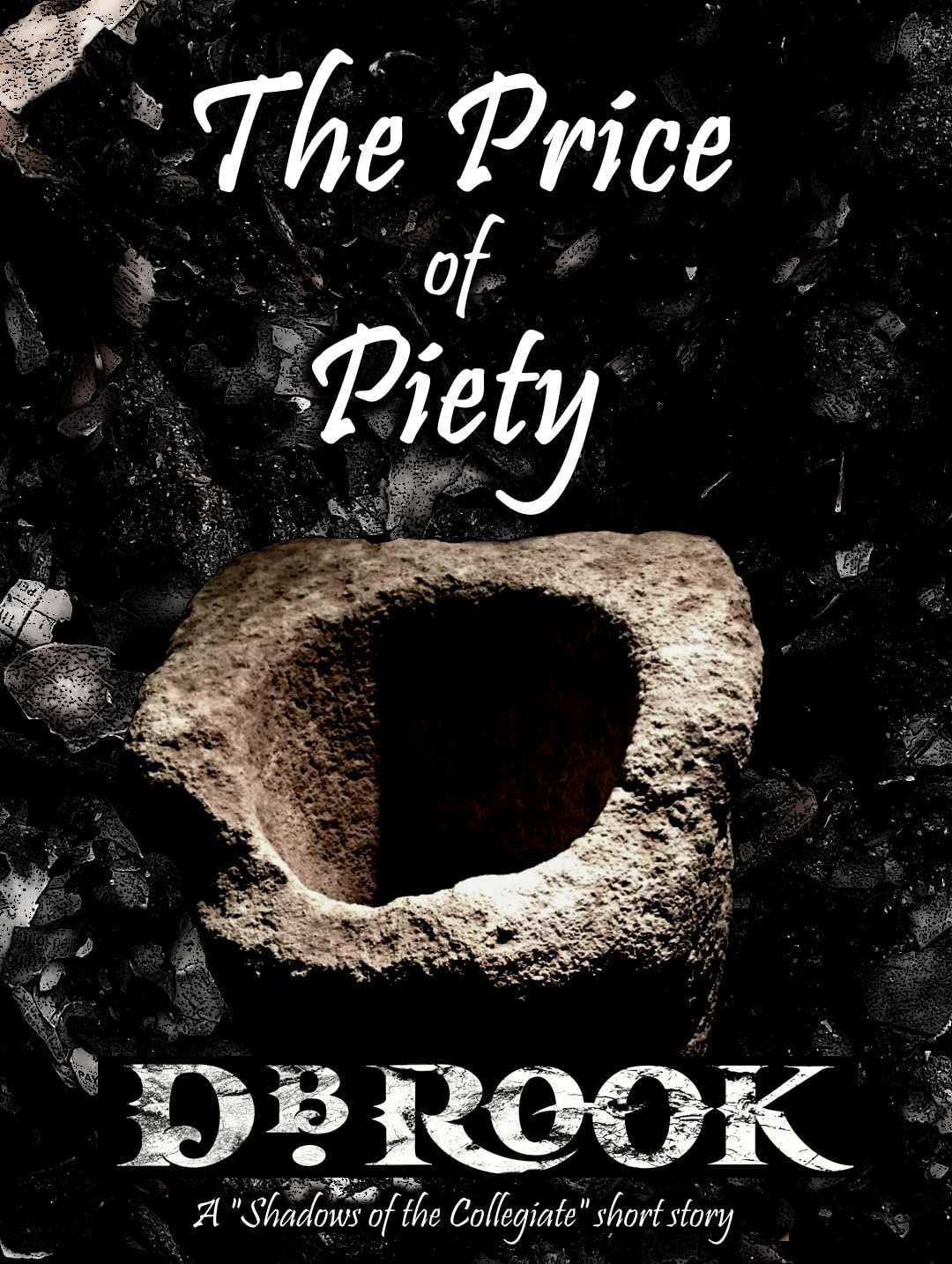
If you like fantasy of the gritty and grimdark variety, then these two short stories – the first from the author’s new Shadows of the Collegiate venture – should be right up your murky, cobbled alleyway.
Full of convincing characters, oozing atmosphere and violence, they are so exquisitely painted in DB Rook’s textured prose, I was hooked from the moment I started reading.

The setting is a fog-drenched town that is no stranger to crime, disease and public executions.
It lives under the shadow of the Collegiate, a mysterious entity described as a “timeless and foreboding seat of power” and the campus is a great place for any dark fantasy fiend to visit. A baroque and sinister institution, nestled beneath rain-lashed cliffs and only accessible via a creepy barge ride across an aquaduct, it has all the ancient stone, spooky ambience, and robed acolytes slinking through the damp that you could hope for.

In “The Price of Piety” we join a bunch of miscreants gathered in a rough tavern called the Dripping Bucket to plan a heist upon the Collegiate. Led by a behemoth of a man with a short temper, his wonderfully motley crew consists of a tough warrior, a silent elfin thief, a foul cutthroat and an ageing sorcerer.

The gang plan to steal a font of wealth and power from the dark catacombs of the Collegiate, but attempting to best the steampunk mechanics and supernatural guardians is no mean feat, and the heist doesn’t quite go to plan.

This story is thick with imagination and takes us to some immersive locations. Despite the murky vibes, I was bowled along by the crass camaraderie, drama, bickering, and occasional slapstick of the group. I particularly liked Kidd, the cutthroat: “His talents were few, but if you wanted a kitten ended, Kidd was your man.” He’s a vile character, but brings life and gallows humour to every scene he’s in.

This was a great introduction to the Shadows of the Collegiate world. It has surprises, skullduggery, and violence almost elegant in its ugliness, and the finale concludes it on a pleasingly wry note.

“Grawnden Tweed felt each decade scrabble up his spine as he tramped up the steps to the gallows.”

Thus begins “No Hook for a Hood” where we follow the grinding life of an axe-wielding executioner and professional maimer.
Jaded, addled by age, and very close to retirement, Grawnden Tweed lops off the heads, fingers and hands of the – usually juvenile – thieves of the plague-troubled town. Working under the jurisdiction of the High Justice of the Collegiate, he does his job with integrity, but is tormented by his deeds. Reminders are everywhere in the form of mutilated and homeless kids, and he is haunted by both his victims and the ghost of his disapproving mentor father.
The title neatly asks that when the hood comes off, can this damaged man escape the guilt and duty of his past?

After the drama of the heist, this is an introspective and much heavier piece, especially without the vulgar banter to buoy it. But it never becomes too much, achieving just the right level of bleak for enjoyment.

I savoured both of these stories. They aren’t just pure escapism; strong feelings and relatable moments abound, despite the fantasy setting. The author conjures a palpable sense of menace and decay, where everyone and everything is past its best, and even the weather seems malevolent.
“Light rain floated downward to settle on the square’s cobbles, leaving a slick sheen of underfoot treachery.”

Speaking of which, I enjoy DB Rook’s rich and somewhat literary style. Of course I like an “invisible” storyteller as much as the next reader, but I’m also a fan of fiction such as this where the sumptuous prose and clear love of language rises to the fore and brings a whole new level of enjoyment. It suits the ghastly mood, and brings the characters to life with panache.

“His bones attempted to pierce his skin at every angle and his dry white beard was likely to catch fire should he stand within a foot of reflected sunlight”.

As well as being so finely painted, the nefarious or broken characters we meet are nuanced and fully rounded, slipping seamlessly into the besmirched sense of place that the author has crafted.

If all this sounds like your grimdark thing, definitely give these Shadows of the Collegiate stories a read. Both tales drew me in with their intriguing glimpses of the town and its denizens. This is world-building perfectly done, and I very much look forward to finding out what troubled, dangerous folk and grisly nooks of the Collegiate’s dominion we will be treated to next.

Available from DB Rook’s Kindle store (Amazon or Amazon UK)
Visit the author’s site here.

Review: “Space Brides LLC” edited by Dana Bell

0

“Tired of those lonely dark nights? No one in your settlement suitable? We are here to help! We will help you find the bride or husband to keep you company, raise your children, and be your partner building a dream together.”

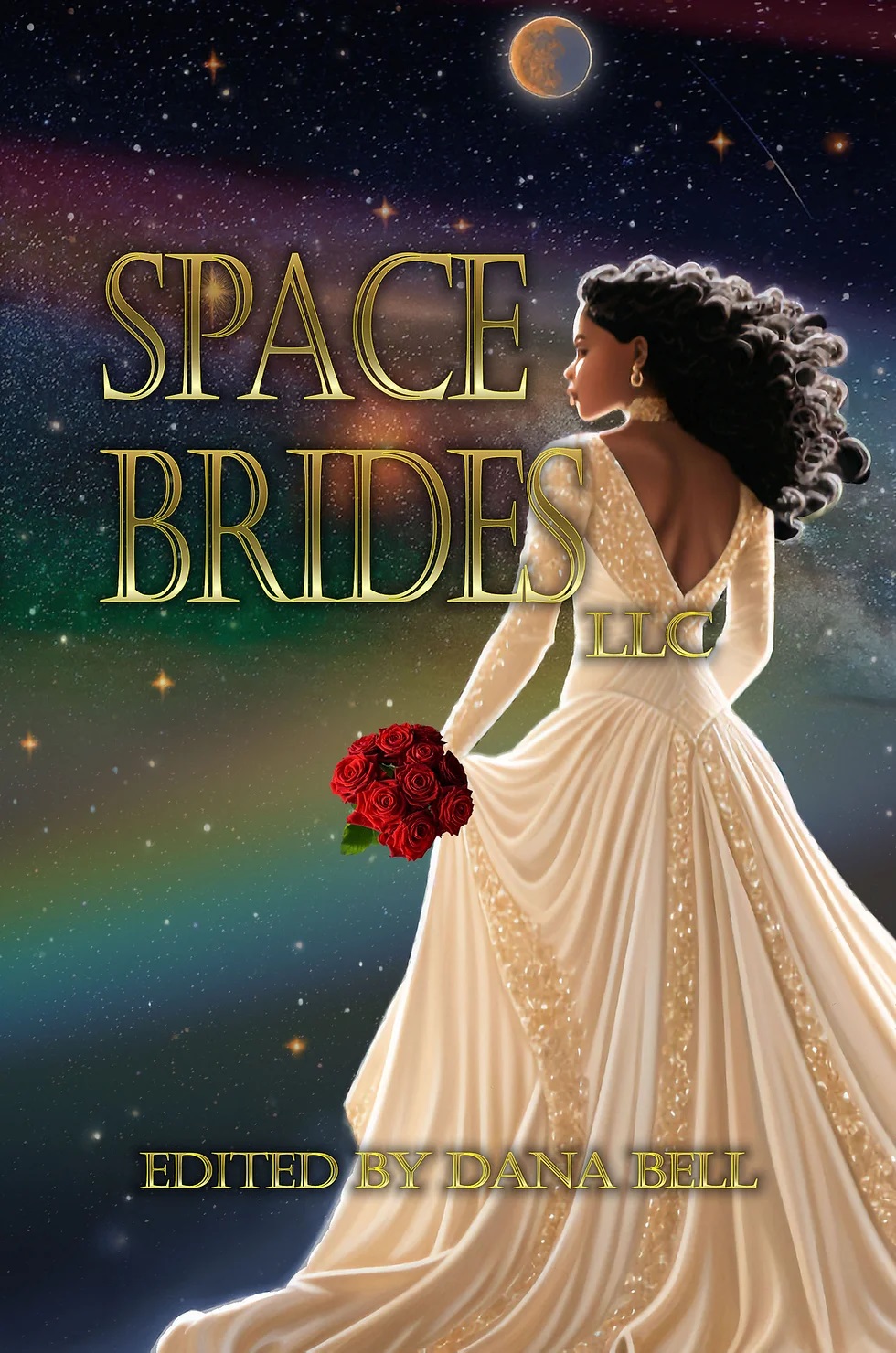
The concept of this anthology from Wolfsinger Publications caught my eye. The idea of Space Brides LLC – a matchmaking agency designed to help people find love on the frontier of space – has great science fiction potential.

This book of 15 mini romantic space operas, edited by Dana Bell, certainly delivers on that. We visit moons, asteroids, caverns, planetary installations and digital worlds. We travel on warp starships and space trains. We meet humans, aliens, vampires and clones. It’s a feast of imagination, and while all of the tales bring something to this colourful party, there are a handful of stories that lingered in my memory after reading.

“Gravity” by Sage Kelly features Jake, a man whose sister has died. He is taking her three lively children (and their pet ferrets) to Mars in the hope of marrying into a farming family to secure them a stable future. Upon arrival however, he is devastated to discover that his betrothed has bailed on the arrangement, leaving her furious dad and brother to sort out the mess.
This is a warm story, thick was pathos, and perfectly evokes the rewarding chaos of domestic life, pets, children and family dynamics.

I loved “Runaway Bride” by Harriet Phoenix. It’s narrated by a skilled and adventurous young woman, Kasih, who is on the run and carrying a mysterious bag of which she’s very protective. She signs up with Space Brides and discovers an interesting prospect on the Saturn moon of Titan: a society where everybody is married to each other as one big collective.
This is one of my favourites of the anthology. It’s well written with a tight plot, full of interesting cultural concepts and fully-rounded characters, and delivers a superb pay-off regarding the contents of Kasih’s bag.
As Harriet Phoenix’s story was also one of my favourites in the recent Terrors from the Toy Box from Phobica Books, she is definitely a writer to watch.

I also loved “A Spectrum of Secrets” by Eric Taveren. This is the tale of Alice, a woman who works for Genetech – a cash-strapped genetics company – and whose young son is terminally ill with cancer. When she sees the profile of Jake, a brilliant scientist, on the Space Brides database, she realises that he might have the skills to cure her son.
With no intention of marriage, Alice travels to stay with Jake in a remote installation deep beneath the ice-crusted sea of the Jupiter moon Europa, and immediately starts to feel guilty about the deception. Especially when she realises she has genuine feelings for him.
This piece shines with slick storytelling, and draws us in immediately. The development of Alice and Jake’s awkward relationship is convincing, and the plot saves some eerie reveals before culminating in a taut and surprising finale.

I really enjoyed “Lapin Chasseur” by Jennifer Roberts. Here we find lunar-dweller Clarissa, who travels all the way to Pluto as part of a holiday trip. But upon arrival, she discovers with horror that she’s been cunningly set up by her horrible twin sister: Clarissa’s journey is a one-way ticket, and she’s actually there to marry a Plutonian mushroom farmer called Doug in the caverns deep beneath the planet.
After a tense start, this becomes a sweet and life-affirming tale that easily draws us into Clarissa’s plight. It has a strong sense of place, a weaving plot, and very relatable attention to detail despite the sf setting. Several of the characters shine with humanity, contrasting the villainous elements, and it saves some twists to conclude on a satisfying note.

The bulk of “Hope Among the Stars” by Luke T. Barnett is in the form of correspondence between Agnes, a previously rich but now impoverished woman from Ganymede, and William, a successful businessman on Mars. They are very much the traditional lady and gentleman, so their written courtship gushes with manners and etiquette. But when disaster strikes during Agnes’ space journey to him, the story takes a surprising and dark turn in which most unladylike behavior will be required for Agnes to survive.
This story stands out with its epistolary structure, quaint characters and drama. We are gently guided into rooting for Agnes and William, and the story constantly keeps us guessing as to how it’s all going to pan out.

The last story – “She’s a Bit Green” by Bogna Jordan – finishes the book on a high. Here we meet Voymir, a soldier who undertakes dangerous missions in a flying suit of armour. After he is seriously injured after an attack on a pirate base, his Space Brides match turns up in the form of Nimfa: a winged and green-skinned woman who is used to a life of racism and rejection.
Both broken in very different ways, the characters and their mutual reticence are believable, and their feelings really power this hopeful tale of recovery and longing.

Special mention also goes to Dana Bell for “Had My Reasons”: an immersive piece that shows us the potentially dangerous side of love with a not-quite-human on an asteroid.
And G.A. Babouche’s “The Titan and the Princess” is a fun and compulsive read that asks if love can flourish between a spirited, jaded princess and a proud alien king.

Of the stories with strong conceptual approaches, credit to Laura Hilse for the clever romantic thriller “Romance of the Algorithm” which shows us the Space Brides process, and explores how the AI used by such agencies could pinpoint things that mere humans might miss.

Despite the niche theme, Space Brides LLC has plenty of variation and we meet all manner of characters looking to find their soul mate. As well as all the above, we meet a Venusian witch,  a troubled clone who is running out of chances, and a purple-eyed alien general. We see collapsing Neptune mines, exclusive lunar hotels, virtual realities, and a shootout in a Martian tomato farm. Niche themes can become samey, but this anthology deftly avoids that pitfall.

As I usually read horror, and the darker and more bleak side of science fiction, Space Brides LLC was a pleasant and refreshing change of tone. The clashes of culture and creed make for some colourful romances and thrillers, and there are several heartwarming stories that show love against the odds. And while that might be a well-beaten trope, it’s a harmless one to indulge sometimes.

A neat concept thoroughly explored, this an enjoyable escapist book.

Available from Wolfsinger Productions here, and through Amazon Kindle stores.

Review: “We Were Seen” by Mark West

2

It’s been a few years since I read a Mark West story, and this novel from The Book Folks made me glad that I’d decided to revisit and also wonder why I’d left it so long.

“We Were Seen” is narrated by Kim Morgan, a lecturer and councillor in the fictional English coastal town of Seagrave. As the story begins, we find her attending a public meeting to protest the development of a golf course and hotel that will steamroll some local marshland. A fight breaks out, and after she is rescued from the violence by a young man, the pair enjoy a spontaneous one night stand. But it transpires that he’s a student at the college where she teaches and someone has taken photographs of their encounter, soon beginning an upsetting campaign of blackmail.

After the excitement of the opening chapters, in which Kim and her protector escape the meeting and are pursued by thugs, the pace cools to an atmosphere of building tension. Despite the stress of being blackmailed, Kim attempts to go about her normal daily life. But as the days go by, she is stalked by an intimidating and obnoxious man, and worries about who she can trust.

Kim assumes, quite reasonably, that her blackmailer is something to do with the proposed golf course she opposes, but the threatening letters that keep dropping on her doormat don’t seem to demand anything specific and serve only to unsettle. Then a dead body turns up on the beach, and the mystery – and the fear – really starts to escalate.

This is a slick and addictive novel. Kim is investable in her normality – a likeable and self-aware everywoman – and the way she is torn between rationality and paranoia is convincing. I love the way the unease is slowly stoked, and Kim starts to see menace in even the most benign locations of sunny Seagrave’s promenades, streets and bars. The small town vibes become very oppressive as the book progresses, especially as further disquieting mysteries are trickled into the mix.

Although a modern psychological thriller, “We Were Seen” has fun shades of a traditional whodunit. Just like our unfortunate protagonist, we suspect that the blackmailer is someone she knows – or has at least met – and there are a great cast of well-written players to choose from.
As well as the obviously nefarious characters such as Glover – the unethical tycoon wanting to build the golf course – and the creep stalking her, we wonder who else might be involved. Her social circle includes several lecturers and staff at the college, her grandfather and his photographer protégé, as well as other councillors, locals, and friends from the golf course protest group. They’re all fully-rounded, but often just enigmatic enough so that we can’t completely eliminate them from suspicion.
This is what I enjoyed. Kim’s paranoia, even though perfectly justified, is infectious. As readers, we start to be wary of everything and everyone; the sinister in the mundane is a great tool and perfectly applied here.

This novel is easy to read with lucid prose and a well-gauged pace, and very compulsive; I found it very easy to lose myself to just one more chapter. This is all the more impressive in that its page-turning quality doesn’t need to come from chapter cliffhangers or sudden jeopardy. It instills a desire to read on purely from the mounting insidious tone.

After this ratcheting of baleful atmosphere throughout the book, the finale is breathtaking and dark. The last few chapters are grim, exciting and genuinely unputdownable. I was gripped, hunched over the page and unblinking as the real world faded to irrelevance around me, which is not something that happens very often.

“We Were Seen” left me satisfied – as everything falls neatly into place – and also in need of a breather from the twist and reveal. It’s also credit to Mark West’s mastery of the writing craft that I was left with the feeling I’d actually been to Seagrave and met all these people, thanks to his knack for characterisation and creating a palpable sense of place.

It definitely won’t be as long as last time before I read another of his books. In fact, his list of thriller novels on The Book Folks site is calling out to me right now. If this review has piqued your interest, you could certainly do a lot worse than visiting it yourself.

Mark West

The Book Folks

Review: “Triptych: Three Tales of Frontier Horror” by Richard Beauchamp

0

I’ve never been a particular fan of traditional or mainstream Westerns, but the tropes of scorched plains, dusty towns, gunslingers and frontier justice provide a great canvas for a pulp horror story.

Having read Richard Beauchamp’s superb dystopian “War Born” last year (my favourite in the “Heavy Metal Nightmares” anthology), I thought his textured prose and talent for conjuring unforgiving wastelands would make him an ideal writer to smash these two genres together. Reading Triptych certainly proved that to be the case.


It opens with “The Courier” in which Jeremiah – the titular character – meets a sinister man in a snow-covered tavern. He is tasked with transporting a strange artifact across several states, in time for solstice eve, and delivering it to a known practitioner of the dark arts.

His journey takes him into the harshest of blizzards during which Jeremiah is stalked and attacked by men who try to warn him of what he carries. Townspeople – and even mountain lions – shy away from his presence, and what begins as a professional dedication to his job soon becomes a protective obsession. He regards the strangely-warm package as his talisman, and it seems to keep him going on his brutal journey long after any mortal should surely have perished.

This tale brings the classic setting of the loner traversing the American West on his trusty steed, but slowly morphs it into cosmic and visceral horror. I read it straight through, driven by a hungry curiosity that was masterfully stoked by the author, and the evocation of the frozen mountainous terrain is perfect. An intriguing and compulsive read with a devilish pay off, this is a sterling start to Triptych.

Following this is “Blood Gulch” which is by far my favourite piece of the three. It doesn’t hang around, immediately presenting an infestation of slug-like monstrosities that burrow into people’s spines and control them as hosts. Our protagonist is Maylene, a woman in search of her missing husband who has been taken by the foul creatures – along with countless others – to an ominous subterranean cave at Blood Gulch.

What awaits there is a wrenching vision of hell, and I wouldn’t dream of spoiling the surprise.

Maylene is a brilliant character – a gun-toting, sharp-tongued badass who will stop at nothing to look after herself and her own. Throw her into a story of revolting parasites against a backdrop of boiling sun, alcohol, blood and dust, and you’ve got an absolute winner.

It shines through its storytelling towards a satisfying epilogue, and the plentiful and gritty period language seems authentic, bringing a grounding realism to the sf/horror concept. With shades of Cormac McCarthy’s “Blood Meridian”, David Cronenberg, Calamity Jane and the Aliens mythos, “Blood Gulch” is worth the price of Triptych alone.

“It Comes For Us All” is the finale, co-written with Korey Dawson. Here we find a sharp-shooting indigenous bounty hunter called Sho’keh. He is transporting a dangerous criminal, Tom Dallion, across the bandit-populated desert and frontier towns of the Mojave to where he will finally meet justice.
But the wisecracking prisoner seems to be undergoing a strange transformation, and once the blood moon rises, pandemonium will be unleashed.

“Dallion’s eyes shone in the moonlight, somehow moving in the stillness of his smiling face, like silver coins in the bottom of a disturbed well.”

My complaint with this story is that I kept losing track of who was speaking, especially during the opening scenes, despite only two characters being present. This was mainly due to the overuse of character tags as well as their names (the older man said, the bounty hunter said, the man on the ground said…) which was confusing and unnecessary.

But the characters are solid, the dynamic between the two leads is convincing, and Dallion’s gruff retorts and escalating creepiness is a great foil for Sho’keh’s pragmatic patience. The foreboding tone slowly cranks up throughout their journey, building to a grisly “Splatter Western” showdown.

Richard Beauchamp has definitely climbed up my horror watch list with this release. Triptych brims with exquisite turns of phrase and slick dialogue, and he clearly makes an effort with historical attention to detail. The landscape becomes an integral part of the tales, essential with any quality Western, and the author’s knack for creating an immersive atmosphere is perfectly suited to this kind of fiction.

Merging the spooky eldritch with gore, it should please fans of both camps. As a devotee of both, I had a splendid time.

“Hell comes at High Noon” indeed.

Richard Beauchamp

Review: “Terrors from the Toy Box” – Phobica Books

1

Hot on the heels of their excellent Heavy Metal Nightmares, Phobica Books have produced another quality themed anthology in the form of Terrors from the Toy Box.

The blurb promised “devil dolls and terrifying teddies, abominable action figures and gruesome games all lying in wait for the opportunity to be free to wreak terror” and it certainly delivers on that.

Some of the tales are obviously supernatural whereas with others, the horror is of the non-magical variety and born from obsession or the darkness that lurks inside people. Sometimes it’s both, and I enjoyed being kept guessing as each story began, as well as wondering what horrors were about to be unleashed when a toy made its appearance.

There’s a good range of styles from the selected authors and the chills are delivered in different ways be that malevolent atmosphere, gruesome shocks or emotional clout. There are also some interesting and subtle concepts that throw shade on the wider world as a whole.

Although I enjoyed all the fiction in this book, here are a handful of those that really stood out for me.

“Faux Joe” by M.J. McClymont is narrated by Tommy, a man concerned about his old friend Joe: a lonely character obsessed with his immaculate and pristine action figure collection. Joe believes his plastic figures to be perfect in every way, and Tommy slowly realises that his troubled friend has concocted a grim plan to improve his life by achieving this supposed perfection for himself. Relatable feelings collide with body horror to create a very compulsive read, and the final line concludes it perfectly on a wry and ominous note.

“Pooky” by Tim Jeffreys concerns Bethany, a girl who cajoles her divorced parents into buying her an old but collectible teddy bear, and it’s not long before things take a spooky turn. A voice seems to be heard talking to Pooky from Bethany’s room, and the child herself speaks of another girl in the house. It has emotional depth for what is one of the shorter pieces in the anthology – merging the stressful domestic troubles of the family with the lurking supernatural – along with some very haunting moments, and a nicely gauged pay off.

In “A Decent Guy” by Wil Forbis, we meet Bennett: a successful family man whose son has a new action figure called Justice Man. But we soon learn that Bennett, who is a loving father and a “decent guy” around his family and community, has a dark and sadistic side that must be assuaged by violence of the most disturbing kind. An increasingly unpleasant descent, the story is crafted into something ultimately very satisfying, all neatly bookended by its own theme.

“Enid’s Dollhouse” by Harriet Phoenix begins with a fairly benign tone as we find young Enid, a girl who loves to collect dolls and play with them, rebuffing her parents’ gentle attempts to dissuade her from expanding her growing collection. This is a very cleverly structured piece. At first there are things that don’t quite seem to make sense, but then everything falls into place, and there’s a cold and terrifying moment of realisation for the reader. With shades of The Twilight Zone, I immediately re-read it and got to enjoy the subtle nuances and pre-reveal attention to detail in a completely different way. Brilliant stuff.

“Lillybet Lollipop” by Scotty Milder is a superb take on the old creepypasta theme. Here, a young man named Mark stumbles across a dusty and obsolete gaming console at a garage sale, along with the game of the title: an ultra-rare cartridge that was swiftly withdrawn from circulation after supposedly terrible things happened to the people who played it. This is a gripping and deftly structured read – switching between Mark’s experience with the malignant game and transcripts of an urban legend podcast about Lillybet Lollipop – as the author takes us on a dizzying and violent journey into madness.

“Kia stood a few steps behind the yellow line, clinging to her little brother’s hand, two over-stuffed rucksacks by her legs, and seriously considered letting go of him and walking out in front of the train that was rapidly approaching.”
Thus begins “A Sister’s Love” by Annie Knox, hooking me in from the start. Kia is a girl on the run with her younger brother Kevin after she has murdered their father for reasons that we don’t initially know. Desperate and out of her depth, she tries to protect him and find somewhere to stay, but is increasingly frustrated by how the young lad seems to talk to someone through various toys. A convincing portrayal of fragile and broken human psyches, this tragic spiral has pathos by the bucketload. It packs several heart-breaking punches, and is definitely the most memorable and powerful tale in the anthology for me.

Although these were my favourites, all the stories bring something to the party. For example, opener “Ma Gentry’s Dream Catcher” by Richard Beauchamp is thick with the evocative atmosphere of its rural witchcraft setting and “Little Red Case” by J Benjamin Sanders Jr has some masterful scenes of unnerving anticipation delivered by a haunted dollhouse. “Uncanny” by Mia Dalia nails the uncanny valley concept, and “A Toy For Zubin” by Galen Gower brings both dark humour and an insidiously nasty tone to the possessed toy trope.

There is much to like about Terrors from the Toy Box. The pieces are often character driven, which is something that can be overlooked elsewhere due to a prime focus on scares or ideas. Without investable or realistic protagonists, short fiction is difficult to care about, and Phobica Books clearly recognise that.

What I also enjoyed is that with such a childhood-related theme, nostalgic feelings inevitably abound, and some of the tales inspired wistfulness for times or toys that weren’t even mine which is a solid and impressive feat.

This is one of those books that I constantly wanted to get back to whenever forced to put it down because real life was dragging me away. Thanks to Phobica Books for the escapism, and I will definitely be keeping a close eye on their future output.

Phobica Books

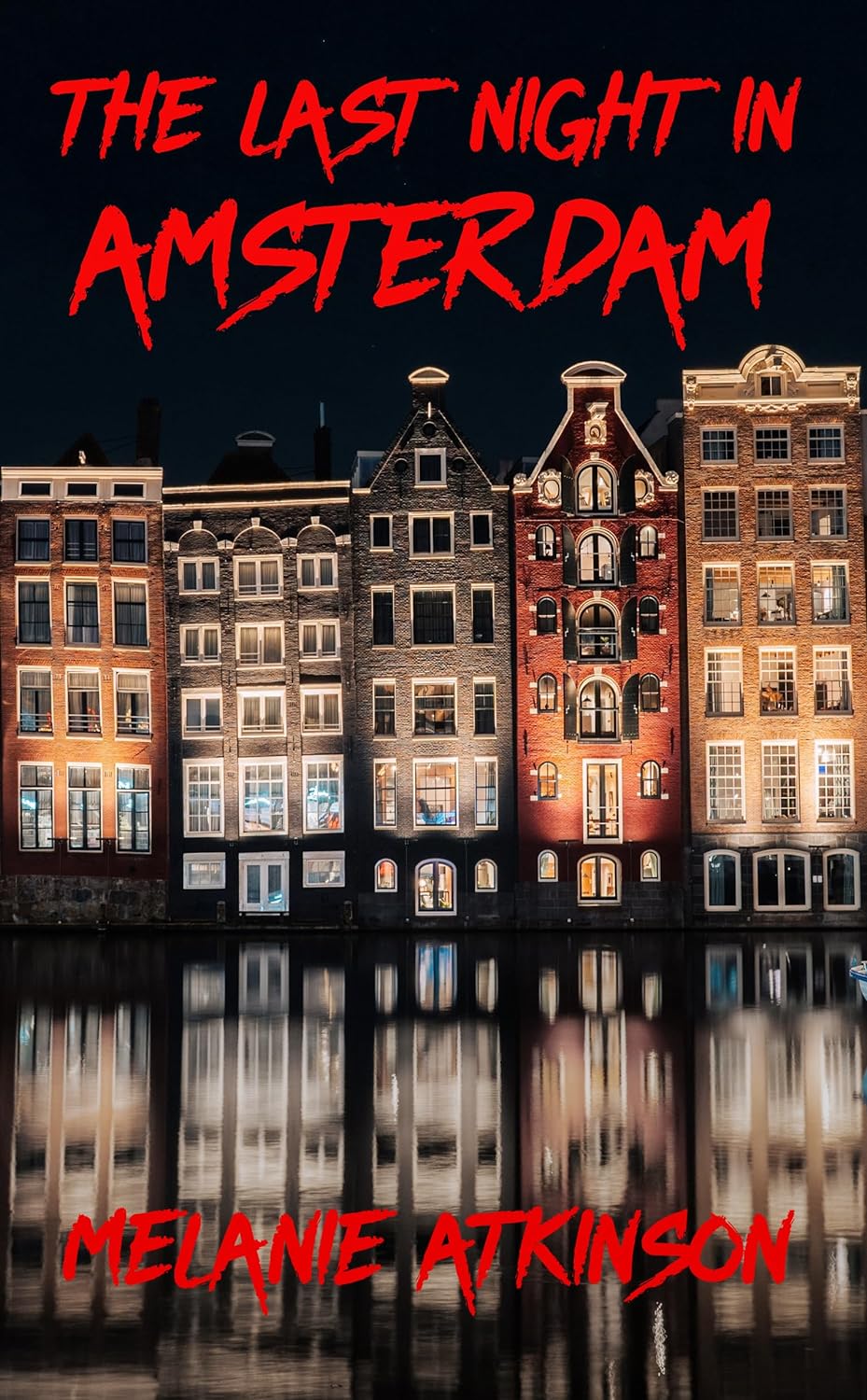
Review: “The Last Night in Amsterdam” by Melanie Atkinson

0

“After over indulging in an Amsterdam coffee-shop, Jennifer wakes in her hotel room to a terrifyingly vague emergency alert message on her phone. On the other side of town, the same alert saves Jonah from the world’s worst stag-do. Soon both of them will be fighting for their lives on the cobbled streets of Amsterdam.

Will these ordinary people overcome exceptional circumstances and be able to live with the choices they make? Will they even make it out alive? It’s not always survival of the fittest!”

I bought ‘The Last Night in Amsterdam’ because I wanted a lively outbreak story to devour, and having visited Amsterdam several times (including on stag-dos), the idea of nostalgic familiarity appealed.

And devoured it was. In the tradition of the best classic zombie stories, we don’t just get suspense, screaming and airborne entrails, but also a taut and sobering analysis of the human condition, tempered with heart and humour.

The book is largely narrated by Jennifer and Jonah in a deftly crafted flashback structure. We learn immediately that both have survived the zombie outbreak that ravaged the city, and are now pole-axed by PTSD and attempting to deal with the experience. It also becomes clear that as well as the trauma, they both engaged in activities that continue to haunt them.

You need assured writing for this to work, and the author presents two strong lead voices. Jennifer is single, travelling alone, and hoping the trip to Amsterdam will be a cure for her annual winter blues. Jonah is on a stag-do with his old football mates, but is struggling with the bar-hopping hedonism of the group and would rather be in a museum, or even better, at home with his girlfriend.

Both are investable, engaging characters and often droll with their outlook on life. They present that bridge between youth and sensible adulthood: still in possession of some adventure but with a healthy injection of cynicism and wisdom. But most importantly they’re believable, which is why we empathise, and the plentiful dialogue is natural and sharp.
The secondary players are just as real, even the ones we might dislike, such as best man Ross from the doomed stag-do who is a manipulative and irritating bell-end. Relatable feelings abound throughout, and it was largely this that immediately kept pulling me back to the book whenever I got the chance.

What also makes this story stand above many of its similar peers, is that I didn’t just want to find out what happened next. I wanted to know how the protagonists felt about recent events. I wanted to know how they would decide what to do, and how would they deal with the consequences. This level of character focus is what really elevates a piece.

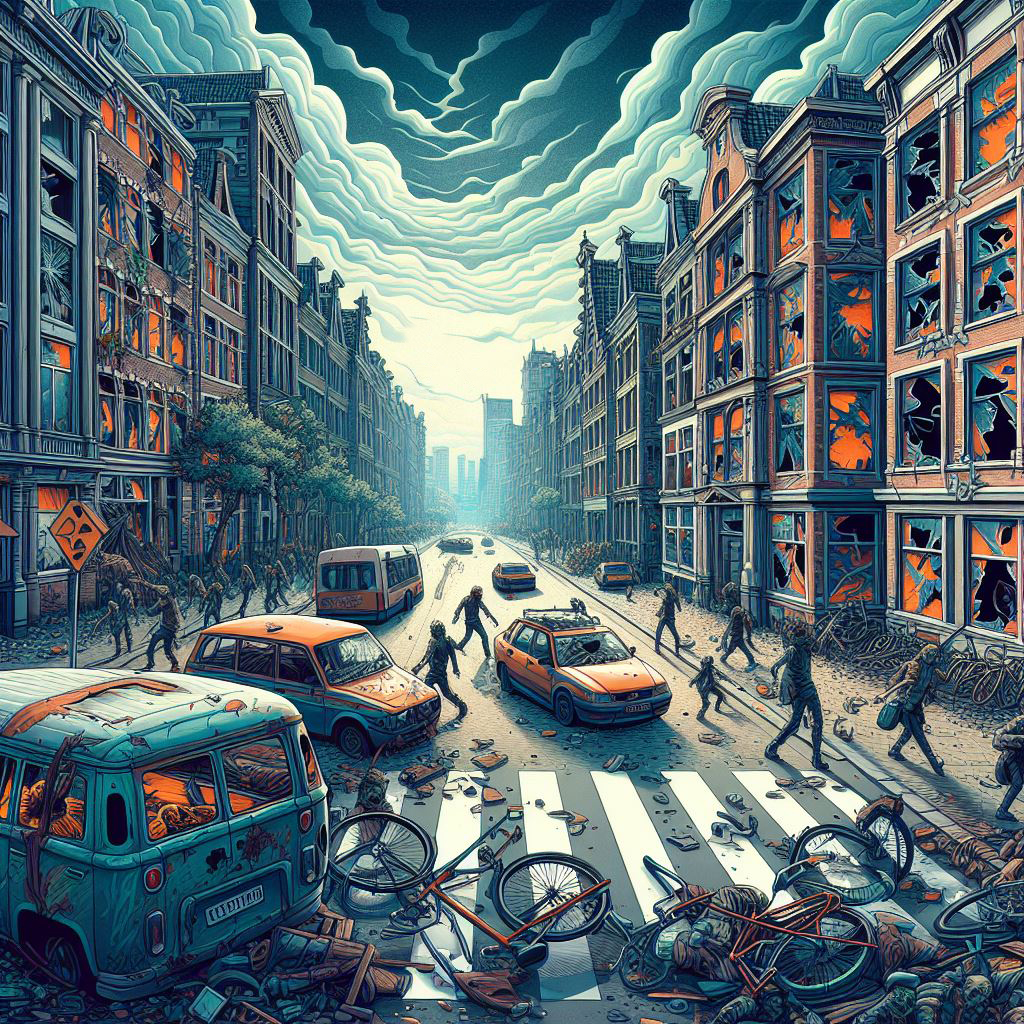
The pace is perfect, nimbly changing gears as it moves from past to present. From breathless chases through the canal and corpse-lined streets of Amsterdam to atmospheric scenes of foreboding, the author gauges our anticipation perfectly. The zombie creatures, with their creative and horrific injury detail, are runners rather than shamblers, which elevates the pace to breakneck speed when required.

There’s a flavour to Melanie Atkinson’s writing, and the evocation of everything from smells to vibes to facial expressions is immaculately presented with crisp attention to detail. Similes aren’t intrusively overused, but the ones we get are lovely. For example “The thing moved in a disjointed hobble, like a ravenous marionette that had broken its strings and come to life” paints such a striking and ghastly picture of an approaching zombie that no further description is required.

Thanks to this skilled writing, we also get a feel for the city. It’s a palpable place in this story, which makes the descent into hell even more potent. There’s a scene at the start of the outbreak in which a morning crowd gathers beside of a canal to see a rising dune of waterlogged undead trying to scramble out, and it has such a beautifully nightmarish quality that it feels like an actual memory.

There are plenty of surprises towards the end, and the finale is satisfying and appropriate, bookending the whole thing with fiendish style.

I’ll certainly keep my eye out for Melanie Atkinson’s future work. Like some of the better zombie tales I’ve read, ‘The Last Night in Amsterdam’ isn’t carried purely by the violent gruesome elements. Although these are riveting and superb, the true darkness of the piece comes through the fragilities, instincts and actions of the characters. There’s so much relatable humanity here. Decision making, regret, survival instinct, friendship, peer dynamics, graveyard humour, hubris, guilt and social anxiety are rendered raw onto the page, all too familiar and utterly convincing. Try as we might, we can’t ignore the discomfort of wondering what we would’ve done in several of their situations.

But the author keeps it all from becoming too intense with dark humour throughout, and coming from the wry perspectives of our narrators, this keeps the book at just the perfect tone for peak enjoyment.

Recommended.
Amazon Kindle link

Review: The Vanishing Point #6

0

“Welcome to the Vanishing Point, that place on the horizon where the lines of reality and imagination intersect. In that place is a promise of excitement, dread, intrigue, and suspense. The Vanishing Point is a triannual literary magazine for works that bend reality. Horror, Sci-fi, Dark Fantasy, and all things speculative are welcome here.”

I wasn’t familiar with this magazine, picked up the latest issue, and was happy to discover that it lived up to this promising blurb. The 6 short stories are varied and good quality, and it was the perfect way to start a grey and rain-drenched morning.

“A Strange Night in Sabbatville” by Joseph Hirsch kicks things off. This supernatural account concerns a man whose car breaks down in the semi-rural town of the title and finds his way to an old-fashioned B&B. Beautifully told, it has an engaging 1st person voice and a spooky and palpable sense of place.

“Tomorrow’s Agony” by Spencer Nitkey is narrated by a man who is captured by thugs and must pay an inherited debt that belonged to his late father. I enjoyed this very dark short, which succeeds through its original chilling concept and downbeat conclusion.

In “Bugs” by Paul O’Neill we meet Nick, a man on the verge of losing everything to his drug addiction, who is infested with some strange bugs under a bridge and discovers that they might help him out of his rut. An unpredictable sf/horror that hooked me from the off, it has the feel of an escalating nightmare with a satisfying and sharp sting in the tail.

“The Chitters” by Keith LaFountaine begins with tragedy, as family man Frank watches his young son suddenly die during a baseball game, and through childhood flashbacks realises that the reason for the death comes from his past. Immediately investable through attention to detail, this is a good old-school chiller.

“The Double” by Jocelyn Szczepaniak-Gillece is told by a woman trapped in a besieged city who sees a doppelganger of herself whilst attempting to board an evacuation train. An intriguing tale in which all is not as it seems, it ensures you don’t stop until the haunting and elegiac finale.

Finally, “Hurts to Breathe” by Scott J. Moses is the story of a healthcare worker revisiting her abandoned home during some kind of gas-induced zombie apocalypse. It’s a melancholy horror piece, nicely balancing violence with emotion, and concludes the issue on an appropriate high.

All the stories here are well written with muscular ideas and satisfying payoffs. There’s a pleasing range of dark speculative fiction, some mysterious and offbeat, some horrific and suspenseful, and the mix of authorial tones and directions make for an interesting read. I’ll definitely be revisiting The Vanishing Point again for more.

Available in print and electronic versions, visit the website here.

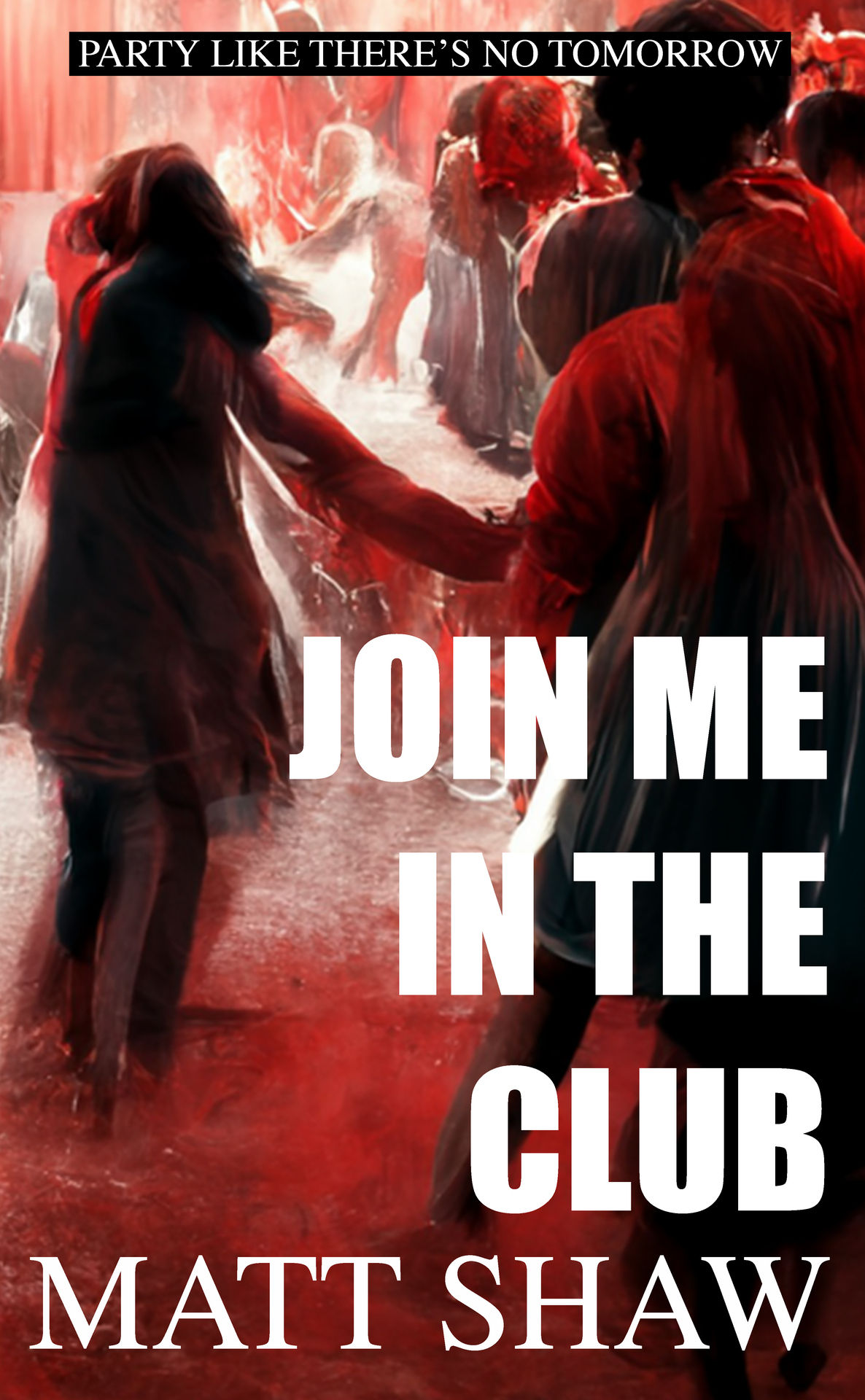
Review: “Join Me in the Club” by Matt Shaw

0

There are two kinds of extreme horror writer. One type thinks that graphic gore, bloodshed and nastiness are all that is required. The other realises that you need characterisation and investment for the aforementioned scenes of horror to have any impact. Matt Shaw is definitely one of the latter.

“Join me in the club” is an immediately engaging story based around an interesting dystopian concept. The world is over-populated and low on resources, so the government has decided that the solution is to prune the unfortunate population. They hold special events at “the club” for which people are randomly selected via the receipt of a red or white token. The red tokens will die, but as a farewell bonus, they get to be in charge of how they spend their last night. They are paired with a white token who will survive, but have to fulfil whatever the red token’s desires might be, as well as being instrumental in their death which is conducted in the manner of their choosing.

The main character is Gary, a regular family man, who has received a white token, and the story begins with the build up to his night at the club. Rather than going straight for the jugular, the tale shows how an ordinary family are preparing for the potential fallout from such an event. This could include damage to Gary’s marriage, as some red tokens insist that the white tokens sleep with them before they die, and Gary’s wife is understandably upset about this possibility. And although he will survive, how will they continue as normal after he has killed someone?
The realistic concerns, frustrations and arguments of a couple forced into this horrible situation are handled with aplomb, and we are drawn into their predicament before the horror has even kicked off.

The timeline jumps back and forth between the club night and the domestic events leading up to it, which creates a pleasing pace, and we also learn a little about Mary: Gary’s red token partner for the night. There’s some real darkness in her soul, and this sets a suitably ominous tone.

The book also features the plight of Justin – a pleasant man and a doomed red token holder – and his wife Emma. Palpable and tragic, this section is a beautifully written vignette with an elegiac tone that both contrasts and elevates the gruesome shenanigans about to be unleashed.

As this is extreme horror, the last section of the book naturally becomes quite inventively brutal. I wouldn’t dream of spoiling the grisly surprises that lay in wait, but strap yourself in. Because we’ve already invested in these characters, it becomes an uncomfortably powerful read, and the tale ends on an open yet very satisfactory note. There’s certainly potential for a sequel – which would please me no end – but it works as a standalone piece regardless.

I enjoyed “Join me in the club”. It’s a short book of novella length, and very easy to fall into and devour in one sitting. If you’re a fan of extreme horror, you’re probably familiar with Matt Shaw and will demolish it too.
If not, but you’re feeling adventurous and would like to dip your toe into this controversial sub-genre of horror fiction, I’d say this is a good place to start. The author brings quality storytelling and emotional depth to a fascinating concept, and while the graphic elements are shocking – and quite rightly so – they are undercut with a psychological darkness that takes it to a whole new level.

Party like there’s no tomorrow.

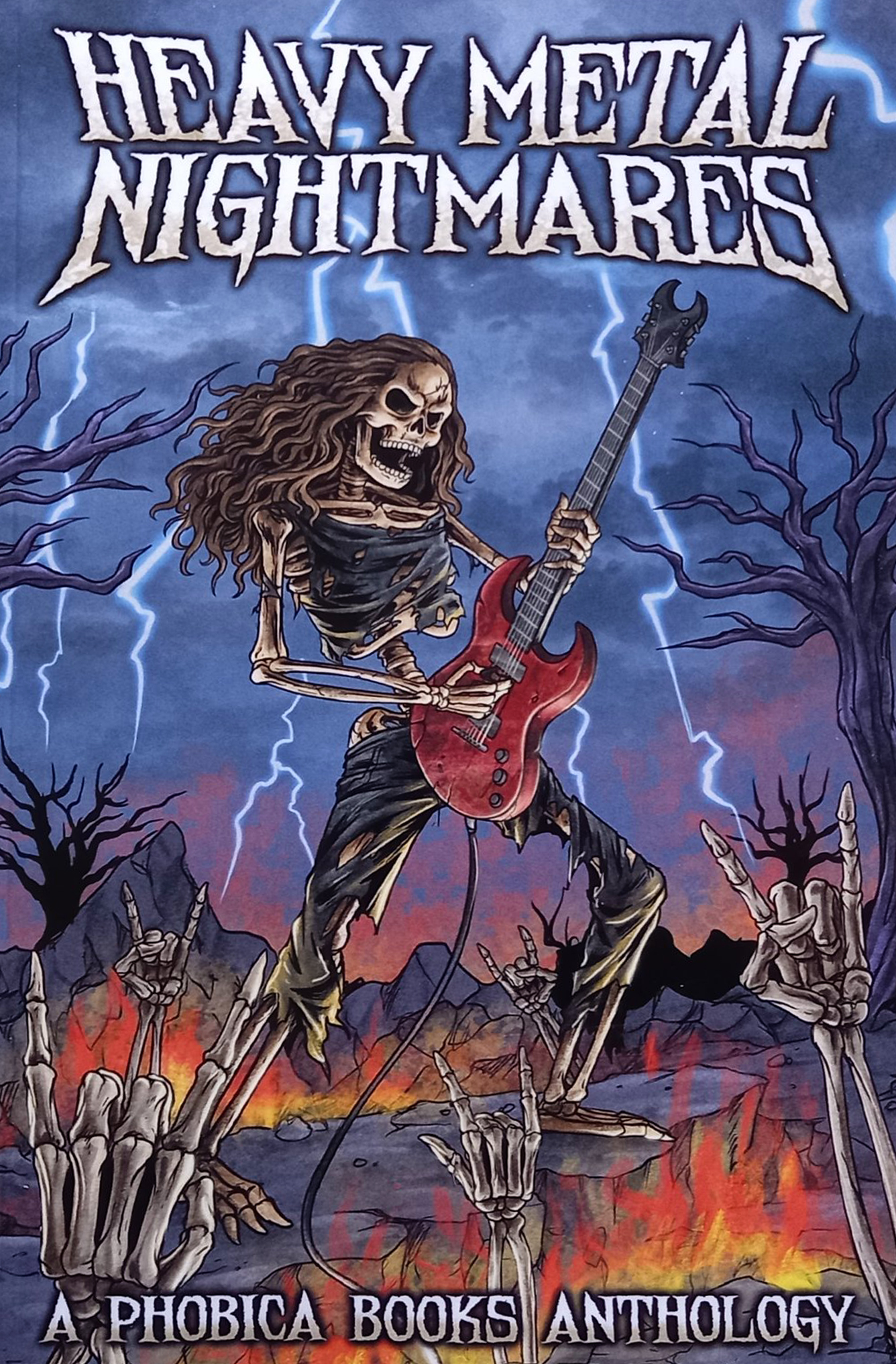
Review: “Heavy Metal Nightmares” – Phobica Books

0

I’ve been a fan of both horror fiction and heavy metal since I was a kid, so this release from Phobica Books was bagged and devoured the moment I clapped eyes on it.

I was pleased to find that beneath that perfect cover lurks a wild and varied selection of twenty stories. They feature the genre staples of monsters, ghosts, curses, possessions and dark whimsies of all kinds, but there are also nightmares of the non-supernatural variety and a couple that feature futuristic and grim speculative concepts.

Most importantly, the overall vibe of the book very much captures the different aspects of heavy metal and its many subgenres. The tone swings from bleak and haunting moods right through to horn-throwing, tongue-in-cheek horror shenanigans, and everything in between.

Heavy Metal Nightmares has an air of celebration. As you can imagine, the authors have a passion for the music – some of them being metal musicians themselves – and this love bleeds from the writing. And although there are song and band references scattered throughout that will delight the metalheads, they don’t intrude or overwhelm if this isn’t really your actual scene.

Here are a few of my standout favourites.

“Phantoms” by Tim Jeffreys is the muscular opening act of the anthology. It is told by the frontman of a rock band called Phantoms, who acquires an ancient song from a mysterious groupie, as well as a spooky picture of an old house. Both these things become instrumental in the band’s swift and almost overnight success, but bad things soon happen and people start to die. Riffing on the classic curse trope, it becomes compulsive, uneasy reading with a potent sense of inevitable doom.

I really enjoyed “Metal Bones” by Mia Dalia. A band called Cerberus decide to build a catacomb-styled ossuary of real bones in which to record their demo. They plunder graveyards for the skeletons with which to construct it, but their actions aren’t without consequence. Told with rich prose and smooth attention to detail, I particularly loved the unexpected, brutal yet emotively elegiac climax: possibly the best finale in the anthology.

Strap on your seatbelt for “War Born” by Richard Beauchamp: an epic and deafening slab of industrial cyberpunk horror that took my breath from its first page to its last. The setting is a radiation-drenched, dystopian nightmare that makes Mad Max look like a children’s fairytale. We follow guitarist Tjal setting off on tour with the War Born: the heaviest and loudest band in the world, who are feared and despised by the ruthless military powers that be.

The author builds an incredible world, full of superb imagination and textured prose, as we are dragged along on a nasty and colourful ride through a boozy, chemical wasteland of biomechanical mutants, twisted tech, atomic-powered subwoofers and vast speaker towers laying gruesome waste to all before them. The chaos is held together by a neat subversive theme as the band plan to play a literally city-wrecking gig on the doorstep of the world’s ruling magistrate. Never have scenes of visceral, apocalyptic hell been so exciting and enjoyable, and this was my favourite of the anthology.

In “Bloodlines” by Paul Sheldon, we meet Joe, a guitarist in a band who audition a new Flying V-wielding guitarist called Mike. Although he slays like a metal legend and seems like a nice bloke, Joe becomes jealous of Mike’s skills and realises something is not quite right about him: nobody in the scene has heard of him or seen him before. It keeps us guessing with “deal with the devil” type suggestions in a tale that has strong character dynamics and a wicked glint in its eye of which the metal gods would approve.

“Black-Metal Baker” by William J. Donahue is a very well crafted story about Jared, a croissant-master who runs a small, independent bakery, and has a black metal band as a side hustle. After he is interviewed by a local magazine, we realise that one of his band mates takes the whole satanic misanthropy mindset much more seriously than him. Written in an enjoyably sharp and evocative style, this is a satisfying piece full of horror and devilry (and baking) that never quite lets on about which direction it’s going to take, and concludes on a melancholy, pitch-perfect note.

“A Darker Sound” by M. J. McClymont features the plight of Angus, driving home, who ends up lost out in the middle of nowhere. He stops at an isolated farm, owned by an old man who is fascinated with the occult and extreme satanic metal, so of course it’s not long before things take an upsetting turn. Full of slick storytelling, deft turns of phrase, and thick with atmosphere, this is nice mixture of old-school quiet horror and the modern violent variety. It would make a great episode of “The Twilight Zone”.

“A Cold Slither Killing” by Angelique Fawns requires no gore or supernatural activity to pack its chilling punch. We meet Glenna and Michelle, two work colleagues who are both fans of a shock rock band called Cold Slither. After an incident with a snake in a river, in which Glenna saves Michelle’s life but only after some hesitation, their friendship is damaged. So they attempt to repair it by going to see Cold Slither perform live together. This story has a beautifully timed dark reveal that makes the early snippets of detail fall cleverly into place, and boasts a conclusion that neatly bookends the whole thing. All this combines with convincing characters and dialogue to make it a very powerful and memorable piece.

I’ll also mention “In Extremis” by Sally Neave. Here, the drummer for the eponymous band wakes up, terribly injured and locked in a storage room below the stage where his band are playing a very important gig. It’s an immediately engrossing, straightforward short with a stinging twist that I’d half-guessed by the end, but still thoroughly enjoyed due to the vivid writing and claustrophobic sense of desperation.

This is only a handful of what is on offer, just being those that particularly spoke to me, but there wasn’t a story in Heavy Metal Nightmares that didn’t bring something to the hellish party.

Given the theme, several of the stories naturally describe gigs in some detail and the lurid rock and roll lifestyle of groupies, drugs and booze. This can get a little samey occasionally, but there’s enough variation in the tales to break it up and I was never bored.

The protagonists and characters are generally well written, whether likeable or nefarious, and we often find ourselves in their corner despite their shortcomings. The stories tend towards strong finales, be them concrete or open, downbeat or gleeful, and there’s some pleasing classic shock twists.

If you like horror fiction or heavy metal, you’ll find something to enjoy in this anthology. If you like both, you’ll find plenty to love. They make excellent bedfellows.
I’ll leave you with the words of the back-cover blurb:

“Get in the mosh pit, rock your head, throw those devil horns in the air and get ready to turn your fear up to eleven!”