Spectral Press Chapbook Series – Alison Littlewood

2

“The Eyes of Water” is the 6th chapbook in the ongoing series from Spectral Press. The quality has been consistently high, and kudos to Simon Marshall-Jones for carefully selecting the authors. These polished single stories often have a quintessentially British feel, and all the requisite elegance and chills one would expect from the best. Alison Littlewood’s tale is no exception, but this time transports us to Mexico and the cenotés: a system of flooded caverns in the Yucatan peninsula. It begins with Alex, our likeable narrator, meeting his old friend Rick for an adventure into these beautiful yet dangerous caves. But later in the trip, a faceless corpse is discovered in the water, and it appears that Rick has fallen to the eyes of the water: a local term to describe the effect of fresh water merging with the seawater of the ocean. The official word is that Rick was trapped and battered by a whirlpool that empties through the complex systems and into the sea, but Alex isn’t quite convinced.

Along with Rick’s sister Kath, he decides to visit the place of his friend’s death: a network of deep, submerged caves with a terrible history of Mayan sacrifice. Certainly not the sort of place you venture alone. Or in the middle of the night.

I wasn’t hugely familiar with this author, but I loved her 1st person voice. The prose is literate but unintrusive, with wonderful attention to detail, and there isn’t a word of overexplanation. This kind of writing makes me very happy, and the perfect editing scores extra points.

What also struck me was her power of evocation. The sense of place is incredible, and there are pictures in my head from this story that are crystal clear as footage. This is also used to great effect to create some breathlessly claustrophobic and frightening moments that balance the quieter moments of atmospheric brooding.

But this certainly isn’t content to be a mood piece. The main three characters are equally real, delivering plenty of empathy and pathos, understandable motives, and their subtle relationships add yet more depth. The story tackles bitterness, redemption, fear and the human need for resolution, and reflects upon life itself with a very satisfying finale. Combine this with a great concept and some spooky, spine-tingling adventure, and you’ve got a winner.

Sadly “The Eyes of Water” is sold out, but click here to visit Spectral Press for information on future publications and chapbook subscription details. You won’t regret it.

Review – “Soul Screams” by Sara Jayne Townsend

1

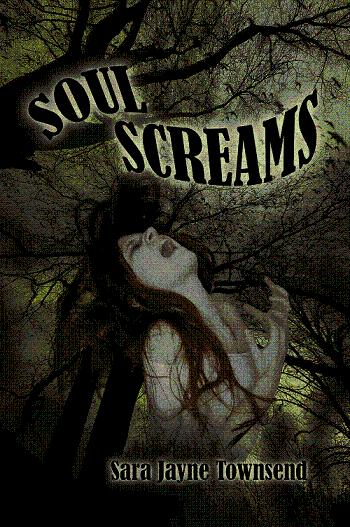
Soul Screams is a new collection from Stumar Press: thirteen tales from horror and crime novelist Sara Jayne Townsend. The book description claims, amongst other things, that these stories are about “that inner scream that no one can hear but you”. Which sounded like routine blurb-speak to me, but actually turned out to be a pretty accurate description. With that stark cover setting the tone, first up is the grisly “Thirteenth Floor”. Our narrator is Paul, a man visiting his friend’s new flat in a grim, McMahonian tower block. He gets distracted by a pretty girl who entices him up to the 13th floor and things soon start to spiral out of control. The growing sense of unease is tremendous, doubled by both character investment and ghoulish curiosity, but the ending did seem abrupt and left me wanting.

“Jimi Hendrix’s Eyes” is next, a strong account in which a man sleeps with his friend’s wife: a classic double betrayal. The musical trappings (including the Hendrix poster of the title) add a humanity to the characters, cementing a poignant story of terrible consequence.

“Trio” is a perfect, elegiac mood-piece. The title refers to a trio of once-inseparable friends, one of whom has died, and the tale finds the survivors mourning at her graveside. This is a snapshot of life that creates huge feeling in few words, and the raw, poetic conclusion surprised me with its power.

“To Dream of a Angel” introduces a member of a writing critique group who has visions of demons and knives that she can’t possibly dismiss. I usually sink when stories report fictional characters’ dreams, but they’re reasonably well woven here, and I liked the desperation of the final few paragraphs.

“Kay’s Blues” changes to third person for the frst time in this collection, which works just as well. We meet the eponymous heroine irritated with her current boyfriend, hormones and life. Her frustration is perfectly evoked, and this intriguing horror story taunts our expectations with a wicked sense of humour.

“The Wedding Hat” begins with a playful trope. It introduces Alex, a jaded twenty-something, who purchases a hat from a dusty, anachronistic shop staffed by a spooky old lady. She soon discovers that through the hat, she can hear thoughts and see unhappy futures and deaths. The concept was overexplained several times, which felt rather patronising, and the themes surrounding inevitability weren’t subtle. But it’s an enjoyable, contemporary dark fairytale with some rewarding scenes.

“Morgan’s Father” is the only present tense tale, which works alongside a basic prose style to create a cold and lucid atmosphere. After a woman gets mugged, her father swears to protect her, and what follows is practiced if somewhat predictable. I was also less keen on how “The Train to Maladomini” panned out. Here a man wakes up after a heavy night’s partying, expecting to be in bed with a girl, and finds himself on a grimy train with an old man named Baal. Although well written, it all just seemed a bit obvious.

But after a bit of a lag, Soul Screams hooked me right back in. “The Boy with Blue Eyes” is narrated by a woman who falls for an achingly attractive young stranger, and soon develops an obsession. A believable voice pulls out all the stops in this heady descent of desire.

In pleasing contrast to that is “Just Don’t Scream”, a short and lurid tale about a magician and his guillotine. I found it slightly overlong – it would’ve worked as a pure flash piece – but it’s nasty fun and certainly made me smile.

“Cigarette Burns” maintains the grisly bar. Kelly is a woman abused by her rancid old drunk of a father, and when her boyfriend promises to do something about it, things don’t quite go plan. Another evocative slice of horror, this delivers a suckerpunch to remember.

I loved the multi-layered menace of “The Guitar”. Certainly one of my favourites, this story concerns a woman named Jocelyn who after being stood up in a bar, turns her attentions to a young musician. But when he brings his guitar back to her bedsit, the usual routines of seduction take a sinister turn. This one is a real guesser with an underlying aura of sour malevolence and the events all fall neatly into place.

Finally, “Someone to Watch Over You” is a reflection from the afterlife: the elegant story of a dead woman protecting her sister from harm. It’s very satisfying, but the emotive conclusion loses some of its edge by being slightly too drawn out. Nevertheless, it rounds off the collection on an appropriate note.

I enjoyed Soul Screams. Sara Jayne Townsend creates real characters, both male and female, and the promised angst is convincing and delivered in droves. There’s madness in the form of desire, betrayal, obsession and loss, but also elements of warmth and a sharp sense of humour that prevent everything from becoming depressing.

Some of these tales have vicious twists, others conclude with cold realisation, some just fade on a haunting scene. This holds the interest throughout, buoyed by the author’s unintrusive style (and a particularly strong 1st person voice) that allows the dark motivation and passion of its protagonists tell the stories.

That inner scream that no one can hear but you? Yes, I’ll take thirteen of those, please.

—–

Packaged with a couple of succinct introductions and pleasant author story notes, Soul Screams is available in print from Stumar Press, and in the usual e-formats from Smashwords, Amazon and the like.

Review: Dark Highways – Five Road Trips into Terror

0

Being a small island, we don’t really have proper road trips here in the UK. Certainly not with the same sense of adventure and freedom available in the US, or indeed the humbling vastness of the terrain. But it’s one of my favourite types of Americana, and should it be in the form of a horror tale, then all the better: the interstate highway is a canvas ripe for helpless peril

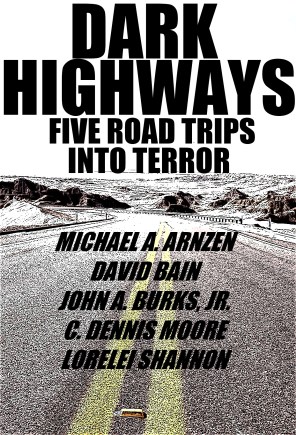
So of course this matter-of-fact title and stark cover caught my eye. And I was soon pleased to discover that the line-up of mostly familiar names have ensured we get exactly what it says on the tin.

The journey begins well with Michael A. Arnzen’s “Damned Potholes”. Told first person, it’s the immediately engaging account of a man driving late at night through the Colorado mountains who spots what seems to be a drunk in a suit staggering along the road. Things get strange pretty quickly in this quirky opener that sports a wry smile and an entertainingly outrageous concept.

Next is the rich and lurid “Black ’47” by Lorelei Shannon. Here we meet Serpentina, a carnival worker showing off her haunted, murderous “death-car” hearse to some unsuspecting punters. Although a couple of pace changes seemed rather intrusive and there was one element of blood spatter that didn’t quite add up, this is intriguing and colourful storytelling with a very memorable cast.

John A. Burks, Jr. provides my favourite of the bunch with “Black Trailer”. Joshua is a divorced trucker who accepts the job of delivering a sinister trailer across the US without asking questions or having a crafty peek. I found it slightly over-described at times, but the lead character and back story hooked me in, and the gore and sheer menace of the truck (my favourite since Duel) make for a ghoulish highway adventure with a pleasing pay-off.

In “Companion” by David Bain we follow Hardesty, a troubled teacher driving a lonely stretch of road who gets stuck behind a lingering pick-up. The occupants – an aggressive  male and young boy – start to unnerve him, and a lapse of concentration results in a truly monstrous encounter. I particularly liked the way the bigger picture was layered in via italicized snippets rather than infodumping: a carefully crafted and old-school piece of horror.

Finally, a man nipping for pizza ends up stuck on a barren and silent highway in “5:53” by C. Dennis Moore. This is a suitably spooky finale and a nice take on those “lost between the cracks” kind of stories. With a Twilight Zone-esque wink, it concludes the book on a good note.

This is a decent little anthology for a couple of quid. There’s often a hushed cinematic tone, and the fun and chilling moments sit comfortably together. Admirably, Dark Highways also manages to avoid déjà vu, despite the specific theme.

If you like your scary stories played out beneath huge dusty skies, with something murderous in your rear view mirror, then you’ll enjoy the ride.

Available in both print and ebook from Amazon, Smashwords and the like.

Review – “Blood Ocean” by Weston Ochse

0

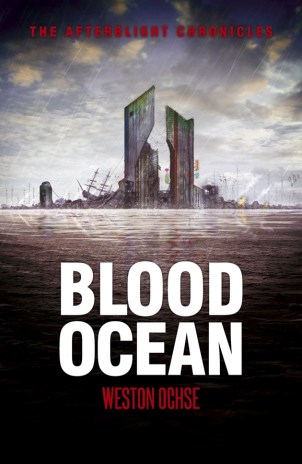
I love a good end of the world, and the Afterblight Chronicles series from Abaddon Books have always been reliable. “Blood Ocean” by Weston Ochse is no exception, and despite treading a couple of beaten paths, it proves to be a tight meld of martial arts, character drama and dystopian horror.

The apocalyptic engineering of this novel is fairly generic. A blood-type related plague has wiped out much of the world’s population: a terrible pandemic known as “The Cull”. But it’s the perfectly evoked stage that sets this novel apart from similar premises. It takes place entirely within the rusted hulls and creaking masts of Nomi No Toshi: a floating city of lashed togther boats, tankers and submarines that drifts on the sun-drenched oceanOur protagonist is Kavika, a young Hawaiian who longs to earn his traditional warrior stripes and become one of  the Pali boys. They rule the skies above the city, swinging monkey-fashion through the rigging and masts above with an ethos of “living large”.

But Nomi No Toshi is a dangerous place, and when one of the boys is apparently harvested for his blood, Kavika sets out to find the killer. This takes him on an adventure through the secret passages, dank hulls, shrines and crow’s nests of the city, and he soon discovers that money talks, fear talks even louder, and power most certainly corrupts.

I loved the setting of this book, and the city is a patchwork of sumptiously realised territories. From the Koreans living in stacked containers aboard an old cargo ship, to the Russians in their subs, life aboard the floating city is one of violence, segregation and suspicion. “Water dogs” rule the sea beneath and control fishing rights, and there are all manner of other scientists, gangs and sinister religions jostling for power and hustling favours.

The characters are also a strength. I cared for Kavika pretty quickly, and enjoyed his point of view. Some authors forget that they’re writing from the perspective of somebody who’s never seen pre-apocalypse times, but it’s subtly acknowledged here in a world where history has become an oral tradition, declining as the older generations die out. The other major players, including a transsexual water dog and a Spanish drug dealer, are all interesting enough to invest, and even Ivanov – a grizzled, alcoholic submarine captain – has an earthy charm.

This is a pacy read with plenty of action: Weston Ochse clearly knows his way around a fight. But the “rip-roaring yarn” feel is deliberately tempered by shocks, and there’s cannibalism, surgery and other bursts of extreme violence to keep the horror machinery oiled. The real dark heart of the book comes from the ruling Corpers, “blood-raping” their subjects and commissioning human vivisection behind the banner of medical research.

This novel isn’t without flaws. Although I generally like the author’s prose, there were occasional times when a scene would describe what I’d already tacitly imagined, which left me getting ahead of the text and waiting for it to catch up. And although most potential cliches are avoided, I did find the whole orphan boy yearning for acceptance rather too familiar. Kavika is real and likeable with his bravery and affecting naivety, and I’d liked to have seen him fundamentally driven by something less textbook.

Another minor gripe is that one element of the vivisection stepped into the realm of SF. As this is a novel otherwise based in concrete science, it demanded a suspension of disbelief I couldn’t give, and dulled a scene that had otherwise very much appealed to my love of the physically macabre.

But despite these grumbles, there is certainly nothing to spoil it. Weston Ochse has a great eye for speculative detail, and neatly presents our inability to rebuild without resorting to tribe and abuse.

Fans of China Mieville may also notice similarities with his sprawling and gorgeous “The Scar” with its floating city, cultural diversity and grotesque body modification, but those heavy sociopolitical depths aren’t attempted here. In fact, ignoring the horror content, this almost feels like a book for younger audiences. That’s not because this is euphemistic or lightweight storytelling. I think it’s partly due to a sense of optimism despite the odds, but mainly because it’s a wild ride driven by a fresh-faced youth that doesn’t contrive to be disturbing or profound, but concentrates on shovelling coal into its furnace.

I enjoyed “Blood Ocean”. Take a tour of the City on the Waves, and give both your inner kid and your inner ghoul something to get their teeth into.

Review – “Hell Train” by Christopher Fowler

1

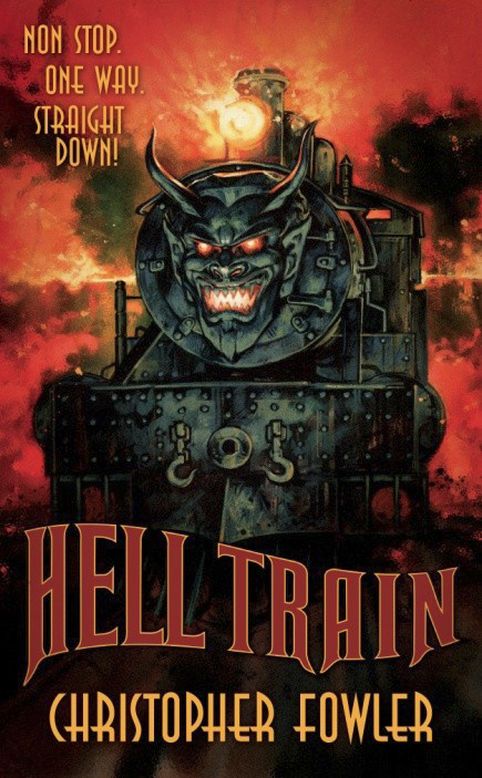
This new novel from Solaris charmed me before I’d even bought it. Firstly because it was championed as the greatest supernatural chiller that Hammer never made. Secondly, it combines hell and trains, both of which are personal favourite canvasses for a yarn. And lastly, it sports a deliciously loud and cinematic cover by Graham Humphries.

Behold.Like many horror fans, I’m deeply fond of Hammer, and I hoped that this would turn out to be a worthy homage. “Hell Train” certainly is, and also keeps a few surprises up its sleeve.

The tale begins with Shane Carter, a recently dismissed Hollywood scriptwriter, who arrives in England hoping to find work. He visits the home of Hammer Studios – an oak-beamed 17th century mansion – for an interview with the boss. After a rather jovial and tea-infused chat, he is given just a few days to write a script with one polite requirement. “We rather liked the idea of a train.”

This forms a wraparound for the novel, and having being introduced to the existence of an old board game by the name of Hell Train, the internal story begins.

War is spreading across 1916 Eastern Europe, and two lively couples find themselves out of their depth in the sinister village of Chelmsk in the Carpathian region. And where else? Thomas is a stuffy vicar, whose holiday with his wife Miranda has gone somewhat awry and Nicholas is an awol lothario with designs on a local village girl, Isabella. The English protagonists struggle with the aggression and ill manners of these farming peasants, to some amusing effect, and are soon forced to escape. But the only way out is a mysterious train, of which locals will only speak in suitably hushed and nervous tones, which arrives at the dark village station at midnight.

They inevitably board, and meet plenty of other rum folks as the train begins its journey into the rural night. The supporting cast includes a beautiful Hungarian Countess with a pack of tarot, a dead aristocrat in a coffin, and the grim and authoritative conductor. The protagonists begin to be tested in some way, but do they have a chance at redemption? And where exactly is the train’s destination, strangely blotted out on all the maps? As if we didn’t know. Hehe.

The author’s prose is sharp and clear, bringing to life a strong bunch of characters. They are understandably motivated despite their varied backgrounds, and perfectly resemble the cast of a classic Hammer outing while still being investable individuals. It’s also a nice touch that we are gently nudged into envisioning the train’s conductor as the “terribly tall and grave” Christopher Lee.

The thundering train itself is also perfectly evoked as it cuts through the ravines and wolves of the landscape, indeed a character itself. And while this is never a desperately scary novel, the pace never lags, and there are some tense and cruel scenes to balance the lurid fun. The wraparound story supplies much fond nostalgia and humour, and shovels in plenty of wry references to the film industry, censorship, Hammer’s rivalry with Amicus, and the familiar actors we know and love. And it isn’t afraid to play with stereotypical 60s Englishness: the essence of the studio.

I struggled to find fault. There are a couple of typos, and one of the main character’s tests aboard the train wasn’t quite as interesting as the others, but I’m being picky. This has all the satanic ritual and heaving cleavage you could hope for, along with clever stalemates, breathless action and generous spurts of modern gore. The cinematic tone is well evoked throughout, lending theatre to the peril, and merging with the classic novel stylings. And although it embraces many genre tropes in homage, this book avoids the pitfalls of a cliched finale. Does good triumph over evil, or is there some kind of diabolical punchline? Is it happy or bleak? Relax. Christopher Fowler’s got you.

If you’re familiar, “Hell Train” is a glorious tribute to the 60s horror cinema of Hammer. If you’re not, it’s still a gruesome and delightful ride that completely blows the budget.

Review: “Lest You Should Suffer Nightmares: A Biography Of Herbert Van Thal” by Johnny Mains

2

An unusual non-fiction review for the Hellforge, this book from Screaming Dreams gave me a shiver of nostalgic anticipation. A matte hardback with a terrific portrait by Les Edwards, it took myself – and I’m sure many others – right back to the playground.For me, it was the late 80s, and we were lucky enough to attend a school that had several of the Pan Book of Horror anthologies on the shelves in the English room. It was always long-serving editor Herbert Van Thal’s name on the cover, and they were devoured with glee, even proving to be the humiliation of an indignantly self-righteous teacher who confiscated them as lurid contraband before discovering they were actually school property.

“Bertie” was a lifelong lover of books, and did much other work in the field as well as the Pan anthologies. Here, Johnny Mains has put together a succinct and highly readable biography, and is the only one to tell the story of this publishing niche legend. This book has fostered me with a great mental image of Bertie’s office, him perched over a tome at his desk like a vulture, flanked by creaking overflowing shelves. We are given a pacy summary of his life and publishing career, from his nights as an AR warden during the war, being on the jury for the infamous John Christie serial murderer case, and facing a legal wrangle of his own when his then employer was accused of publishing obscene material.

Johnny Mains has done some thorough research, contacting the subject’s family and old colleagues, and his reporting feels satisfyingly factual. There is the occasional supposition if the truth isn’t known, but this is always clearly explained as such, along with the reasoning. It’s nice to read something unsensational, and the author also offers some detective work regarding prose styles, attempting to deduce the identity of a mysterious pseudonym.

Certainly an odd-looking man, Bertie emerges as passionate and friendly to work with, although certainly no angel. Perhaps his contributors could’ve seen more reward, especially with repeated print runs, and there was also the shady business of reselling their work. There’s a selection of contributor  interviews that provide some pleasing anecdotes, and also a great section of photocopied correspondence in which Bertie compliments, cajoles and gently scolds the authors. His personality and humour really come across in these short but wry letters.

There is the odd typo, and I had to reread a sentence occasionally due to a lack of punctuation. But overall, the simple informative style works well and lets the subject matter speak for itself.  With the Pan books the star of the show, it was fun to revisit these tales, a couple of my favourites from years ago being George Fielding Eliot’s dark milestone “The Copper Bowl” and Myc Harrison’s ghastly “The Spider and the Fly”. The book also discusses the possible reasons for the series’ decline, including Bertie’s ailing health and issues with colleagues.

Johnny Mains is certainly the right guide. His knowledge and passion is clear, and his debut fiction collection “In Deepest Sympathy” also has a delicious Pan-esque flavour to the proceedings. He’s been instrumental in resurrecting much genre interest in these books, being the project editor for the re-release of the 1st edition last year, and also publishing “Back from the Dead: The Legacy of the Pan Book of Horror Stories” which included a shorter version of this biography.

“Lest You Suffer Nightmares” is a slim volume, but therefore uncluttered, the author admirably restricting discussion to the notable highs and lows. Too much detail would’ve become turgid, and I avoid doorstop biographies like the plague. Bertie wasn’t some revolutionary or rock star, he was an interesting but normal man who led an interesting but normal life, and this book is gauged appropriately. I thoroughly enjoyed his story, and while the appeal of course lies mainly with those who have a fond history, this is an attractive addition to any bookshelf.

Order direct from here

Johnny Mains

Screaming Dreams

Favourite Genre Reads of 2011

6

Hope you all enjoyed Christmas and had a happy new arbitrary-moment-in-time-the-same-as-any-other, and all that.

Another vintage year for all things imaginative and ghastly, and it was tough to whittle a mere top 10 from the heap. There’s a couple of works here that spilled over from 2010 – too many books, not enough hours – but nothing older than that. So here they are in no particular order, and you can click on the title of the first 8 for a thorough review.

  • “Do Not Pass Go” by Joel Lane A beautifully produced, sturdy little chapbook of addictive crime fiction. I was right there in the city streets, drifting through the garbage, cigarette smoke and darkness. Brilliant.
  • “Push of the Sky” by Camille Alexa A relaxing pleasure to read, this is an impressively colourful fantasy/sf collection, and a real melting pot of styles and subgenres. She’s a talent to watch.
  • “Weirdtongue: A Glistenberry Romance” by D.F. Lewis A book that seems to divide its critics like Marmite. Thick with wordplay, outrageous characters, layers and textures, I found this oft-baffling linguistic art piece to be a real treat.
  • “End of the Line: An Anthology of Underground Horror” edited by Jonathan Oliver Just in case you needed more reasons to dislike travelling on the tube. An impressive line-up run wild with the concept, leaving a host of unpleasant, lingering memories.
  • “Angels of the Silences” by Simon Bestwick A modern and alternative ghost story full of humour, horror and pathos. “Bestwickian” is a phrase that should have caught on by now.
  • “Where the Heart Is: A Guided Tour of British Horror” edited by Gary Fry And what a chilling yet elegant tour that is. Some of Britain’s most interesting horror writers don’t disappoint in what was certainly my favourite anthology of the year.
  • “Fearful Festivities” by Gary Fry Being a bit of a bah-humbug when it comes to things sentimental and twee, this is my kinda Christmas story. Intelligent, creepy and character driven. With claws.
  • “Ill At Ease” by Stephen Bacon, Mark West & Neil Williams A truly faultless ebook featuring 3 equally memorable, macabre and highly polished tales. There are even clowns to upset any fellow coulrophobic masochists.
  • “Dark Matter: A Ghost Story” by Michelle Paver Journal-style writing at its best, this evocative Arctic ghost story reminded me of how much fun it is to be actually scared by a book.
  • “It Knows Where You Live” by Gary McMahon Very glad I bagged one of this limited-edition collection, in which the lights are turned down from the start. And then swiftly off. Rumour has it that the author’s underpants are made of Countess Bathory’s shroud, and his shadow cries in its sleep.

And although it’s only a short novella download, special mention also goes to “Butterfly Winter” by Weston Ochse, a breathtaking and beautifully written tale of war and human nature that still haunts me months later.

And there it is. There’s plenty of supernatural in the list, which isn’t always to my taste, so thanks to the authors for reaffirming my love of the spooky. It’s too difficult to pick an overall winner, so I’m going to cop out and just leave it at top 10. Which was tricky enough itself.

Cheers.

Keep reading and writing in 2012, folks.

Review – “Fearful Festivities” by Gary Fry

1

It was a chilled but sunny December morning when I opened a parcel to discover this beautiful jacketless hardcover from Screaming Dreams.

I tend to dislike jackets anyway – they just snag and look tatty – and even after being read, dropped on the floor and pounced on by the cat, this sturdy book still looks pristine, festooned with its fantastic artwork from Steve Upham. And it turned out to be a great distraction from the pre-Christmas chores that I should’ve been doing. Having enjoyed several of Gary Fry’s short stories, I was pleased to discover that Fearful Festivities is a thoughtful and well paced horror novel, brimming with the season of ill-will.

It begins on a strangely warm December 22nd in the gentle Yorkshire village of Hitherton, when several of the residents receive a dragon-stamped invitation in the mail.

“Christmas is a time for miracles. Tell us what you want.”

Delivered by an elusive but nightmarish postman, could these tempting requests possibly be the answer to their woes? There’s Tom, a cash-strapped family man with a failing bookshop, and Graham, his unemployed academic brother. We also meet a lonely and obese woman, a wannabe internet tycoon, and a boy who misses his soldier father who’s away fighting in Afghanistan… and all of them have a deep longing for something that traditional gifts can’t provide.

Along with some other desperate folk, they’re lured into making wishes against their rational judgement. The miracles start to take form, yet things seem increasingly askew and sinister. Before long, it’s clear dark forces are at work and all kinds of devilish trickery ensue, which I don’t want to spoil.

Initially, I wasn’t bowled over by this book. The prologue concerns the 8-year old boy, Kevin, who misses his dad and is frightened of the closet monster. It delivers the requisite horrors and excitement for a curtain raiser, but seems slightly over-described and didn’t quite hook me as it should. Regarding this character, there are plenty of nice moments when we, as readers, realise certain things that have eluded his 8 year old perspective. But I also thought there were a couple of times when his ruminations were expressed in a form that seems far too adult.

I became much more engaged when we start to meet the other residents going about their daily routines, and the oft-familiar problems of their lives in which the grass is always greener. This is one of several deft themes, and we don’t have long to wait before it all starts to kick off.

The semi-rural village’s sense of place is neatly evoked and the inhabitants themselves are mostly likeable and flawed. They’re painted in some detail so that after a while, the reader knows them intimately enough to allow slightly odd changes in behaviour to become noticeable. This complements the feeling of unease and  makes this homage to small-town old-school horror work so well.

The book is full of clever turns of phrase, and some startling visions that unsettle in a single sentence. This author also has the knack of wry one-line teasers at the end of a chapter, which makes for some theatre. The plot threads are nicely linked and I liked the way that the characters’ individual wishes are not all immediately revealed. They’re teased in as the tension mounts, letting us wonder what manner of hellish trouble they might have accidentally invoked.

Although entertaining, the loud, showcase finale was not quite to my taste, and includes a paragraph of explanatory narration that I found intrusive and unecessary. But I certainly wasn’t disappointed, and the monstrous conclusion provides plenty of surprises and ties up some good concepts with a flourish.

Fearful Festivities is a layered, strongly-themed novel, and manages to dissect the envy and hope that come at this time of year without getting bogged down or losing the sense of grisly fun. It makes for compulsive reading with investable characters, shocks, and that classic feel of lurking menace that should be the essence of any horror tale.

Switch off that Christmas repeat on the telly and read this instead. You’ll never look at a child’s misspelling of Santa Claws the same way again.

Available from Screaming Dreams here

Review – “Where The Heart Is” edited by Gary Fry

1

I’m a bit late with this Gray Friar Press book review, but I enjoyed it too much to merely slot it back onto the shelf without fanfare.

Where The Heart Is promises an alternative tour of Great Britain, in which the 19 British contributors wrote about what they know best… home. From faded northern industrial towns, violent urban sprawls of the south, and the bleak and sublime countryside in between, this promising TOC delivers a convincing journey through the sinister side of this sceptred isle.

Where else to start but the capital? The opener is “Ticker” by Allen Ashley, which transports us through the tube lines, streets and pubs of London from the perspective of a man who’s recently lost his father. He’s drawn into an urban “clothes war” in this clever presentation of modern urban behaviour, both tribal and cynical. This is a well written, multi-layered tale with pathos and menace in equal measures.

Next, “A Killing in the Market” by Stuart Young takes us to Romford and introduces Dave, an ill man deeply suspicious of the medical community. And for good reason. Another expert pen delivers plenty of seamlessly real dialogue, but don’t be lured by the reassuring humour and warmth, because you’re in for a real horror finale.

If you haven’t read any of the inimitable DF Lewis, then this is a good place to start. “So” (referring to the local pronunciation of “sea”) is a mood piece set in the traditional resort of Clacton-on-Sea. As everything closes down at the end of the holiday season, there’s an overwhelming atmosphere of ebbing time, transience and final journeys. It gives such a flavour of the place that it feels like I’ve been, even though I haven’t.Norfolk is the stage for “The Onion Code” by Andrew Hook: a remarkably original tale of a woman who can read onions, and manages to predict an earthquake. Told in a distinctive style, it has a wry sense of humour, and a less concrete finale than expected, the satisfaction of which will depend upon your taste. It has memorable moments, including an entertaining good cop/bad cop duo, and scores extra for a deeply chilling moment in a fashion shop changing room.
Following is “Easter” by Stephen Volk. Here we visit a quiet Bristol suburb and meet Martin – a middle-aged unconfrontational man – and his frustrated wife, Cheryl. The council arrive to conduct some work, and soon they have a crucified man in their front garden. “Easter” has a very English flavour, and despite the strange and slightly nightmarish content, it’s rendered normal by the couple’s believable relationship and their extraordinary diffidence: the essence of the tale. Very pleasingly tied up, this is one of my favourites.

Next we cross the border into South Wales. In “The Cuckoos of Bliss” by Rhys Hughes, Swansea is the canvas for this wild tale in which a jobless man is selected to be safety officer in heaven. Full of stunning turns of phrase, this extraordinary fantasy bursts with colour. Managing to be fun, then suddenly deeply disturbing in turns, this is a razor sharp piece of fiction, if perhaps slightly overlong.

From Swansea, our tour heads west into the mist-shrouded marshes of the Welsh Gower Peninsula. “Summerhouse” by Mike O’Driscoll begins with a wall of descriptive text, which initially put me off, but I was soon drawn into the mood. A married man revisits the location of childhood love, and the result is a triumph: nostalgia, ritual and loss collide to deliver a powerful conclusion.

After this sobering piece, we head back into England for “The Last Witness” by Joel Lane. Set in the hulking city of Birmingham, it features a nefarious property developer who’s no stranger to violence and murder, and a derelict house with dark forces at work. The tale made me feel for even the minor characters – the author has a talent for conjuring real people from a sentence or two – and it’s a solid meld of crime, noir and horror that keeps us guessing.More urban clautrophobia follows in the excellent “The City in the Rain” by Mark West in which he paints a sagging, rain-lashed Leicester. A master of empathy, the author introduces Andrew, a man who recently lost his wife and is lured into an alleyway after hearing cries for help. Despite being ever-so slightly marred for me by that old trope of a glimpsed figure from the past that then slips away and invites pursuit (just a personal irritation), at least here it was an important part of the plot. Andrew’s grief is palpable, and forms the spine of a good old-fashioned horror story and another of my favourites in this anthology. And the final sentence made me grin.
Another treat is “Last Summer” by Stephen Bacon. Set in an old colliery village near Sheffield, this is a moving piece that harks back to the miner’s strike of 1984, the Margaret Thatcher years and the distinct troubles of the time. The plot concerns missing children, possibly by the hand of a serial killer, and there are moments of horrible realisation but no punchlines: this is understated storytelling with no exclamation marks, but it packs more punch than the loudest scream of a tale. The narrator is reflective and gentle, seamlessly switching between childhood past and present, and this perfectly constructed descent into darkness brims with nostalgia. Bittersweet and memorable, “Last Summer” is the book’s crowning glory for me, and I would recommend it to anybody whether they like horror/dark fiction or not.

“Winter’s End” by Simon Bestwick presents both the urban and rural landscapes of Greater Manchester. A man begins a relationship with a girl in a band, falls in love, but then to his frustrated dismay, she starts to drift away from him. The story really captures that heartbreaking feeling of clutching at smoke, and is full of characterisation and style. But although I enjoyed the grisly showdown, I had the feeling that I’d missed something.

A stretch of ex-colliery wasteland in Wigan is the scene for “The Daftie” by the ever-reliable Paul Finch. Here, a young lad on a school cross country run is exhausted and left behind. He decides to take a short cut, despite the risk of bumping into the Daftie: a mentally disturbed man said to haunt that bleak and lesser-travelled route. His ill-advised decision soon descends into terror, and becomes a real adrenaline kick of a story. It has a sharp pay off, and is certainly the most tense page-turner of the anthology.Then we head east to Wakefield for “A Victim of Natural Selection” by John Travis. This sums up the author’s askew take of the world, concerning a man named Crocus who lives in abandoned urban desolation. To reveal any more would either spoil it, or not give sufficient credit to the weird and wonderfulness of it all. So I won’t. Just read, and enjoy this extraordinary vision.

We travel just a few miles to Dewsbury for “Ways Out” by Mark Patrick Lynch. This is a solid tale that presents colour and individuality amid an ambitionless, deprived populace. Brought to life by sharp dialogue and a pleasant yet strong ethnic narrator, it’s less depressing than it initially seems, and has the air of a modern fairy tale and much to digest for a story so short.

Lingering in Yorkshire, we visit Leeds for “Quarry Hill” by Michelle James. This is a modern ghost story featuring a couple of theatrical friends, and some modern buildings constructed on a site that once held flats in which people lived in terrible squalor. More light-hearted than many of the stories here, it begins well with a bit of mystery and gentle deliberate confusion. But it really starts to impress when you twig what’s happening through the clever structure of tense-switching, and it all falls nicely into place at the end.

Set near Morecambe Bay, “Scale Hall” by Simon Kurt Unsworth brings child abduction and hellfire to a gentle Lancashire conurbation. Although perhaps a little too wordy for my taste, the tale is bookended perfectly by the narrator’s troubled reflection. There’s a tremendous sense of location, and the aura of the evil supernatural is just as ice-cold and malevolent as it should be, which is no mean feat.

It’s back out into the sticks for “The Welcoming” by Gary Fry, specifically the wind-swept North Yorkshire Moors. Here we find that old cliche of a man breaking down in the middle of nowhere, which might have been a problem in the hands of a lesser writer, but not here. Parker, our unfit protagonist, trudges through the night to discover an isolated house of warm, welcoming folk, but is suspicious of their open arms. The author delivers educated prose, injected with humour and feeling, and plenty of metaphor that manages to not be invasive in the slightest. Also remarkable is the escalating threat, achieved in subtle ways that one can’t quite pin down, before a delightfully pan-esque finale. Some people scoff when anthology editors include a piece of their own, but when they’re more than good enough to rub shoulders, I’m not seeing a problem.Continuing north, we find ourselves in a snow-flurried Sunderland for “We Are The Doorway” by Gary McMahon. This has the author’s stamp of a bleak urban stage and exquisite attention to detail, as we follow Sangster: a drunk miserable man who carries a literal door to something inside him. It’s an odd but beautifully told tale, and thoughtfully explores the true concept of home.

Last of all, we head into the heart of Scotland for “Stamping Ground” by Carole Johnstone. Set in the bustling centre of Glasgow, it tells the increasingly desperate plight of a man stalked by homeless people. As the weeks go by, it masterfully evokes that grim feeling of being alone in a crowd, and also helpless despite the presence of those who might assist, including the police. The tale kept me guessing throughout before delivering a climax that I though I’d predicted, but it managed to wriggle free at the last moment. A quality finale to the book.

The tour concluded, I was happy to discover that there isn’t a poor contribution. The locales all have a firm grounding and flavour, presented as they are by natives. Some also explore the very nature of home, yet even when the physical stage is arbitrary, it doesn’t detract from the enjoyment. En masse, the geographical description can intrude slightly, but that’s the nature of the theme and a location-based anthology inevitably has scenes to set.

The editor Gary Fry has selected a great bunch of strong voices here. Despite the odd spelling mistake, the stories are well written, staffed by believable characters and true motives, and even the supernatural elements seem tangible. Several are 1st person tales, which all work well, lending them a traditional storytelling vibe.

If you’re British, then you’ll no doubt recognise much in location, character and tone. If you’re not, then this is a fascinating journey through the darkness of the country’s heart via the prose of some of its finest dark fiction authors. Highly recommended.

Where The Heart Is is available from Amazon and the like, as well as direct from Gray Friar Press here.

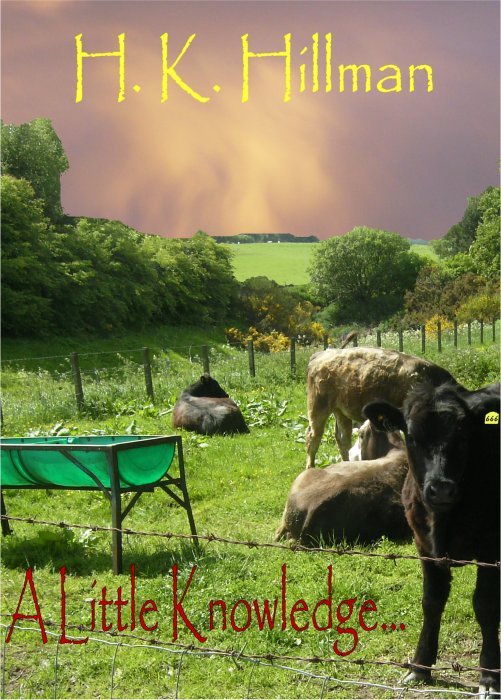
Review – “Room Service”, “Bernie’s Bargain” and “A Little Knowledge…” by H.K. Hillman

1

While sifting through Smashwords for some new gruesome fiction, I’d quickly bailed on a couple of amateurish pieces before stumbling across H.K. Hillman. I wasn’t familiar with this author, but as they were free, I downloaded the three short stories on offer and found some literate, vivid and rather entertaining old-school horror.Room Service begins with tongue-in-cheek licence notes, warning readers that the events of the story probably won’t happen to them. This sets an appropriately wry tone before we meet Bob – a jaded cemetery nightwatchman – and his colleague, trudging through their nocturnal routine. But in this necropolis, the coffins are fitted with emergency buzzers should anybody be accidentally buried alive, and one of them starts to go off. One that’s been buried for several weeks. Grisly goings on ensue of course, and it turns out to be an engaging ride that could’ve been an old episode of Tales from the Crypt. The dialogue is strong, despite being interrupted occasionally by excess description, and the tale has a likeable lead and a grim pay-off.It’s Halloween in Bernie’s Bargain, a shorter tale, and we’re introduced to an elderly gentlemen angered by a late night trick or treater. A skeletal figure wearing a black robe and wielding a scythe, no less. But the old fella isn’t the least bit impressed, and a genuinely amusing comversation ensues. This piece has an eye for detail and a clever biblical take on the legend of the grim reaper. It’s probably the lightest of these 3 tales with shades of Pratchett, and the conclusion delivers a wicked tweak. A Little Knowledge…  tells of Jimmy and Javier, two hardworking brothers who run a farm. But when Javier, the brains of the pair, introduces his brawny, poorly educated brother to the library and the joys of reading, we discover just how dangerous misunderstood or partial knowledge can be. Although I was jarred by a couple of clunky informative paragraphs, it rolls along nicely and becomes a solid meld of whimsy and hellfire.

Overall, H.K. Hillman’s fiction breathes with a sense of devilish fun and the dialogue gives it life. The characters are well realised, so there’s empathy to be had, though I noticed that the cast of these stories is exclusively male.

The author has a tendency to over-explain situations, and also to describe what has been inferred. But these tales are well paced with a sting in the tail, and none of the twists are predictable, nor those annoying stories that rely solely on their punchline.

Click the links above for the Smashwords freebies, and if you like, visit the author’s site here. He has a novel and a couple of collections for sale, and I’m rather tempted.