Review: “To See Too Much” by Mark West

0

I’ve recently read all of Mark West’s dark thrillers from The Book Folks, and was happy to discover that his latest novel “To See Too Much” is up there with the best of them.
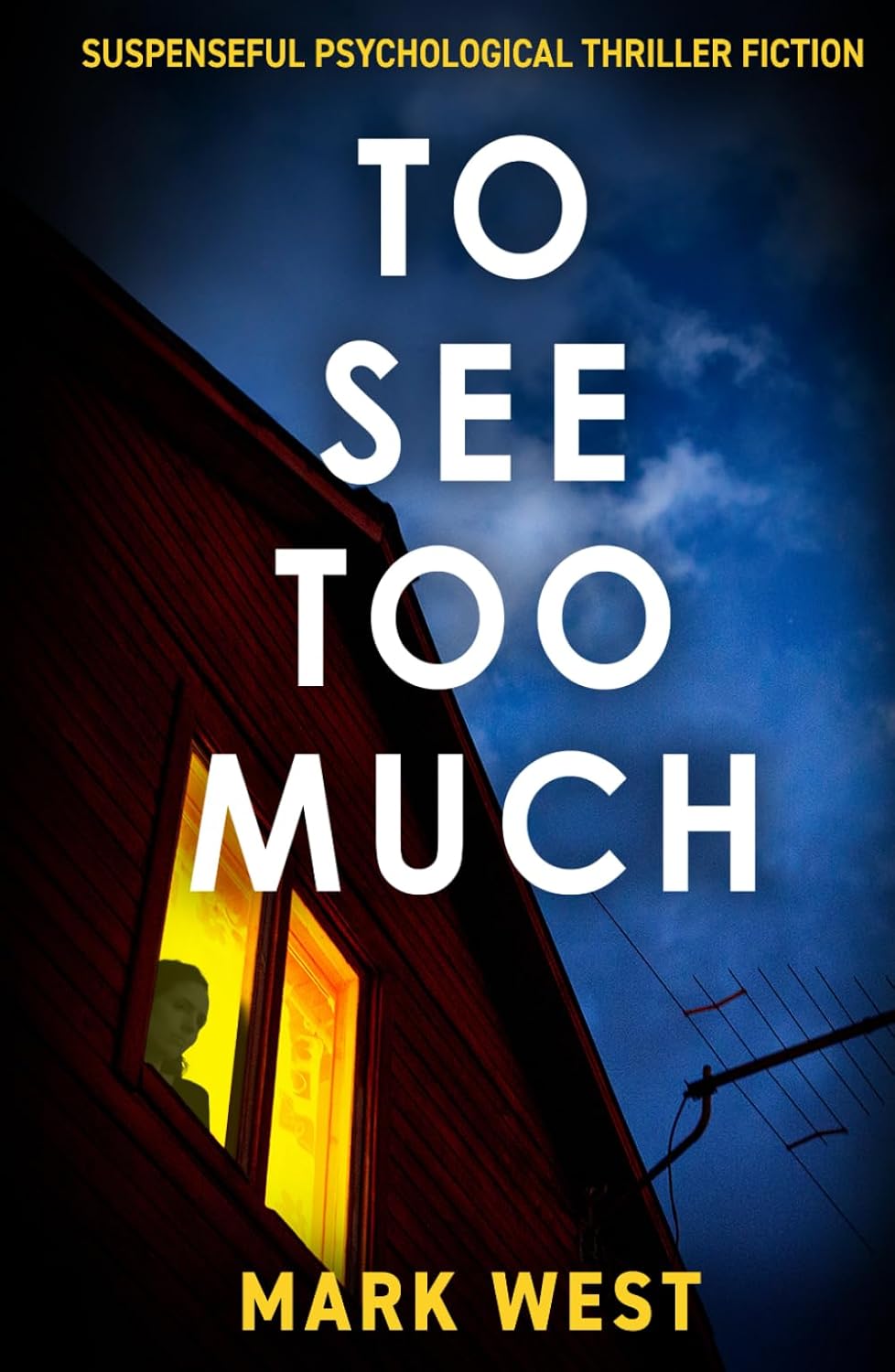

It’s narrated by Carrie: a social worker recovering from a heart attack. She heads to Miller’s Point – a small cluster of quaint cottages on the coast – to convalesce, planning a gentle time of sea air and walks on the beach, but the other residents turn out to be an intriguing and unsettling bunch.

She accidentally overhears a couple of heated exchanges, and somewhat bored and restless, becomes drawn into watching the lives of her temporary neighbours. Discovering broken marriages and professional scandals along the way, Carrie soon realises that Miller’s Point is full of tension and dark secrets. And some people are not happy with her watchful presence.

When a local woman goes missing and a corpse turns up on the beach nearby, Carrie realises that she’d be better off well away from all this, but feels bound to do the right thing and help some of the new acquaintances she has made.

Carrie is a great narrator: pleasant, strong and intelligent (like many of Mark West’s previous protagonists) so it’s easy to invest. Her social work background means she is an astute reader of the human condition, and also instinctive when it comes to perceiving threat. And she certainly sees plenty of that as we are carried along by her sharp curiosity and suspicions.

The author is a master of building menace and that is perfectly escalated here. The story begins with occasional and subtle moments of unease – the odd glance or awkward exchange – then slowly cranks the apprehension as unpleasant things start to happen.

The narrated prose is clean and effortless to read, dappled with lovely turns of phrase, and the dialogue always feels real. There’s a depth and fragility to the characters, and I love the way everyone has secrets and is a bit weird, broken or hard work in some way. Because, aren’t we all? The character dynamics and interactions are convincing and full of deft touches, which is a good job because “To See Too Much” is very much a character driven piece.

Miller’s Point is part of the traditional but faded British seaside resort of Seagrave: a fictional location of the author’s that has featured in several of his previous novels. Although I was pleased at the prospect of a revisit, it’s a little different this time. We don’t see much of the town, the tale concentrating upon the dysfunctional microcosm of Miller’s Point, and the book is all the better for this tight and somewhat claustrophobic focus.

There’s fun whodunitry to be had should you wish to try and deduce the real villains of the piece, and it all builds to a gripping, violent and satisfying finale that had me glued to the page as everything fell into place.

One of the many things I love about this author’s novels is that I can relax in the knowledge that I’m not going to be disappointed or feel cheated in any way. With touches of Rear Window, “To See Too Much” is a page-turner that requires no cheap shot fireworks to keep us hooked and I eagerly look forward to Mark West’s next work.
Mark West

The Book Folks

Review: “The Price of Piety” and “No Hook for a Hood” by DB Rook

0

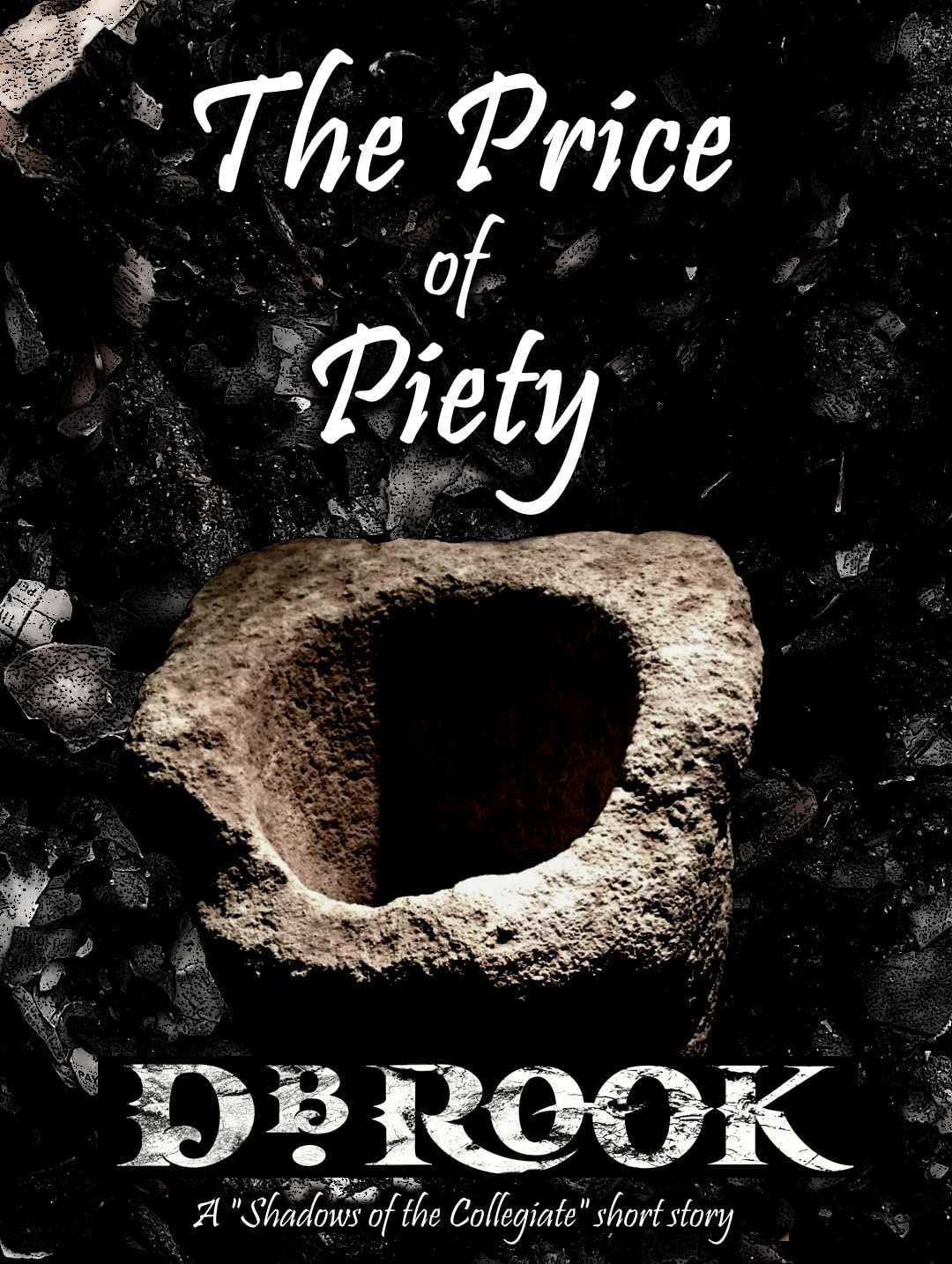
If you like fantasy of the gritty and grimdark variety, then these two short stories – the first from the author’s new Shadows of the Collegiate venture – should be right up your murky, cobbled alleyway.
Full of convincing characters, oozing atmosphere and violence, they are so exquisitely painted in DB Rook’s textured prose, I was hooked from the moment I started reading.

The setting is a fog-drenched town that is no stranger to crime, disease and public executions.
It lives under the shadow of the Collegiate, a mysterious entity described as a “timeless and foreboding seat of power” and the campus is a great place for any dark fantasy fiend to visit. A baroque and sinister institution, nestled beneath rain-lashed cliffs and only accessible via a creepy barge ride across an aquaduct, it has all the ancient stone, spooky ambience, and robed acolytes slinking through the damp that you could hope for.

In “The Price of Piety” we join a bunch of miscreants gathered in a rough tavern called the Dripping Bucket to plan a heist upon the Collegiate. Led by a behemoth of a man with a short temper, his wonderfully motley crew consists of a tough warrior, a silent elfin thief, a foul cutthroat and an ageing sorcerer.

The gang plan to steal a font of wealth and power from the dark catacombs of the Collegiate, but attempting to best the steampunk mechanics and supernatural guardians is no mean feat, and the heist doesn’t quite go to plan.

This story is thick with imagination and takes us to some immersive locations. Despite the murky vibes, I was bowled along by the crass camaraderie, drama, bickering, and occasional slapstick of the group. I particularly liked Kidd, the cutthroat: “His talents were few, but if you wanted a kitten ended, Kidd was your man.” He’s a vile character, but brings life and gallows humour to every scene he’s in.

This was a great introduction to the Shadows of the Collegiate world. It has surprises, skullduggery, and violence almost elegant in its ugliness, and the finale concludes it on a pleasingly wry note.

“Grawnden Tweed felt each decade scrabble up his spine as he tramped up the steps to the gallows.”

Thus begins “No Hook for a Hood” where we follow the grinding life of an axe-wielding executioner and professional maimer.
Jaded, addled by age, and very close to retirement, Grawnden Tweed lops off the heads, fingers and hands of the – usually juvenile – thieves of the plague-troubled town. Working under the jurisdiction of the High Justice of the Collegiate, he does his job with integrity, but is tormented by his deeds. Reminders are everywhere in the form of mutilated and homeless kids, and he is haunted by both his victims and the ghost of his disapproving mentor father.
The title neatly asks that when the hood comes off, can this damaged man escape the guilt and duty of his past?

After the drama of the heist, this is an introspective and much heavier piece, especially without the vulgar banter to buoy it. But it never becomes too much, achieving just the right level of bleak for enjoyment.

I savoured both of these stories. They aren’t just pure escapism; strong feelings and relatable moments abound, despite the fantasy setting. The author conjures a palpable sense of menace and decay, where everyone and everything is past its best, and even the weather seems malevolent.
“Light rain floated downward to settle on the square’s cobbles, leaving a slick sheen of underfoot treachery.”

Speaking of which, I enjoy DB Rook’s rich and somewhat literary style. Of course I like an “invisible” storyteller as much as the next reader, but I’m also a fan of fiction such as this where the sumptuous prose and clear love of language rises to the fore and brings a whole new level of enjoyment. It suits the ghastly mood, and brings the characters to life with panache.

“His bones attempted to pierce his skin at every angle and his dry white beard was likely to catch fire should he stand within a foot of reflected sunlight”.

As well as being so finely painted, the nefarious or broken characters we meet are nuanced and fully rounded, slipping seamlessly into the besmirched sense of place that the author has crafted.

If all this sounds like your grimdark thing, definitely give these Shadows of the Collegiate stories a read. Both tales drew me in with their intriguing glimpses of the town and its denizens. This is world-building perfectly done, and I very much look forward to finding out what troubled, dangerous folk and grisly nooks of the Collegiate’s dominion we will be treated to next.

Available from DB Rook’s Kindle store (Amazon or Amazon UK)
Visit the author’s site here.

Review: “We Were Seen” by Mark West

2

It’s been a few years since I read a Mark West story, and this novel from The Book Folks made me glad that I’d decided to revisit and also wonder why I’d left it so long.

“We Were Seen” is narrated by Kim Morgan, a lecturer and councillor in the fictional English coastal town of Seagrave. As the story begins, we find her attending a public meeting to protest the development of a golf course and hotel that will steamroll some local marshland. A fight breaks out, and after she is rescued from the violence by a young man, the pair enjoy a spontaneous one night stand. But it transpires that he’s a student at the college where she teaches and someone has taken photographs of their encounter, soon beginning an upsetting campaign of blackmail.

After the excitement of the opening chapters, in which Kim and her protector escape the meeting and are pursued by thugs, the pace cools to an atmosphere of building tension. Despite the stress of being blackmailed, Kim attempts to go about her normal daily life. But as the days go by, she is stalked by an intimidating and obnoxious man, and worries about who she can trust.

Kim assumes, quite reasonably, that her blackmailer is something to do with the proposed golf course she opposes, but the threatening letters that keep dropping on her doormat don’t seem to demand anything specific and serve only to unsettle. Then a dead body turns up on the beach, and the mystery – and the fear – really starts to escalate.

This is a slick and addictive novel. Kim is investable in her normality – a likeable and self-aware everywoman – and the way she is torn between rationality and paranoia is convincing. I love the way the unease is slowly stoked, and Kim starts to see menace in even the most benign locations of sunny Seagrave’s promenades, streets and bars. The small town vibes become very oppressive as the book progresses, especially as further disquieting mysteries are trickled into the mix.

Although a modern psychological thriller, “We Were Seen” has fun shades of a traditional whodunit. Just like our unfortunate protagonist, we suspect that the blackmailer is someone she knows – or has at least met – and there are a great cast of well-written players to choose from.
As well as the obviously nefarious characters such as Glover – the unethical tycoon wanting to build the golf course – and the creep stalking her, we wonder who else might be involved. Her social circle includes several lecturers and staff at the college, her grandfather and his photographer protégé, as well as other councillors, locals, and friends from the golf course protest group. They’re all fully-rounded, but often just enigmatic enough so that we can’t completely eliminate them from suspicion.
This is what I enjoyed. Kim’s paranoia, even though perfectly justified, is infectious. As readers, we start to be wary of everything and everyone; the sinister in the mundane is a great tool and perfectly applied here.

This novel is easy to read with lucid prose and a well-gauged pace, and very compulsive; I found it very easy to lose myself to just one more chapter. This is all the more impressive in that its page-turning quality doesn’t need to come from chapter cliffhangers or sudden jeopardy. It instills a desire to read on purely from the mounting insidious tone.

After this ratcheting of baleful atmosphere throughout the book, the finale is breathtaking and dark. The last few chapters are grim, exciting and genuinely unputdownable. I was gripped, hunched over the page and unblinking as the real world faded to irrelevance around me, which is not something that happens very often.

“We Were Seen” left me satisfied – as everything falls neatly into place – and also in need of a breather from the twist and reveal. It’s also credit to Mark West’s mastery of the writing craft that I was left with the feeling I’d actually been to Seagrave and met all these people, thanks to his knack for characterisation and creating a palpable sense of place.

It definitely won’t be as long as last time before I read another of his books. In fact, his list of thriller novels on The Book Folks site is calling out to me right now. If this review has piqued your interest, you could certainly do a lot worse than visiting it yourself.

Mark West

The Book Folks