Review – Tales From The Smoking Room, edited by Benedict J Jones and VC Jones

4

This anthology from Hand of Danjou press is exactly what the title suggests: a collection of macabre and startling stories from the brandy and cigar-smoke ambience of a Victorian-era gentlemen’s club.

It contains 7 tales, most of which are 1st person and favour an appropriately traditional style of storytelling, often finding the narrator lounging in a leather armchair of the smoking room, the witching hour upon him…

Tales from the smoking room

The opening tale is Stephen Bacon’s “The Strangled Garden”. This features a country garden walled-off after the unexplained disappearance of a child, grown into an impenetrable tangle of vines and lurking darkness. The baleful atmosphere and period language are faultless – the work of a very meticulous writer – and the inevitable adventure into the garden builds to a classic finale.

“Room Three” by Matthew Crossman is a very dark, downbeat story of madness and a family curse, and also contains the single most creepy and disturbing line of dialogue in this anthology. I may have actually shuddered.

Matthew Harding uses a tried and tested trope with “Iron Ape”: the discovery of a scientific artefact that goes hideously awry. But it’s an intelligent story, evocatively told, and the mechanical monstrosity of the title has a palpable presence of violent power even before the threat is actually unleashed.

“The Decent Thing” by V.C. Jones is a single-page flash piece that leads nicely into “Parlour Games” by Mike Chinn. Here, a sinister Russian brings the after-dinner entertainment to a smoking room familiar with illusion and grand-guignol, but not quite expecting the terrors that will arrive when the clock chimes midnight.

The second flash piece is “Serendipity” by Trudi Topham, a gruesome but light-hearted Vault of Horror style story of graverobbery and reanimation. Finally, the proceedings are closed with”A Game of Billiards” by Craig Herbertson. This is an engaging and neat finale regarding a colonial-era love-squabble that concludes with brutal retribution.

While the quality of the stories is good, “Tales from the Smoking Room” is clearly published from a home printer and would’ve been improved by keener editing. There are several errors and the font is strangely peppered with gaps and too small for A4, but for £2 (Yes, that’s £2) it’s tremendous value for money. Light your cigar, have the butler pour you a large glass of port, and enjoy.
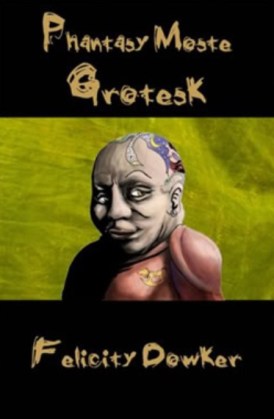
Review – “Phantasy Moste Grotesk” by Felicity Dowker

0

Maybe it’s because I’m British, but recently so many great stories have fallen into my lap that I’ve had nothing to moan about, and I’ve kinda missed it.groteskI thought the opportunity might come with this little chapbook from Corpulent Insanity Press, purchased on a whim simply because I liked the title and cover. But it wasn’t to be.

Phantasy Moste Grotesk is an exceptional novella, a colourful and emotive horror tale that rubs its hands gleefully whenever you pull a face in distaste.

It follows the tale of Josh, whose evening with a takeaway pizza and a book is upset by the arrival of a ghastly, black-eyed kid at his front door. Along with his troubled ex-girlfiriend, he visits a circus tent that has mysteriously sprung up in a nearby playing field: a sinister carnival that promises monsters moste grotesk and phantastique.

That we certainly get. The tale is a claustrophobic descent, just as notable for the emotional destruction that ensues as well as the twisted attractions within the big top’s yellow canvas walls. I think the carnival theme can be precarious ground for horror and dark fantasy writers. There’s a danger of unoriginality and cliché, and because the opportunity is there to really let the imagination go, there’s a risk of exposing oneself as not being able to pull the punches when the golden chance has presented itself.

Felicity Dowker’s story avoids these pitfalls with a sneer. There’s some vividly sick images that cling in the memory (the ferris wheel is stunning), but more important is the way some of the horrors entwine with the characters and the deeply personal anguish of their plight. This chapbook seems to give an actual taste of madness, not just somebody’s guess as to what it might be like.

I’ve no complaints. It begins with a wheel-spin, slows to let you get your breath back, then slowly accelerates, faster and faster until by the climax, you’re clinging to the pages, appalled and intrigued in equal measures.

If you’ve missed out, then keep your eye out for Felicity Dowker. I hope, actually I’m sure, that we’ll be seeing a lot more of her deliciously sour prose in the future.

Review – “The Golem” by Edward Lee

0

I picked up this book hoping for some gory, supernatural fun, and that I certainly found, but a lot more besides.

It follows the story of Seth and Judy, a middle aged couple fresh out of rehab and escaping the darkness of their pasts by relocating to an old farmhouse on the quiet Maryland coast.GolemBut their peace is short-lived thanks to corrupt cops, drug dealers, and a local Jewish history of occult slaughter that appears to involve the reanimation of corpses into terrifying, murderous rape-machines of lore known as Golems.
The book switches between the present and the 1880s, nicely filling in the history and origins of the troubled town as we go along. While the first half is more gently paced, with enough intrigue and interesting characters – both pleasant and vile – to keep the interest from waning, the second half suddenly explodes. After that, the novel doesn’t pause for breath as everybody is sucked down into gruesome nightmare, and the conclusion is unexpected and wonderfully dark.

The Golem has plenty of Lee trademarks. I expected bodies to be torn asunder, swathes of blood, skulls, imaginative violence and nasty behaviour, and wasn’t disappointed. This is Ed Lee after all.  But despite all the supernatural brutality, it was Judy’s achingly human story that kept me glued to the pages. Despite the horrors that surround her, she has to battle personal demons and is trapped in a descent that is convincing and tragically inevitable.

There’s a few typos on the editing side, but other than that, it’s a very accomplished novel from a master of no-holds-barred fiction. Genre fans will devour it.

Review – Black Static #10

1

As ever, this excellent magazine from TTA press is the product of keen editorial eyes.Static 10The selection of book/film reviews and genre articles are tight and informed. Amongst other things, Christopher Fowler talks about B-movies, Stephen Volk discusses Amicus films and the state of modern horror, and there’s a Q&A with Thomas Ligotti. Oh, and congratulations to Allyson Bird for a positive review of her brilliant collection “Bull Running For Girls”

The fiction selected for Black Static is always impressive. Christopher Fowler starts with a jazz-infused tale of voodoo set in post-katrina New Orleans. The traditional tropes of such a story are given such colour that they  intrude from the page in a blaze of seamless storytelling.

“The Chair” by Gary McMahon is a short, open-ended tale about a troubled young boy, his disturbed mother and missing father. It bears all the trademarks of the author’s work I have grown to love; a bleak atmosphere, pathos and prose to savour.

“Washer Woman” by Scott Lambridis is a vivid tale of war in which a miserable group of soldiers encounter a village peasant woman who appears to be some kind of assistant of death. The sense of place is impressive and ultimately rather depressing, but it rescued me from losing any sense of enjoyment by the traditional supernatural.

Maura McHugh’s “Vic” concerns a sickly young boy confined to his room and the nightmares that normalcy might conceal. The tragic humanity and immediate empathy makes the tale strong, something that most of Black Static’s stories achieve.

“Beacuse Your Blood Is Darker Than Mine” by James Cooper is a very dark ride, so vivid is the POV of a young girl we follow through a traumatic series of events populated by the chilling, almost carnivalesque members of her family.

The  last story, “Eastlick” by Shannon Page, finishes the fiction very nicely: an adolescent coming of age story with a sting in the tail.

The writing is slick and faultless throughout, and while the stories may be less concrete and conclusive than some tastes may prefer, they have sharp narrative voice, genuine feeling and a nightmarish quality that is seldom captured so well.

Recommended.

Review – “The Culled” by Simon Spurrier

0

My wife bought this Afterblight book from Abaddon Books in a recent apocalyptic-fiction phase of which I wholeheartedly approve. I rattled through it, and it’s definitely one of those addictive stories where you anticipate the next chance to pick it up and dig in.CulledIt’s five years since most of the world’s population has been decimated and we find a new social order in the hands of a sinister cult called the Clergy. Our enigmatic protagonist (and narrator) takes us on a brutal adventure through the shanties and clans of New York. He isn’t an entirely pleasant creature, and deliberately so, and proves to be increasingly fascinating the more we learn.

The characters present all our traits, from the reassuring to the heinous, giving the book an extraordinary sense of humanity; the triumphs and the flaws. This makes the extreme violence all the more shocking, yet at the same time, sometimes understandable.

It’s a very colourful tale that manages to be a homage to the familiar (there’s plenty for fans of  Mad Max and Escape from New York here) while also treading fresh, unexplored ground. The pace is relentless and it’s all tied up nicely at the end in a manner that should be irritatingly contrived, but instead just cements a solid story.

This novel has certainly thrust Abaddon books to the forefront of my attention. If you’re not a fan of the tribal, post-apocalyptic futures, you’ll probably think it’s good. If you are, you’ll love it.

Review – “Hawg” by Steven Shrewsbury

0

“Hawg is one wild ride…” begins Bryan Smith’s blurb on the cover, and if I had to sum up this novel in five words, they’d be what I’d choose.

In the rural community of Miller’s Fork, a feral tusked beast is on the rampage, raping and slaughtering his way across the countryside.HAWGThe cast of characters includes a gang of tough bikers, a bewildered police force, some tenacious kids and a farmer who likes his religion dipped in fire and brimstone.
These folks come across as very real, producing some great dialogue and often also a sense of fun. The occasional grin-inducing, theatrical lines of dialogue are self-aware and saved for just the right moment.

But it’s not all smiles.  There’s extreme violence, an impressive body count and one scene in which a pair of kids are trapped and terrorised by the terrifying Hawg had me holding my breath. The gore is in-yer-face, but pleasingly not at the expense of story.

I have a couple of negatives. In the first half of the book, I had to flick back a couple of times to keep up with who was whom. The second gripe was a Hawg chase through a printworks. It was a blast at first –  a joyous slab of carnage –  but went on for just a couple of pages too long and  I was getting bored by the time it finished, which was a shame.

But overall, this book is bang on. There’s some visceral ideas, nods to the genre and a strong sense of place. In fact, the pace and vision of Hawg would translate perfectly into a movie. The film-makers would need a stout cast, a talented director and truckloads of fake blood and offal to do it justice.

You know you want to. Hawg needs to play.

Graveside Tales

Steven Shrewsbury

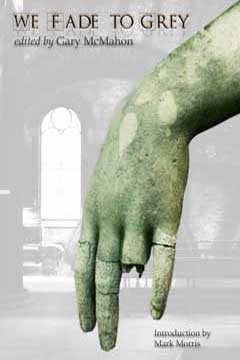
Review – We Fade To Grey, edited by Gary McMahon

4

This anthology of British supernatural horror novelettes from Pendragon Press proves there are some small press publications out there that can go toe-to-toe with the heavyweights of the genre. All 5 stories are beautifully written and slick as a fresh werewolf pelt, yet their shadows envelope you in different ways.We fade to grey

Paul Finch kicks off the grim proceedings with “The Pumping Station”. This features a trio of young quad-bikers who experience a countryside accident leaving them at the mercy of an unspeakable menace. This story is so vividly evoked that you will feel the rain on your face, the cold mud and hot blood against your skin. The arrival of the aforementioned menace actually sent a shiver down my spine, something that hasn’t happened for some time, and I salute this tale of creeping doom.

While the Pumping Station was an exercise in escalating terror, the strength of Stuart Young’s “Bliss” begins with humour and camaraderie amongst its characters in an uncomfortable atmosphere. We find a young Iraq war veteran, back home and attending his murdered father’s funeral. After the locals start turning nasty, he is drawn deeper into trouble with his brother until the whole situation resembles an ultra-violent, X-rated episode of Doctor Who. Although I detected a Lovecraftian vibe at the end, this is probably the least “horror” of the bunch. But it’s also the most fun.

“Heads”, written by the anthology’s editor, proves Gary McMahon is a writer to watch. It’s back to the full blown horror as we meet the narrator, one half of a middle-aged couple, devastated by several miscarriages in their attempt to start a family. After they discover some creepy folklore artefacts buried in the garden, an unexpected pregnancy arrives and the tale accelerates into nightmare. McMahon’s prose is a rare treat. His attention to detail in human interaction creates characters you can see and feel, and the couple’s grief and fear is quite palpable.  This makes for a very intense descent.

“The Mill” by Mark West is next to rumble out of the darkness. A man who has lost his wife to cancer suffers strange dreams and discovers through a bereavement support group that he is being drawn towards something sinister. Something centred around an old abandoned mill. Dealing with grief, suicide and desperation, this one grabs your heart-strings and twists. Extra kudos to the author for being able to write dream sequences that aren’t dull.

The last tale by Simon Bestwick is a grim slab of post-apocalypse. “The Narrows” is told by a teacher attempting to save himself and a few surviving pupils and fellow staff from a nuclear fall-out. Their journey through a network of flooded subterranean tunnels is intolerably bleak and will remain in your head for good. Breath-squeezingly claustrophobic yet at the same time very poignant and moving, this isn’t one to read to your kids. Or to anyone afraid of the dark. Or scared of the supernatural. Or a nuclear holocaust. Well, anybody in fact. Other than the ne’er-do-wells who actually like  this kind of thing. Like me.

So there it is. We Fade To Grey sets the bar high from the off and doesn’t pause for breath. I normally only like the supernatural in small doses, but this imaginative collection packs such a wallop – both emotional and visceral – that I didn’t care one bit. All five authors weave genuine human pathos with blood and don’t then go and spoil everything with a happy ending. Brilliant. Grab one while you can.

Order here from Pendragon Press

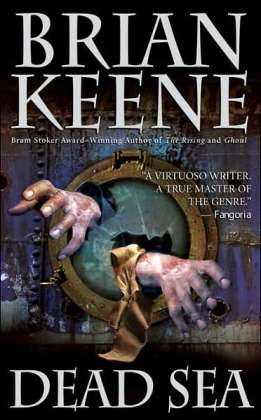
Review – “Dead Sea” by Brian Keene

1

I wasn’t expecting Dead Sea to deliver as much as it did.

It begins with a pretty standard outbreak and action, but as Keene is a practiced veteran of the genre, it’s well written enough to hold the attention.Dead SeaThe troubled narrator, Lamar Reed, is an engaging and slightly enigmatic lead as he escapes the fires and undead of a swiftly apocalyptic Baltimore, ending up on a coastguard cutter with a bunch of other survivors. As they search the seas for possible sanctuary, things start to get really interesting and the second half of the book is a real page turner.
There are a standard characters in the group – the asshole cop with attitude, the tenacious kids – but fortunately this doesn’t harm enjoyment as it may have in the hands of a lesser talent, and they develop nicely with plenty of surprises along the way.

There’s enough of blood and violence to satisfy the sinew-thirsty gorehounds and when the crew dock at a rescue station for supplies, we get an imaginative, sickening treat that I wouldn’t dream of spoiling.

Although the science of the zombie disease is pretty generic (with the bonus of cross-species), the conversion of the infected is very dark, and one scene describing a confused crewman’s fall to the sickness is genuinely haunting. There’s also a couple of incidents when you realise what’s brewing before the protagonists, and it’s fun waiting for the shit to hit the fan as they carry on oblivious.

The book only stalls briefly with the sudden introduction of 20 or so characters as the narrator boards the ship. For the subsequent few chapters, I had to keep flicking back to their initial meeting to remind myself of who was whom, something to be expected in a sprawling space opera, but not usually the case in a Lesiure 300 page horror thriller.

But this is my only complaint and I read it in 2 sittings. After “City of the Dead”, Keene’s 2nd zombie novel, I thought I’d had my fill of his undead, but now I’d happily read another. Right now in fact.

Brian Keene

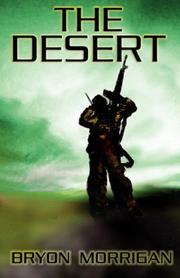
Review – “The Desert” by Bryon Morrigon

0

I wasn’t expecting to enjoy this recent offering from Darkhart Press. The military drama angle of US soldiers going missing and fighting an “unspeakable menace” in Iraq didn’t sound desperately original or my cup of tea. But I gave it a go and was pleased that I did.Desert

It starts with a pair of soldiers in remotest Iraq who discover the journal of a man from a long-vanished platoon. His journal describes an almost deserted village in which the platoon became trapped. People died, creepy goings-on ensued, and the journal ends.

Shortly after, the pair of soldiers find the village and by this point I was hooked. Tightly plotted and fast paced, this book grabbed my hand and ran without giving me any choice in the matter. The action and chase sequences are handled with aplomb and I think I might have actually held my breath a couple of times.

There are some faults. While the early journal section sets the mood, it doesn’t read like a journal but more like a novel, which dulls the realistic effect. Some of the characters are slightly stock and I also sometimes found the author over-descriptive. There is also a very jarring scene in which while running for their lives, one soldier manages to regale his companion with complex information about how their terrible situation came about. While this dialogue is clearly to inform the reader, it didn’t ring true in that situation.

But never mind all that. Although somewhat obvious, the characters are strong to a man. The atmosphere of the desert is perfect and the tension is palpable throughout. It also managed to make me afraid of the supernatural. I like spooky, but it’s usually just fun. This author has a talent for even the most imaginative of beasties to kick down your reality filters.

It’s a ride and I’ll happily read Mr Morrigon’s work in future.

Bryon Morrigan