I first encountered Mia Dalia’s writing with “Metal Bones” in the excellent Heavy Metal Nightmares anthology from Phobica Books. It stood out as a well-written and engrossing short with a sobering finale, and I was also impressed at how the musical concept pervaded the whole vibe of the story.
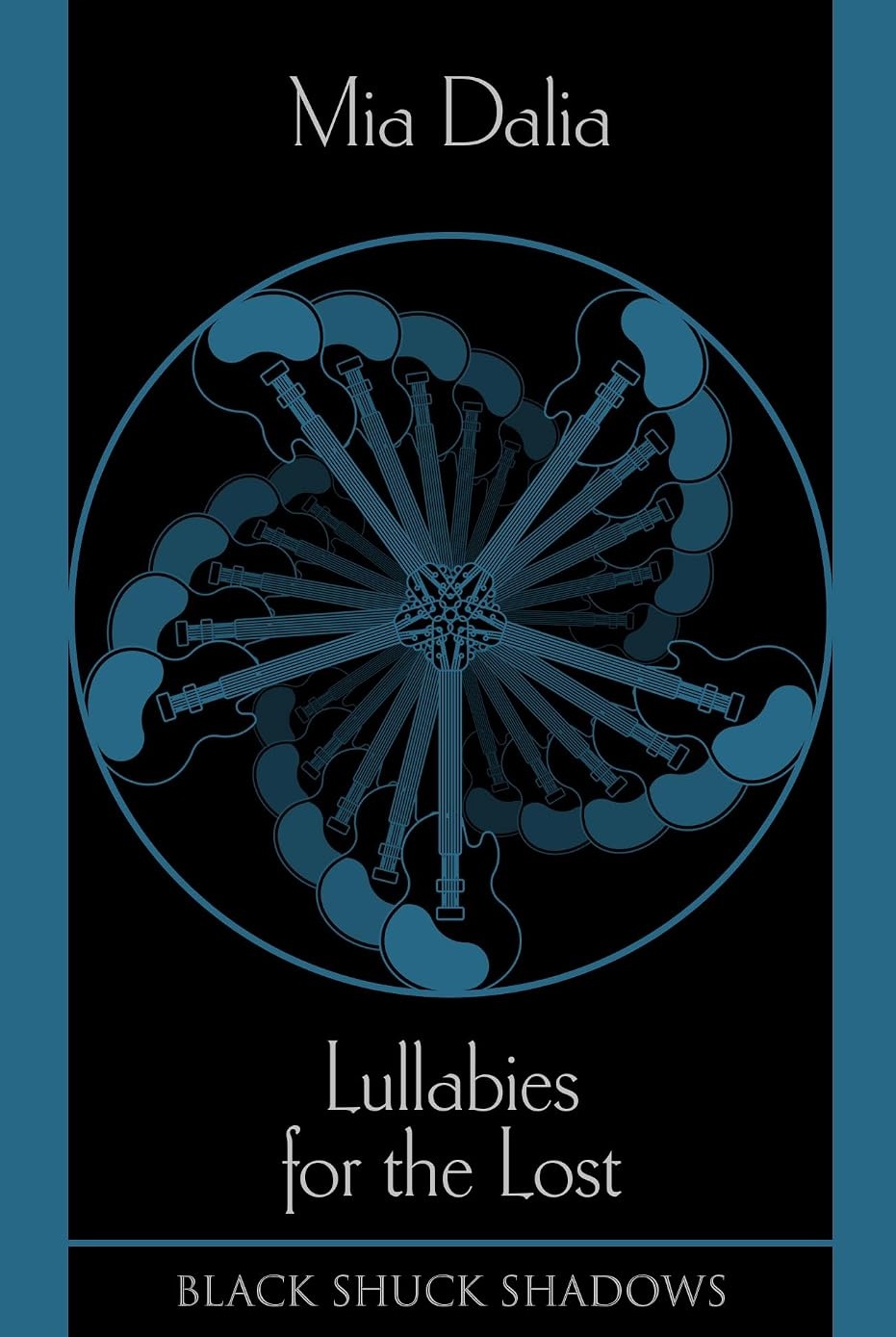
I was pleased to discover that Lullabies for the Lost – an attractive themed collection from Black Shuck Books – offers more of that same dark musical energy.
First on the playlist is the aforementioned “Metal Bones”. Here we find Rex, a member of a metal band called Cerberus who decide to build a catacomb-styled ossuary of real human bones in order to create an authentic ambience to record their demo. They plunder graveyards for the skeletons with which to construct it, but their unethical actions aren’t without consequence, and as the story builds, we know full well that something bad is going to happen. We just don’t know what.
A compulsive read, I particularly loved how the brutal yet emotively elegiac climax took me by surprise.
The second piece is “Blues for the Soul” in which we meet a troubled widow named Martha. Childless and lonely, she has quit her job and rarely goes out, other than to read to young children in the local library. But one kid at the library, Darren, is a spooky and cruel misfit who is forever getting into unpleasant trouble, and Martha is concerned of what he might truly be capable. Out of curiosity, she sneakily follows him to their trailer park home and meets his mother: a talented blues singer doing the dive bar circuit.
The characterisation and sense of place of this tale is solid, assisted by a heady atmosphere and some great turns of phrase.
“This was the kind of place people who did evil things came for fuel. It was in the smoke-choked air, thick enough to taste.”
There is a sense of escalating doom, and it concludes on a slightly open note after a gruesome and visually arresting scene. Although the “devil child” trope has been done countless times, it’s exquisitely arranged here, just like much of the music it describes.
Next up is “The Devil’s Chord”, narrated by a man on a trip with some horror fan friends to an abandoned house where – according to a local horror book – something evil dwells. But he’s bothered by an earworm that he’s picked up from a cassette of music using the “Devil’s Chord”; a discordant musical technique that creates a tense atmosphere and has caused much religious consternation throughout history.
I found the actual story here somewhat light, but it’s an easy read and full of well-drawn characters for a work of this length. I also appreciated the music theory that the author discusses regarding the Devil’s Chord, explaining it succinctly without bogging anything down.
The final short story is “B Minor”. This is told by a jaded man whose musician brother is in prison following a violent post-gig incident where he met their long-lost mother.
This is the shortest piece in the book and has the feel of a vignette, but still manages pathos; a character-driven page-turner in the Mia Dalia tradition.
It’s always pleasing when the final tale in any collection or anthology ends things on a high, and the Faustian novella “Discordant” certainly delivers.
It concerns young rocker Jax, who has accidentally become a father. He has to leave his band and abandon the classic rock and roll lifestyle to pay maintenance for his new baby – with whom he feels absolutely no bond – and so gets a job working as a janitor at a retirement home.
“People came here to die. It seemed oddly appropriate – or maybe ironic, Jax was never sure on the proper use of irony – that this was the place his dreams came to die too.”
He meets an elderly tattooed man who owns the same guitar as one of Jax’s musical heroes, and it is here that the Faustian elements of the story come in to play. Selling your soul to the devil for rock and roll success is far from a new idea, but the concept is explored thoughtfully, and it builds towards a sharp moment of horrible realisation on the part of the reader.
“Discordant” combines an intriguing story with characterisation, place, and – despite a certain familiarity with the concept – a satisfying conclusion.
I enjoyed Lullabies for the Lost. The tales are easy to pick up and full of elegantly phrased storytelling that has a literary feel without ever losing its feet on the ground. The author also has a knack for powerful and very dark endings; definitely my favourite kind!
But I think the real triumph here is characterisation. There is not a 2-dimensional cliché to be found, even in the shorter pieces where you might be inclined to forgive sparse development; minor, briefly-appearing players are still tangible and fully painted. Even if the concept of a tale is a little samey, we are still drawn in by the human angle and get to savour the ride. This is never more apparent than with the more flawed protagonists, such as swaggering Rex from “Metal Bones” and selfish dad Jax from “Discordant”. They never alienate us enough to stop us investing in the tale. They’re layered and balanced with normality which allows us to tolerate their shortcomings to some degree, if not excuse them.
It’s a fine line, but the author treads it perfectly.
Mia Dalia clearly has true passion for art, wordcraft and music. If you have too, and your tastes lean towards the dark, then this book is a great way to spend a couple of hours.

