Review – “The Sixth Black Book of Horror” edited by Charles Black

2

Edited as always by Charles Black, Volume Six is the latest in this series from Mortbury Press. As a new reader, I was led to believe that these anthologies were old-school in the tradition of the wonderful Pan Books of Horror. That is certainly true. There are twists and knowing winks. There are ancient churches, derelict houses, creepy old shops, sprawling countrysides, and several of these tales feature a funeral. But the tropes are just the garnish, and the stories themselves pack a real contemporary punch.

Black 6

There are 15 tales hustling for your attention beneath the frosty cleavage on the cover, and I’ll briefly mention a handful that through their brilliance, refuse to get out of my head.

The opener – “Six of the Best” by John Llewellyn Probert – is a grisly treat. It centres around a bunch of sly characters filming a Most Haunted style television documentary about ghosts that were murdered in especially horrific ways. The writing is bacon-slicer sharp, there’s satire and black humour by the truckload, and a devilish twist that made me grin – but thankfully not groan.

“Traffic Stream” by Simon Kurt Unsworth concerns the plight of a driver who gets lost on his way to a meeting, and begins to encounter sinister and progressively dangerous traffic. It’s a gripping tale, the ordeal expertly conveyed through a series of increasingly manic phonecalls received by the person who awaits him.

I particularly enjoyed “The Doom” by Paul Finch. This features a young priest whose rustic church reveals a secret: behind a crumbling wall lies an ancient piece of hellish, ecclesiastical art depicting the 7 deadly sins. The priest meets a curious visitor who seems fascinated with the work, before confessing the terrible reasons for his interest. Despite the classic horror setting, this is a contemporary story – delivering the best of both worlds – and offers thought-provoking themes regarding sin, moral choice and consequence. And it certainly has the most powerful and desperately helpless conclusion of all the stories in this book.

“Gnomes” by Mick Lewis is a blast. We follow a couple who take some magic mushrooms and decide on a trip to the cinema, an adventure soured by an escalating paranoia towards garden gnomes. A hallucinogenic experience is difficult to write without sounding fake, or simply boring the reader to tears, but the author dodges this pitfall, and “Gnomes” grabs the interest and doesn’t let go. It offers welcome moments of humour, but like a genuine bad trip, the advancing darkness will not be stopped. Eventually, like the protagonists, you will be questioning what’s real in this engaging mix of uneasy chuckles and malevolence.

For me, another peak is “Bagpuss” by Anna Taborska. Definitely the most sobering story on offer, we find Emily, a lonely, anxious girl who moves to the countryside with her single mom and beloved cat. The POVs of the protective girl and little Bagpuss himself are beautifully rendered, as is the weary heart of her neurotic mother. This is a distressing tale, with some incredibly poignant and fragile scenes. There is no humour to temper the tone, so I suppose it depends on the reader’s tolerance of mood as to whether they will derive enjoyment from it.

I’ll also offer a quick thumbs-up to Craig Herbertson for his “Spanish Suite.” Involving a confectionary salesman, a Spanish village funeral and a corpse, the sick finale made me guffaw on public transport and startle the lady in the next seat.

There are certainly no undeserving stories – all are written to a professional standard – but there are times when the quality dips slightly. Although well told and ultimately harmless enough, Alex Langley’s “The Red Stone” – regarding a rural slab of rock that has been the scene of many an atrocity – seemed almost too old-school with its textbook twist. There’s a similar problem with “The Switch” by David Williamson, a thrilling tale of a prison escapee whose luck takes a turn for the worse. It’s enjoyable, but the mechanism is rather worn. This anthology also doesn’t quite end on the high that it deserved. The final story, “Keeping Your Mouth Shut”  by Mark Samuels, featuring a stuggling writer turned scream-queen stalker, seemed to lack a coherent focus. While entertained, I was gently confused.

But these complaints are minor. This is an unapologetic tome of horror – both spooky and lurid – with an unusually high level of writing. And while there is much to fondly compare with the Pan books of the 60s, 70s and 80s, that isn’t to cheapen what else has been achieved here. The 6th Black Book of Horror isn’t merely a derivative homage, it’s a fresh, colourful anthology for the cliche-wary audience of now.

Recommended.

Review – Nemonymous #10: Null Immortalis edited by DF Lewis

4

“Short Fiction by Various Authors” reads the pleasingly simple cover. This book has the air of something that is comfortable with its quality, and doesn’t need a corny byline to carnival-bark you into purchasing.

Null Immortalis contains 26 stories presented by steadfast editor D.F. Lewis. It is volume ten of the quietly intelligent Nemonymous series; anthologies of weird fiction in which the listed authors are not assigned to the stories until the subsequent instalment. As this is sadly the swansong of the series, the mystery is no more and the authors are credited in the traditional fashion.Null

The loose theme is simply the cover photograph and title, to be interpreted in whatever way the authors saw fit. The submission guidelines also required a character named Tullis, or Scott Tullis: the winner of a previous Nemonymous competetion to be immortalised in this way.

But on to the actual content. The first thing to say is that there are no weak links. All are thoughtful, precisely composed pieces – these authors take pride in their work, as does the editor – but I will mention a few that particularly appealed.

“Lucien’s Menagerie” by David M. Fitzpatrick certainly stood out for me. One of the longer works, this is a taut ride of impending doom. In order to inherit her cruel ex-husband’s house, a woman has to spend a night there with several creepy exhibits and memories of her miserable past. It’s genuinely unsettling and I love the way it keeps us guessing as to whether the events are supernatural or trickery.

In “Love is the Drug” by Andrew Hook, the title is quite literal. Told via a futuristic interrogation, this is off-kilter SF about the nature of love and conflict, and one of those sharp stories that leaves a chill and draws you back for a second curious peek.

Mike Chinn’s “A Matter of Degree” is one of the more simplistic tales in which a disgruntled employee attempts to human spider across a dangerous bridge. A compelling read, it neatly ties in the theme of the anthology.

“Only Enuma Elish” by Richard Gavin finds a reclusive man whose life changes course when an elderly neighbour draws him into a world of arcane knowledge. It’s immediately engaging and the magic sits comfortably with themes of self, inevitability and our place in the world.

Joel Lane’s “The Drowned Market” is a short tale about a damaged writer. Before you groan, it rises from the swamp of this particular cliché with a haunting and original finale. Conclusions are definitely a strength of this anthology. Other examples include “Holesale” by Rachel Kendall – which concerns an ex-con market trader who sells miniature black holes – and “FIRE” by Roy Gray: the ruminations of a man facing execution by firing squad. I finished both with a wry smile of admiration.

Another peak is “The Toymaker of Bremen” by Stephen Bacon. In this polished work, a boy loses his parents on a trip, and is strangely adopted by a rural family and their house of toys and creepy artefacts. The 8-year old’s innocence regarding the sinister descent makes for a powerful read and I didn’t want it to finish.

Speaking of point of view, “The Green Dog” by Steve Rasnic Tem is an exquisitely told piece about the eponymous dog, its ageing master and a ghostly mirror. It’s a reflective and poignant journey, and the 3rd-person perspective of the dog is a joy.

Special mention also goes to a couple of stories that capture the essence of Nemonymous. The concept of D.P. Watt’s “Apotheosis” involves a mysterious collective of writers of which the protagonist is, or a least yearns to be, a member. Also, “Haven’t you Ever Wondered?” by Bob Lock stars our uncredited editor, DF Lewis. It’s a referential and dark story that draws together the previous anthologies; a tasty gift for the series faithful.

I would recommend this book to anybody who enjoys an anthology to savour. The subtleties, the synchronicity, the love of language. It cares not for genre, other than the general blanket of weird fiction, and blends imagination with startling humanity. The stories are ordered so that themes sometimes leak from one to the next, but best of all, they credit the reader with intelligence. There is no unecessary explanation of thread or coincidence. Null Immortalis is a respectful equal, not a weary teacher.

Review “I Was Probed By Aliens And Lived To Tell The Tale!” by Barry J. House

0

I hadn’t read any of this author’s work before, so I thought I’d begin with something light-hearted.

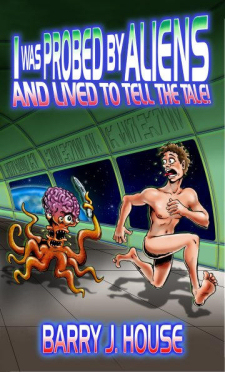
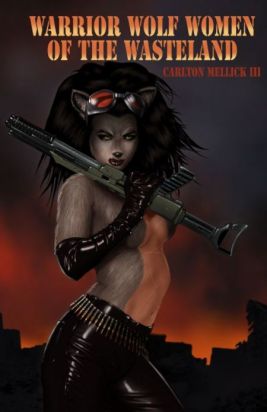
The star of this ostentatious title is William Brown, an ordinary bloke who is abducted by an alien from Tau Ceti 42. Although hideous in appearance, the xenomorph goes by the name of John Smith, and turns out to be polite, slightly indignant and affectingly naive with a passion for reruns of the earth show “I Love Lucy”.  The two become friends, and he takes our protagonist on an adventure across the galaxy.ProbedThis is a strong novella that wrings a giggle out of every SF staple and abduction cliche. There are bawdy misunderstandings (such as the shaking of an alien’s “hand” that turns out to be a much more intimate appendage), gross-outs and comedy of manners. And as you’ve probably guessed from the title and cover, the aliens have an unhealthy and inexplicable obsession with anal probes. I was going to post a paragraph as an example, but was too spoiled for choice and couldn’t decide. Which says it all, really.
The dialogue is crisp, and there’s plenty of slapstick buffoonery, including the accidental destruction of an entire planet. Even the minor characters bring something to the party. My favourite was a pompous, megalomaniac brain that achieved its glory in a spelling test that lasted thousands of years during which its opponents died of boredom. Neurotic baddies – especially those that are completely unaware of their own absurdity – are always good for laughs.

With its “Which Ray Gun?” magazine and irreverent banter, this is SF very much in the vein of Red Dwarf. The raw science takes a back seat to the gags, and while some of them are pretty obvious, they’re well-timed and relentless.

My only complaint is the language of our narrator. I suspect his slang is used to contrast with the comically well spoken alien, and to inject a distinctly English flavour. Although this worked overall, the overuse of “bloody” seemed unecessary and somewhat intrusive after a while.

But despite this, the pace never lags, and an amusing set of appendices rounds it all off very nicely. Throw in a strong sense of otherworld place, some adept greyscale artwork and a wry smidge of politics, and you’ve got a perfectly entertaining way to spend an hour or so.

EDITED TO ADD:

I was very sad to learn that Barry passed away at 9 am on Saturday 26th June after a battle with terminal cancer.

RIP.

Review – “Warrior Wolf Women of the Wasteland” by Carlton Mellick III

0

This wonderfully titled book comes courtesy of Avant Punk, an imprint of the trusty bizarro kings, Eraserhead Press.

The tale begins in McDonaldland, a futuristic dystopia in which the fast food corporation has absolute power and bland conformity is king. We meet our hero, Daniel Togg, a bored machine operator who brews illegal alcohol and soon finds himself banished. Beyond the towering city walls, he finds a dangerous wasteland populated by female biker werewolves, genetic mutants and other renegade fringes of society.

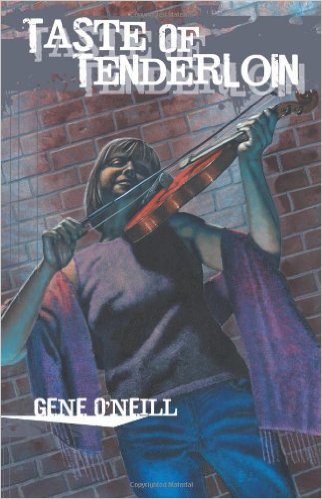
As the story progresses, we discover that the city has terrible secrets regarding the origins and history of the wolf women. Daniel is captured by a heavily armed faction named Warriors of the Wild, not realising that his loyalties will soon be tested.WolfThe post-apocalyptic wasteland has been rightly compared to The Road Warrior. There’s modified vehicles, plenty of weapons action, explosions, tribal atrocity and gruesome deaths. We come to meet many of the individual wolf women, each presented with lascivious artwork courtesy of the author, but there is depth to the characters too. My favourites included the cool and pragmatic Slayer, and the twin axe-wielding, dog-snouted Talon, a very powerful but sensible alpha female who is one of the warrior chiefs. And I’ll never forget the psychotic and terrifyingly childish Pippi whom I grew to love and loathe in equal measures.
As well as the violence, there are some guiltily arousing wolfish sex scenes, and a deftly handled angle of lost love that is surprisingly poignant.

It’s not a faultless book. There are several glaring text errors, which are always disappointing. And while the action is mostly a blast, a prolonged swordfight near the end didn’t work for me on the page, and I ended up skimming until I found its conclusion.

I was also slightly disappointed when we left McDonaldland behind. It’s a fascinating idea. Here, the smiley, brightly-coloured facade of a fast-food environment  – that masks the disillusionment or brainwashing of its automaton workforce – now infects every walk of life. The opportunities aren’t wasted, whether they be light-hearted fun or deeper social commentary, and I would’ve loved to have seen this concept explored further.

But the matriarchal wasteland itself is a fresh and exciting vision, and there’s considered gender politics at play; it’s not just cheap thrills for the boys. This author always manages to blend twisted bizarro japery with substance.

Despite its minor flaws, Warrior Wolf Women of the Wasteland is one of Carlton Mellick III’s stronger works. The conclusion is unpredictable, but without resorting to contrived twists, and nicely seals a subversive, intelligent and entertaining read.

Carlton Mellick III

Eraserhead Press

Review – “Taste of Tenderloin” by Gene O’Neill

1

Having visited San Francisco and its infamous Tenderloin some years ago, this book caught my eye. That district has a distinctive air of desperation and damage, and I was delighted that Mr O’Neill has captured it. Perfectly.TenderloinThis attractive little book from Apex Publications contains 8 exceptional tales all set in the Tenderloin in which we meet some interesting and broken people. My favourites included “Tombstones in his Eyes” in which an addict attempts to hoodwink a terrifying new dealer on the block.  “Balance” features an obsessed Vietnam vet on a homicidal mission of restoring order to the world. In “Bushido”,  a hideously scarred homeless man meets Samurai culture in a story of guilt and redemption. I’ll also mention “The Apotheosis of Nathan McKee”. Here, a middle-aged drunk discovers he has powers of invisibility in a tale with a rare light-hearted tone. But there isn’t a single weak link in this collection.
With such a niche theme, I feared it could become samey. On the contrary, while the flavour and atmosphere of the Tenderloin is present throughout, I actually yearned for more once the last story was concluded. The evocation is so strong, I could smell the trash, feel the drug-sweat against my skin, taste the Wild Irish Rose whiskey.

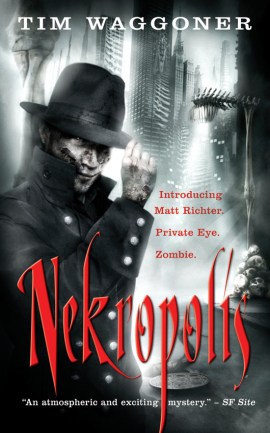
There are several recurring characters, such as the legless bum Short Stuff, and Sweet Jane: the prostitute on the beautiful cover. They provide a very human and reassuring familiarity to the deprivation, but it is the ‘loin itself that is the antihero of the book. A character in itself.

Even if urban, superntural horror is not to your taste, I would still recommend Taste of Tenderloin. It is written in a leisurely, uncluttered style that engages immediately whether the tales begin with a bang or a whisper. Gene O’Neill has presented us with a small but perfectly formed fictionalisation of one of the western world’s most fascinating city districts – or at least how it used to be – and the lost souls that populate it. Enjoy.

Apex Book Company

Nekropolis – Tim Waggoner

0

Meet Matt Richter. He’s a zombie ex-cop who does favours for people.

His turf is the Nekropolis, a dangerous and shadowed city of the dead. When a powerful artefact is stolen from one of the vampire darklords that rule the city, Matt teams up with Devona, a beautiful half-blood, to recover the artefact before its legendary powers can be unleashed.NekropolisI had high hopes for this book, partly because it seemed like an intriguing genre blend, but mainly because I’m a huge fan of stories with grim, urban settings. I’m happy to report that this novel more than does its premise justice.
The Nekropolis is a vast, pentagram-shaped city populated with all manner of creatures. There’s ghoul restauranteers, vampire punks, randy demons, a police force of golems, and nobody will forget the terrifying Silent Jack and his Black Rig. Now there’s a cab you don’t want to take you home.

Our protagonist’s case takes us to the Tim Burton-esque Gothtown, the spooky calm and vast foundries of the Boneyard, the brothels and bars of the murderous Sprawl. Elements of the supernatural are merged seamlessly with modern earthly technology – this is the work of an imagination that refuses to be restricted – and any genre cliches are self-aware, presented with a subtle wink. Nekropolis also has the cultural and social trappings of  a China Mieville novel, but is much more streamlined and less political.

Matt Richter is a delightful narrator. He is witty, pragmatic but jaded like any good city cop. His personal journey brings a human touch to the fantasy, and we wonder – along with him – if his dead zombie heart can ever be roused to true feeling. Devona proves to be an equally likeable sidekick. Although strong-willed, she is initially naive and sheltered, and serves as a mirror for our own wonder and disgust at the city’s nightmares. I really warmed to the duo on their adventure and the potential for genuine poignancy amid the fun is not wasted.

I could only find two minor things about which to complain. Firstly, there are occasional errors in the text, which always annoyingly leap from the page. Secondly, in the first few pages, a lot of information and description almost (only almost) distracted me from the dialogue and tension of an otherwise perfect opening gambit. But other than that, I found it a blissfully effortless reading experience.

Nekropolis is structured like a detective thriller, and has all the shadowed alleyways, skullduggery and razor-sharp noir banter you could want. The cinematic quality would lend itself to a classic cult film, and if I won the euromillions lottery tomorrow, I’d fund it myself without hesitation.

I love the frightening and wild world that Tim Waggoner has created. Dead Streets, the next installment, is in the mail and I can’t wait to tuck in.

Tim Waggoner

Angry Robot books

Review – “The Harm” by Gary McMahon

0

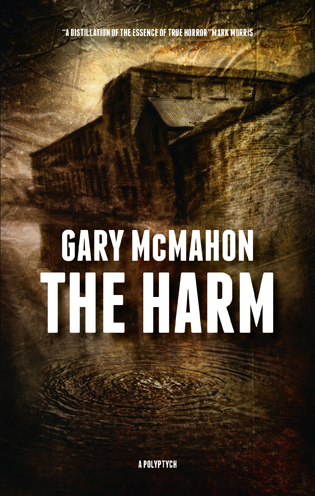
The HarmThe decision to get comfortable with a big mug of tea and no impending commitments before beginning this novella turned out to be only half correct. I was right in suspecting “The Harm: A Polyptych” would be devoured in one sitting. I should, however, have had a mug of neat whisky for the chill that now curls around my insides.
Gary’s latest novella from TTA press is a thought-provoking, gripping tale. The plot revolves around three young men – Tyler, Roarke and Potter – who were horrifically abused as young boys in a disused warehouse on the bank of a canal (a location beautifully rendered for the cover by Ben Baldwin).

It commences with a traditional, narrated introduction to the scenario – similar perhaps to one of Clive Barker’s more whimsical works – which is an unusual and pleasant surprise. But once the story begins, any such fond familarities are swiftly demolished.

We first meet Tyler, a moderately successful family man, on a dismal night out with his colleagues from work. The depiction of bland, urban life is tremendous – in which even a birthday visit to a nightclub is depressing – and it soon begins to curdle into something nasty. Strangers and family begin to treat Tyler with violence, unprovoked, and the scene is set for a classic McMahon spiral into his damaged past.

Next is Roarke, a violent criminal who rules his deprived neighbourhood with fear. His nightmare begins when he falls asleep half-drunk on a night bus, and finds himself in a silent and unfamiliar part of town.

Last of the trio is Potter, a very lonely man with sexual issues and an unhealthy affection for illegal execution videos. He discovers, just like his old friends, that the ghosts of his childhood experience will not relent. The Harm… almost a literal beast of despair in this book.

The terrors that befall our haunted protagonists seem disjointed and random at first, but by the claustrophobic conclusion, it has all fallen into place. This one of those rare treats that inspires reflection, both upon the themes and mechanics of the story itself, and also the world around us.

There’s a real sense of the ephemeral nature of life, and just how fragile it is. Gary uses this to bring humanity and frailty to the characters, whether they be sympathetic or odious. It hammers home the sickening power of abuse, and the insidious ways in which the legacy of damage spreads, while at the same time being a very tight and grimly entertaining horror tale.

I highly recommend this book. Gary’s prose is as rich as ever, evoking atmosphere in every detail, without drifting into excess. Along with the flowing snippets of dialogue, it brings colour to the bleakest of horror landscapes. There are a few surprises, but rather than being a story that relies on shocks, The Harm delivers ice-cold realisation.

Excellent.

Gary McMahon

TTA Press

Dead Lines #3

0

The latest issue of online zine Dead Lines continues its tradition of quality horror and dark fantasy. The strong names on the TOC caught my eye, and I was extremely impressed with the contents.

While there isn’t a weak tale among this pleasing mix of voices, my favourites include At the Back of the Blue Bus by W.D. Gagliani and David Benton, which involves a murderous game being played aboard an overnight Greyhound bus.

Fatter by Wrath James White features a desperate, weight-obsessed woman and has lashings of the author’s trademark under-the-skin discomfort, both visceral and psychological.

Mutilation Street by John Everson offers a gory slice of bizarro, before Jeff Strand gatecrashes the party and upsets everybody with the utterly sick and wonderful Mr. Twitcher’s Miracle Baby-Chopping Machine. And no, that title’s not a metaphor.

Mark West’s A Cottage by the Sea provides some goose-pimples in a creepy tale of a couple’s seaside break that oozes with menace from the outset.

With excellent stories from Tim Waggoner, Gord Rollo and more, Dead Lines issue 3 is well worth an hour or so of your day. And while it is free, I would happily pay for such entertainment.

I hope it’s here to stay.

Tide of Souls – Simon Bestwick

4

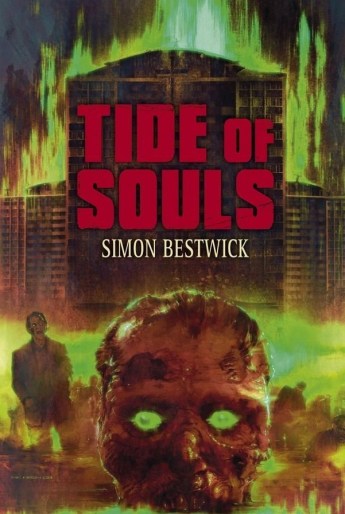
A recent addition to Abaddon’s Tomes of the Dead line, I expected this to be a zombie horror-thriller. And while indeed it is, there’s far more to Simon’s novel than necrotic innards and masticated brains.

tide of souls

Britain is being consumed by floods, and as the terrified population attempt to climb away from the creeping waters to safety, it becomes clear that drowning or starvation are the least of their worries. The murky depths are home to an army of green-eyed undead. Control and hope is soon lost, the semi-devoured victims rising from where they fall to replenish the ranks of their slayers.

The story follows the plight of three characters. The first is Katya Wencewska, an educated and tough Polish immigrant whom we meet imprisoned in the Manchester brothel where she is forced to work as a sex slave. The pace begins at a breathless rate, as Katya breaks out of her flooded vice cell to the rooftops to fight off the watery horde.

Robbie McTarn is an ex-soldier, steeped in alcohol and post-traumatic-stress, who finds himself called back into service to embark on a dangerous mission across the bleak, drowned Lancashire countryside. His orders are to find Ben Stiles, a brilliant but damaged scientist who may have some answers regarding the rotting scourge that is consuming the world.

These are no ordinary zombies. I’ve seen genre fiction in which the dead are nothing but a brainless, relentless eating machine. There are also ones that display cunning and intelligence. This, paradoxically, can sometimes make it less scary; you can’t plot or scheme against something that has no capability to learn or any sense of self-preservation. Well, Simon’s undead fall somewhere between the two with a pleasing twist, and the results are fascinating.

The back stories of our protagonists, and the way their lives become entwined, are delivered in snippets with the skill of a practiced writer. The characters themselves are believable, each displaying a realistic voice of experience (the novel is presented as three 1st person accounts) and empathy is never a problem.

Tide of Souls is refreshingly unpredictable, and also quick to resolve threads before they drag on past their welcome; some writers misjudge a reader’s patience with suspense, but here, the timing is always spot on.

This is also an incredibly visual book, packed with images both haunting and loud. To present one example, at the outset of McTarn’s tale, we join a group of military as they watch handheld footage of some soldiers investigating an office block that are beset by the horde. The experience made me feel as though somebody had triggered a strobe-light in my brain, and the memory of this scene is almost as though I’ve actually seen the horrific video myself, bringing similarly unpleasant moments in Aliens and Event Horizon to mind. Excellent stuff.

So any gripes? There’s a military commanding officer who’s a dick, which made me think yeah, yeah, yeah, but as it works so well here, maybe it is the fault of lesser writers for making this a cliché. It did jar that it comes as a shock to one character when he discovers that infection is spread via the undead’s bite. As this story is set in our world, one could presume that their entertainment media is just as full of zombie fiction as ours, so wouldn’t they just assume that if you get bitten, you’re screwed? I’ll concede that while this is a tricky one, it’s an issue that I wish more horror writers would address.

But these are the only complaints, and I had to be pedantic to find them. This is a powerful, entertaining novel written in crisp, addictive prose. The first two segments brim with action – brawls upon precarious boats, melees involving some serious military hardware (which are startling in their realism) and an immense bodycount – while the third favours a creepy rather than explosive tone. The scientist’s account takes us to a very different place, offering some degree of explanation, pathos by the barrel, and ties up this memorable and grisly package.

Based upon Tide of Souls and also Simon’s collection Pictures of the Dark, his name has joined the ranks of those whose future fiction I shall purchase without hesitation.

Simon Bestwick

Abaddon Books