Review – “Stuck On You” by Jasper Bark

2

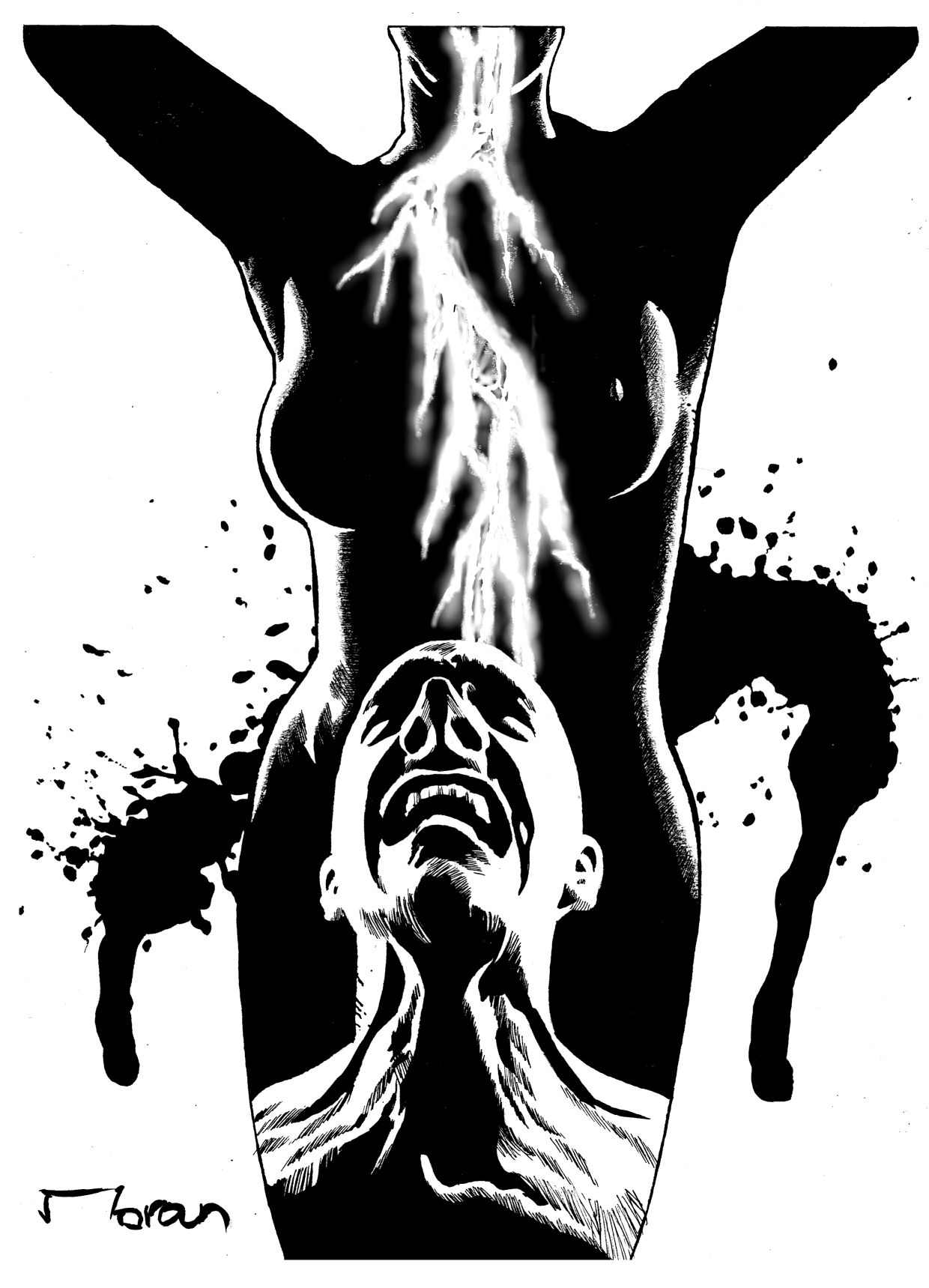
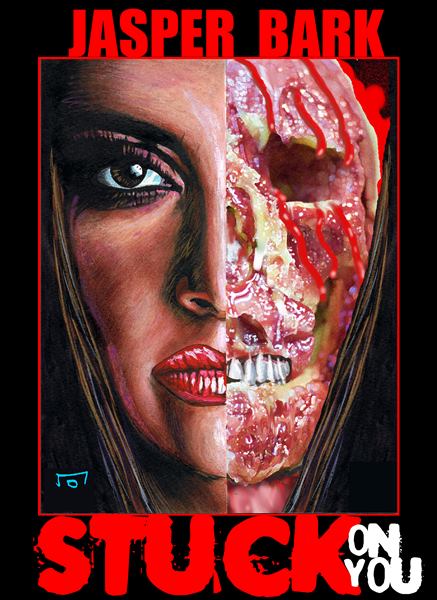
“Warning! Do not buy this book, gentle reader” begins the blurb of this novella from Crystal Lake Publishing. It continues in a similar vein, shooing potential buyers away with cautions of plumbed depths but without actually offering any details about the contents. So how could I resist? But whether that purchase was the result of rash curiosity or clever marketing is irrelevent. “Stuck On You” is both the best and the most gleefully unpleasant thing I’ve read this year.Stuck on youThe tale concerns Ricardo, an American on a trip into Mexico to acquire some cheap artisan crafts for his wife to sell back home. As he’s a bit of a lothario with form for cheating, these trips are as much a test of his fidelity as a business venture. So when he bumps into young Consuela – an alluring drug mule who wants passage across the border – we’re not surprised when he agrees to give her a lift. Ricardo becomes increasingly horny throughout the journey, and while waiting on a deserted country lane for Consuela’s dealer to make contact, he gets the reward he was really after.

And that’s when it goes horribly wrong.

Terrifying-urban-legend meets worst-possible-nightmare wrong.

This is going to be an unusual and restrained review from me. Although that’s the basic set-up of the story, I’m not going to spill any specifics of what happens to Ricardo. This isn’t because of spoilers, as chapter one begins after his nightmare is already underway and has it all laid out within the first few pages. No, I’m holding back because I read it blind with no idea what was coming, and loved it that way. So I’ll just let Jasper Bark tell you what happens instead. Because you are going to read this.

Why? Heady erotica and extreme body-horror collide with a bang, sending us and Ricardo on a horrific downward spiral that gets nastier and… dare I say it… more amusing with every turn of the page. And just when you think it can’t get any worse, it does. And then again. And again.

The helpless descent is structured like a black comedy, and borders on gross-out slapstick at times, but never loses its agonisingly sharp edges. It made me writhe, recoil and smile, sometimes all at the same time, which is probably the most joyfully offensive thing about it. I almost felt dirty for allowing myself to become so charmed.

“Stuck on You” ticks every box with regard to pace, character and evocation. Just leave your concern for all that is good and wholesome at the door. The conclusion is glorious – a chilling suckerpunch that cleverly ties up this gruesome package – and my mouth might actually have fallen open for a moment. Then I exhaled and shook my head slowly as I put the book down, partly sickened by the assault, but mostly in sheer admiration of it.

If you can stomach the hard stuff, then you’ll devour this gripping piece in one sitting. I love it when extreme fiction is so superbly written, and I will definitely be buying Jasper Bark’s collection when it comes out in a month or two.

Never has an author’s evil eye twinkled so bright. Highly recommended.Stuck on you 2

Review – “Boot Boys of the Wolf Reich” by David Agranoff

0

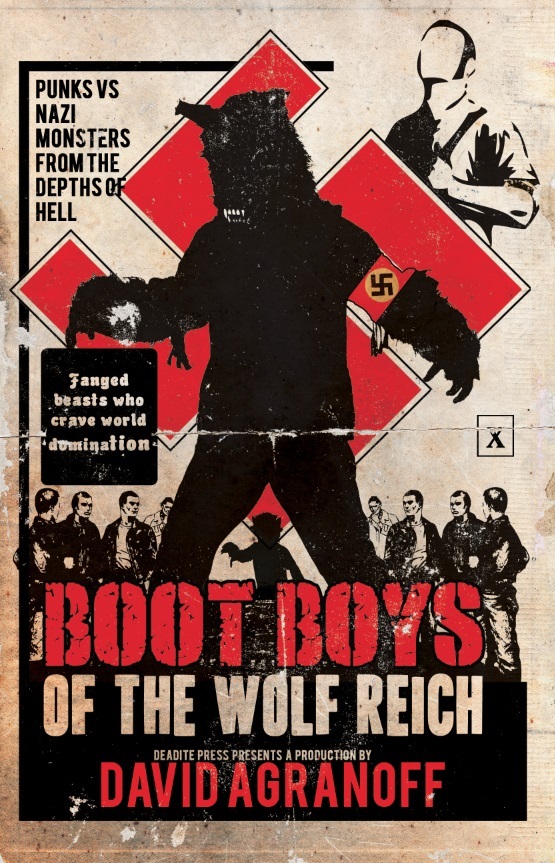
I really hoped that this release from Deadite Press would be good. Punk/skinhead subculture and werewolves are both right up my street, so I was pleased to discover that David Agranoff has written an appropriate homage to both. With characters worth rooting for and plenty of gore, this is as much a coming of age tale as it is a ghastly slab of Nazi horror.Boot Boys final coverA chilling prologue introduces Klaus Schroeder, SS gruppenfuhrer at Auschwitz. He’s as cold, efficient and dangerously hateful as you would expect, and whilst on the trail of escaped prisoners, he discovers an ancient cult who use the hide of an Egyptian wolf-god to achieve lycanthropy.

We are then transported to Chicago, 1989, to meet Paul: a young mixed-race skinhead new to town. He’s quite a likeable lad, and we’re along for the ride as he settles into his new life, sees his first street fight, and finds both love and brotherhood with the local scene of punks and skins.

Similarly we meet tough guy Sonny, who used to be one of this crowd but has since fallen in with neo-Nazis. He now works at an auto store run by an ex-KKK wizard and although more intelligent than the other thugs in the gang, he finds asserting himself more difficult in such an ultra-aggressive environment. Not to mention them getting a beating, twice, at the hands of new kid Paul and his anti-racist crew.

But our old friend Klaus is also new to the area, fresh from evading Mossad overseas. He’s looking to resurrect Hitler’s Reich by starting an Aryan werewolf army, tuned for hunting and unstoppable savagery. What better place to start recruiting than a store full of white power boot boys out for revenge?

I enjoyed this book. The first half has plenty of street menace, with one tense scene using a dead-end alleyway to good effect. I suspect that some of this is semi-autobiographical, which lends credibility to the action. And once the lycanthropy has kicked off, there are scenes of stalking and violence that get the pulse racing. Some of these characters are dangerous enough as people, but as werewolves?

Regarding the protagonists, Paul’s coming-of-age rings true and Sonny brings ambivalence. Despite him being on the wrong side, he has potential, and toys with our loyalties. It also leaves us guessing as to whether the bestial nature of the wolf will be his redemption or downfall.

While the racist slurs used in dialogue are startling, they stamp a chilling authenticity on the neo-Nazis. Overall, the politics and the whys-and-wherefores are tackled intelligently without eroding any of the fun of the story. It is also through this that comes some of the more uplifting moments. When Paul is locked up in a cell with a rival gang member, there’s an American History X type moment of camaraderie that brings hope.

There are plenty of nasty moments, but this is tempered by humour in the comradeship, and also through the narration. For example, the neat throwaway line “They had to eat the Hammer Skins because they wouldn’t calm down” made me laugh out loud.

As I was hoping, “Boot Boys of the Wolf Reich” is rounded off by a showdown of violence and gore. As the first half lets us get to know the crew, this is monstrous carnage we can invest in, and certainly makes the most of the concept with some well-written cinematic flourishes.

A nice touch for the music fans, as well as the in-story references, is that each chapter starts with an appropriate lyric. Some of these are from my favourite Oi! bands, such as The Business and Cock Sparrer, and its great to see a nod to these often-unsung heroes of punk. And it’s also pleasing that there’s a firm differentiation between traditional skinheads and the sieg-heiling supremacists.

David Agranoff is a succinct storyteller. He paints a clear picture, whether in a concentration camp, ska gig or back street, and transports us there through the characterisation and drama. And if you’re not familiar with – or dislike – the music, then don’t worry. The subcultural garnish brings only colour and life, and you’ve still got a well-paced story and homicidal Nazi werewolves bent on world domination to entertain you.

Oi! Oi!

Review – “The Black Land” by MJ Wesolowski

3

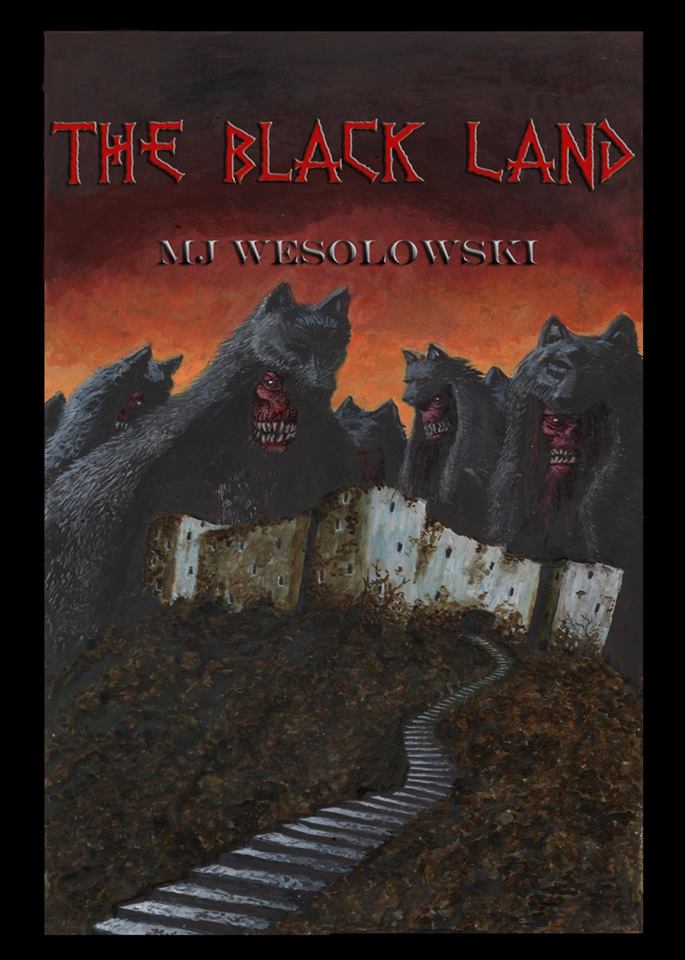
After a few days of June sunshine spent in pub beer gardens, it was a grey and rainy afternoon, so I thought some old-school terror would be the perfect way to while away a couple of hours. This downloaded novella from Blood Bound Books proved to be just the thing with its baleful castle, ghosts in wolfskins and a splendid descent into madness for all those unfortunate enough to be involved.Black LandWe meet Martin Walker, an American self-made tycoon who owns the exclusive Gateway Resorts. He arrives in North-East England with his wife and two young children in tow, intent on acquiring the remote island of Blamenholm to add to his luxurious list of locations. But the bleak slab of rock is also home to a forbidding and long-abandoned castle that was once garrisoned by invading Norsemen. And it appears that these “Children of Odin” – psychotic wolfskin-wearing warriors high on hallucinogens and bloodlust – are still very much there in spirit.

The tale begins with a brilliant Hammeresque feel as the family visit the storm-lashed rock. I was completely drawn into the malevolent atmosphere as they enter the twisted keep of the castle, a building apparently designed to keep something in as well as out. Not to mention a vast, diabolical trap looming in the shadowed hall that chills the family – and us – right from the start. And that’s before we even know what’s lurking in the castle’s dungeon, about which their English guide Saul is terribly grave but teasingly vague.

They return to a rented mill in the coastal countryside, and things start to go wrong pretty quick. His wife Martha and the kids start to have dark thoughts as nasty ghosts rise from their past, and everything becomes drenched in the same unease that bled from the castle. The rooms plunge cold, things go missing, internal voices start to whisper. Their young son Chad claims to have seen wolves, and pawprints surround the sodden mud around Martha’s car, all of which cements the tone for a genuinely scary ride.

I really enjoyed this novella. The characters are well rounded, filled out deftly with back story as the tale progresses. Although the stubborn, success-driven businessman Martin is not always the most likeable character, we still invest, and soon realise his behaviour – and increasing rage – isn’t entirely in his hands.

While there’s a few familiar tropes, there are some ghastly flourishes of fresh imagination and attention to detail, and I was drawn into world of Blamenholm and the Walker family. I also enjoyed the author’s use of digital technology (such as smart phones) to bridge the gap between the archaic and the contemporary. This particular ancient evil sure can adapt with the times.

What’s also cleverly done is that the family seem trapped, somehow unable to pinpoint and discuss the creepy events with the expected rationality. This creates a slick aura of otherworldliness as the wicked powers do their thing, racheting up the fear.

Ah yes, the fear. What I loved most of all about “The Black Land” is the chills. MJ Wesolowski creates menace through suggestion and a superb malignant presence. This is “bump in the night” horror rather than graphic, and all the better for it. I was startled by the movement of one of our cats in the room, and the rain and wind blowing through the branches of a tree outside my window kept making me glance up uneasily from the page. Creating such edginess on the part of the reader is no mean feat, and is of course the essence of any quality horror story.

I also liked the author’s voice. There is no fixed POV, which is unusual nowadays, but used to good effect here. It gives the whole thing a classical feel and provides sinister narrated observations of which our protagonists are unaware. The prose is also very descriptive – which isn’t usually my thing – and although I found it slightly off-putting at first, I soon settled in. Stick with it, stalwart reader, because this style brings evocation and grim atmosphere by the bucketload.

The conclusion also delivers. The final few chapters tie up all the loose ends, some of which I’d forgotten about, and there are a few surprises as everything descends into nightmare. My anticipation was stoked throughout the first half, and rewarded by a noisy showdown of subterranean, primordial dread.

I will definitely be checking out more of MJ Wesolowski. “The Black Land” is great value for money at 111 pages – available in print and download – so if you fancy a seamless meld of classic and modern horror, give it a whirl. Just don’t read it alone on a rainy night. Actually, do read it like that. Because hey, we’re all a bit tweaked in the head and that’s exactly why we love this kind of thing.

Review – “Home and Hearth” by Angela Slatter

0

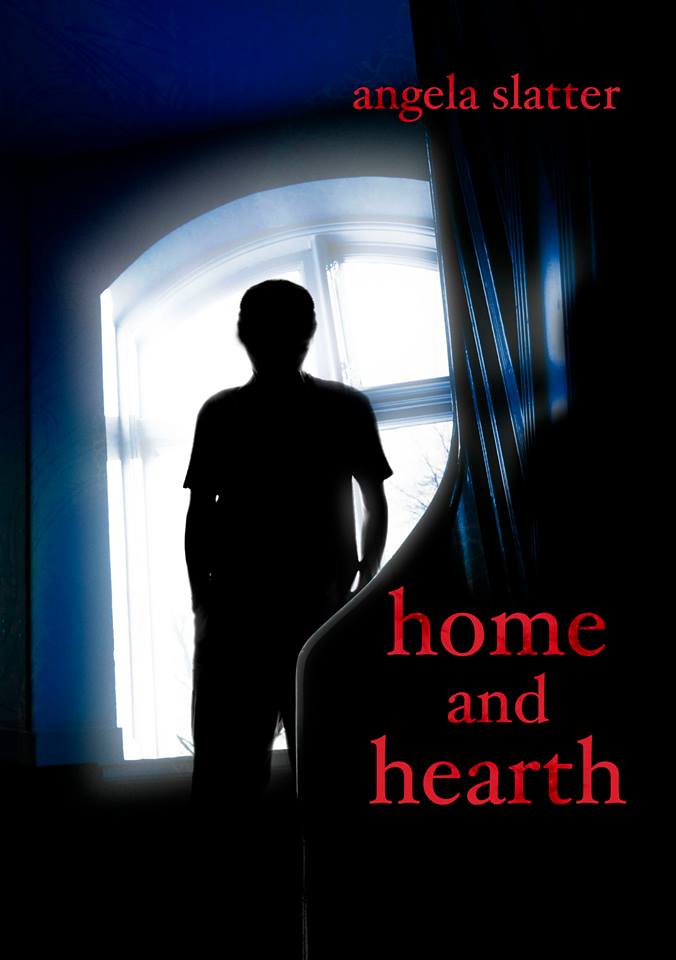
I hadn’t read any Angela Slatter before this, but I certainly will again. Volume XI in the reliable Spectral Press chapbook series, “Home and Hearth” is one of those short stories that sticks.H&HWe meet Caroline, a single mother welcoming home her teenaged son Simon. He’s been in custody for the duration of a deeply unpleasant trial, and despite him not facing sentence, Caroline finds it difficult to put the tough times behind them. She wants to want him back and be a good mother, but the ghost of Simon’s actions – and indeed her own – will not be silenced.

Overall, I found this quite a wrenching piece. It’s exquisitely told, with keen attention to detail, especially regarding the sinister awkwardness of Simon’s return to “home and hearth”. The characters are convincing and Caroline’s sense of shame – amplified when forced out in public to buy groceries – also makes us squirm beneath the pity and curious distaste of others. We’re under the microscope with her, but at the same time, aren’t quite sure what dark secrets she might also harbour. These are deftly woven in through back story, and when presented alongside moments of familiar domesticity, it could be happening to any of us.

Caroline’s torn sense of right and wrong carries this tale, along with the sense of innocence lost. Of course any parent wants to protect their child, but what if such maternal instinct may have terrible consequences for others? Caroline has to reconcile loyalty, love, guilt and responsibility as the plot glides effortlessly to a gut-punch conclusion.

Many horror stories conclude with either triumph or a gleeful descent into bleak. But like many of my favourites, this doesn’t fit into either camp. It’s poignant, brutal and concrete – the way it needed to be – and I couldn’t help but be satisfied despite the heartache.

I enjoyed “Home and Hearth” enough to read it twice, and found that it rewarded the extra time with a new experience of grim hindsight. This chapbook certainly does the Spectral brand and chapbook series proud, delivering the kind of quality that makes me renew a subscription without hesitation.

Review – “Depraved 2” by Bryan Smith

0

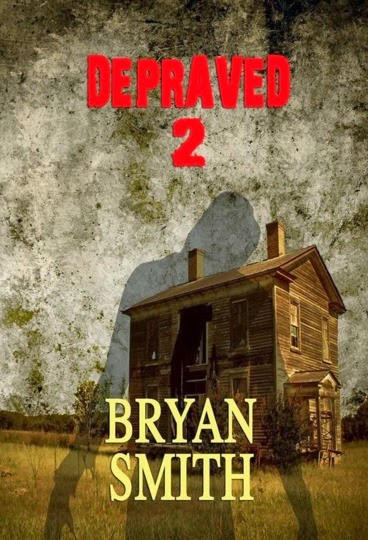
The original Depraved is a masterpiece among its particular kind (my old review here), and I was looking forward to another fix of depravity and madness. The sequel certainly steps into the dock with a machete in one hand and its erection in the other, and while less lurid in tone and not quite as much fun (if that’s the right word), this is an ice-cold and intense read.depraved 2Four years have elapsed since the events of the first book, which concerned a family of perverted mutants in the rural community of Hopkins Bend. We meet Jessica again, the heroine and survivor of the first story, who managed to escape their microcosm of rape, murder and religious sacrifice. Having been ignobly discharged from the military, she finds herself on the run having being framed for a murder set up by powers much bigger than her. Drawn back to Hopkins Bend, now a ghost town having being cleaned out in some hush-up sweep by the army, she discovers that it’s not quite deserted as it initially seems.

The story also follows Sienna and Jodi, sisters from the old family, who are now living in nearby Bedford and no less fond of torture and all things nasty. While Jodi attempts to keep her wild and crumbling family together, Sienna fancies herself a witch and wants to bring her monstrous father back from the grave.

The other main player is Daphne, a gutsy but entitled girl who falls foul of Hopkins Bend on a country drive with her lover. Having been captured and imprisoned by a pair of murderous rednecks, she realises that unless she can think fast, her fate looks like being a life of sex-slavery or becoming the main course for a cannibal feast.

Like the first, this is a very slick and well paced novel. There’s no padding before the action gets going and while it’s not quite the breathless rollercoaster of Depraved, it gives you time to take stock.

The prose is seamless and unintrusive, and one of Bryan Smith’s talents is to make the reader care immediately about people in jeopardy, even if we’ve only just met them. While that is the case here, things aren’t clear-cut and the actions of some characters really tests our loyalties. Perhaps this might be too much for some readers, but it’s well handled, and riffs on the old human-capacity-for-atrocity idea. The descent of some characters still seems a little swift, but I personally liked how it forces us into an experience devoid of comfort zones.

Speaking of which, although the original Depraved is more gruesome and sick, I found its nastiness to have a knowing twinkle. The horrors of Depraved 2 are darker, more sobering, and its very rare that this extreme horror veteran is rattled. There are several powerful scenes of sexual violence and psychotic cruelty, and although any graceless hack can write a no-holds-barred torture scene, it takes a skilled scribe such as Bryan Smith to make it really hit home. I’ll never look at a commercial restaurant grill the same way again.

This is superbly evocative writing and the menace of the backwoods is nailed, providing the familiarity you want from a sequel. I also liked the gentle conspiracy theory angle. It’s not rammed down our throats, but with larger forces at work regarding both Hopkins Bend and the price on Jessica’s head, it allows us to wonder who watches the watchers? It suggests that anything might happen next and that nobody is safe, lead protagonist or otherwise.

I don’t really have any complaints. At first, I found the character of Sienna – although a pleasingly sociopathic villain – to be rather out of place with her black magic and goth teen angst. Perhaps this is because the novel harbours a primitive, rural vibe: the kind that doesn’t normally flirt with either the supernatural or “street” kids. But I was still carried by her story and she provides some of the twists that the later chapters have in store. The finale itself is somewhat bleak, but there’s a definite shade of black humour which serves to temper the grim tone and allows you to close the book with a wry smile.

If you enjoyed the first instalment, then get your blood-sticky palms on Depraved 2. While perhaps not quite scaling those ghastly heights overall, I’m very glad this isn’t just a franchise-style rehash. There’s a refreshing lack of predictability, it moves the plot in new directions, and still finds time to pile on the mood and forcefeed us horror by the bucketload.

The story notes mention that Depraved 3 is a possibility. Although this sequel is nicely tied-up (don’t worry, no annoying cliffhangers or blatant dangling threads to see here) I’d be more than happy to see another. Hopkins Bend can’t have exhausted its potential for degradation and debauchery just yet. Those folks are just too damned good at it.

Review – “Clusterfuck” by Carlton Mellick III

0

You know you’re in for plenty of warped humour and weird horror with Carlton Mellick III, and Clusterfuck is no exception. Loosely following on from the excellent Apeshit – that followed a bunch of jocks and cheerleaders being stalked by a crazed mutant in the woods – Clusterfuck has a similar hook. But this time it’s fratboys and college chicks on a caving weekend, and while not quite as outrageously gruesome, it piles on the claustrophobia and the laughs.ClusterfuckAs the author explains in the foreword, frat boys are both “the worst human beings on the face of the planet, and the funniest human beings on the face of the planet”. And that’s certainly true of this crowd. The “alpha-bro” of the group is Trent, who along with his gloriously stereotypical buddies – beer-guzzling, insensitive, sexist pricks – decides to stock up on booze and go caving with a trio of girls in tow, undeterred by his lack of experience and the fact that two of the girls can’t even stand him.

So after some pre-trip shenanigans and a journey into the wilds, with shades of Deliverance and The Texas Chainsaw Massacre, they head off underground. Naturally, things start to go bad pretty quick. The cave network starts to flood, and if this wasn’t enough, they soon realise they’re not alone down there. Yes, there are cannibal mutants to contend with and as we have a bizzarro master at the helm, some brilliant and sick imagination is on the way.

It’s the characters that drive this story. A couple of them seem fairly normal at the outset, such as squeaky-voiced Lauren, who simpers around Trent, and Selena, who’s intelligent and completely unimpressed by bro-culture. And of course the quiet and sensible Lance, dragged on the trip without really wanting to be any part of it. But as we find out more, they’ve all got serious issues: some just weird, others monstrous. These are deftly teased into the plot, and I found myself delighted every time some back story made an appearance, wondering what perversion or beastly childhood trauma was going to surface next.

Lance – who suffers from human proximity anxiety and entrapment nightmares from his past – also forms the foundation of some intense claustrophobia. When he gets firmly wedged upside-down in a descending, pipe-thin tunnel, his panic beneath the pressing rock made me short of breath. This is expert writing, and also tempers the comedy and impending gore.

I ended up being quite fond of main player “Extreme Dean”, despite him being the most irritating, high-fiving, whooping, hooting bellend you could imagine. As the book progressed, his view of everything as awesome and extreme – no matter how unpleasant and tricky the situation might be – became rather infectious. But while his eternal optimism and complete lack of self-awareness is endearing, he’s still a dick, and capable of some pretty callous violence. I suppose it’s because “THAT’S WHAT YOU GET FROM MESSING WITH EXTREME DEAN, THE ULTIMATE ASS-KICKING MACHINE!”

The first half of the book is atmopsheric adventure-horror of a familiar tone, but the author’s gloves really come off for the second. The promised family of subterranean cannibals don’t disappoint, there’s gross-out moments involving male lactation, mutant sex and consumption of vomitus, and plenty of bone-crunching physical trauma. And although some of this causes a wince, it’s played for gory slapstick too. One scene involves Extreme Dean using poor Lance as a human shield to defend himself from a deranged butcher with a knife. The argument that ensues between the two fraternity bros during the attack made me laugh out loud.

It builds to a blackly comic finale, but harbours a nasty sting regarding the fate of one particular character. Although only hinted at in a couple of lines, it left a sour taste in my mouth as well as a smile on my face. Which is no bad thing.

Overall, this is a wild read, and the witty narration just rolls off the page. It’s not essential to have read Apeshit first (click for my review), despite the threads and references, as this is very much a standalone novel. But should you start here with Clusterfuck, it just means that you’ll have an extra “What the fuck?” moment that readers of the first book have already enjoyed. If “enjoyed” is the right word.

I think this is one of Carlton Mellick III’s finest works so far, and have to recommend this bad trip of horror, entrapment, douchebaggery and twisted humour. Because “This is gonna be the most EXTREME FUCKING WEEKEND EVER!”

Review – “Alien: Out of the Shadows” by Tim Lebbon

3

Being a huge fan of the whole mythos, and knowing Tim Lebbon is a safe bet, my expectations were high for this release from Titan Books. But what really snagged my curiosity was discovering that Out of the Shadows is set between the events of the Alien and Aliens movies and features a certain 80s science fiction heroine who should’ve surely been in hypersleep that whole time. So with the plot already intriguingly thick, I settled down into what turned out to be a very slick adventure of mood and menace.out-of-the-shadowsThe main protagonist is Chris “Hoop” Hooper, engineering officer aboard the Marion: a deep-space mining ship orbiting the remote, storm-blasted planet of LV178. His daily routine is suddenly upset when two dropships full of shrieking miners come careering up from the planet’s surface, overrun with something that’s been found hibernating deep beneath the planet’s surface. Hoop is left dealing with a damaged ship stuck in decaying orbit, a depleted crew, and of course our favourite oil-black, chitinous killers. But some surprise help might be at hand when an escape shuttle automatically docks with the Marion. It contains none other than the last survivor of the Nostromo, Ellen Ripley, and Hoop soon realises that she’s just the kind of personality that he needs to get through this hell.

I fell straight into this book. It opens with the camaraderie and grind of regular space life, perfectly capturing the tone of deep space industry that we are accustomed to from the films. It’s not long before the grisly action kicks off, and Ripley and the crew are forced into planning a dangerous expedition down into the labyrinth of the nest-infested mine.

It wouldn’t be Alien without characters we care about, and I was pleased to discover that the crew are a solid mix of jaded and driven space veterans. Sharp dialogue brings them to life and so the inevitable violent deaths pack quite a punch. I also liked that because this is a mining operation and not military, the crew are not trained for battle and forced into using practical equipment – bolts, acid sprays, plasma torches – to fight off the horde. The presentation of the technology is also a strong point. The science of the films can seem outdated in our digital world, and the author has done a solid job of gently updating the technology so that it seems real to our 21st century sensibilities, but doesn’t lose any of its clunky industrial charm.

And of course we want a degree of nostalgia and familiarity when visiting an old favourite mileu. There’s plenty of references in theme and setting, but I quite like the subtle touches too. For example, a moment when Ripley thinks that an impregnated crew member about to give birth “seemed fine” put me in mind of her exact words in Aliens.

Speaking of whom, Ripley’s character is realised to a tee. I heard and saw Sigourney Weaver with every word and mannerism, and cheered her every step of the way. Tim Lebbon’s Ripley is the woman at the outset of Aliens – fresh out of hypersleep and troubled by nightmares and memories of her daughter – and we see her resolve, feelings and fragilities evolve in a pleasingly similar way here. And naturally, she get to kick some serious ass.

We’re treated to some startling action sequences, both down in the mines and aboard the Marion. They’re delivered with such aplomb by the author that we feel every blast of heat, crunching bone and razor snap of an alien’s jaws, and the attacks are as vicious as they should be. There are also sections of intense suspense when the crew are being stalked. One haunting scene describes four static aliens waiting with insectile focus for some airlock doors to open, watched by the fearful crew on CCTV. It gave me a genuine chill and I was right there with the crew and their unease, not reassured by the multiple sealed doors between them.

The book also ties in thoughtfully with the “space jockey” aliens from the derelict ship in original story, and of course it just wouldn’t be right without “the company”. As the story unfolds, we discover that the most nefarious employer in the galaxy – Weyland-Yutani – have a familiar role to play. This is delivered through ice-cold mission protocols and another insidious and cleverly realised presence that I won’t spoil here.

But anyway, on to the question everybody asks. What happened to Ripley’s memory of these events in the “Aliens” film? Of course it’s a tough job for a writer to account for this, and while the trope that explains it does feel somewhat convenient, I was satisfied enough. Given the circumstances, I don’t think it could have been handled better, and there’s plenty of other things to engage us at the conclusion. There’s a good old race against time, a chilling “murder” that really goes against all we believe, and still plenty of room for some very poignant and elegiac scenes.

Overall, Out of the Shadows is a superbly paced blend of all the good elements of the first two films. Fans will have a blast meeting Ripley again, not to mention immersing themselves once again in the bleak, claustrophobic atmosphere of this unique mythos.

Happily, this is the first instalment in a new trilogy. Sea of Sorrows by James A. Moore and River of Pain by Christopher Golden are due later this year, and I’m eager to see where they take it from here.

Review – “Bone Splintered Asphalt (The Game Book 2)” by John A Burks

0

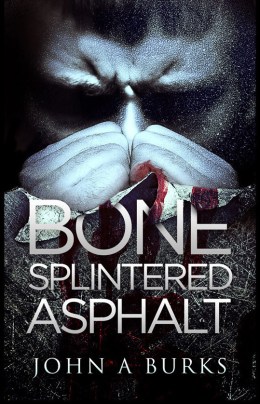
This is a direct sequel to “Flesh Worn Stone” so if you haven’t done so already, read that first. My Hellforge review of it can be found here.BSA

But for those of us who have seen and survived the Game, I will briefly recap. The first book followed the ghastly plight of Steven Alexander, who after the murder of his young sons, found himself trapped in a cave on an island. Along with hundreds of others, he was plunged into a world of murder, rape and cannibalism in a savage arena – the Game – all at the whim of some unseen rich elite.

“Bone Splintered Asphalt” picks up exactly where we left our broken and gore-drenched hero, escaping the island on a cruise ship with a mute child named Mia.

This novel doesn’t hang about, and Steven immediately finds himself hiding from the ship’s staff who seem to be under the command of the “Court”: a centuries-old organisation that run the whole thing. A hunted man, Steven must think fast and kill quick to survive, and once he gets to the ship’s destination, he begins to realise that the Court’s power reaches further than he realised.

Also drawn into the darkness is Marcus Dillard, a regular FBI agent, and both men spiral into the Court’s chilling web that has influence across the globe, from media to law enforcement.

Although this has a different vibe to “Flesh Worn Stone” – dabbling with conspiracy thriller as well as extreme horror – there’s plenty of familiarity to make us feel at home. We’re treated to a variation of the Game played in a dilapidated mall and also meet Darius again, a champion back from the ravages of the island’s Cave. While a shadow of his former physique, he’s still as vicious and fearless as ever.

The main players are strong and I was along with Steven and Marcus all the way as they sink deeper into danger, the action deftly switching between the two. I was less impressed with the character of Lulu – who runs the mall – as she seemed rather comic book and not particularly frightening despite her sociopathic cruelty. But while some of the minor players are somewhat one-dimensional, it usually just adds to their Laymonesque brutality.

I liked the development of Mia, the child rescued from the hell of the Cave, who knows nothing else. She proves to be Steven’s Achilles’ heel by giving him somebody to care about, and also provides moments of dark humour regarding her casual approach to cannibalism.

My main grumble, as was the case with the first instalment, is that this book has far more than its fair share of typos, spelling mistakes and other errors that cause confusion. It’s a shame, as a thorough edit would’ve smoothed out all these superficial niggles, but at least I kept reading which is testament to the strength of the story. I would’ve bailed on lesser pieces over this.

I also felt a lag in pace about two thirds of the way through, but generally, this is a well structured novel. It begins at a tight sprint then allows the pieces to fall into place before some high-octane action paves the way for the finale.

It’s not as beautifully nightmarish as “Flesh Worn Stone”, lacking the same depths of visceral darkness and reflection on the base human condition. As I said, it wanders into conspiracy thriller territory, but by doing this presents menace of a grander scale. I found the philosophy of the Court intriguing and perhaps there’s a degree of satirical reflection regarding our own governments and cultures.

I was carried by our unwitting hero’s weary frustration, sadness, fear and hate. The finale is unexpected but appropriate, mercifully devoid of any cheap shots that such stories can suffer, and it brings a distinct level of pathos to the table as well as satisfying the inner ghoul.

It does require a hefty suspension of disbelief, much more so than “Flesh Worn Stone”. There’s a fine line between brilliance and nonsense with this kind of plot, and it happily manages to err the right side most of the time, and delivers some helpless desperation in the vein of “Rosemary’s Baby” along with the adrenaline.

If you enjoyed the first book of the Game, then there’s no reason why you won’t lose yourself in “Bone Splintered Asphalt”. A third chapter is apparently on the way, and this is pleasing news indeed. John A. Burks is running with a superb and pitch-black concept, and it’ll be interesting to see where he takes it next.

Review – “Samurai and other stories” by William Meikle

0

I’d read a couple of William Meikle stories before, but this was the first time I’d tackled them en masse. Crystal Lake Publishing have presented 16 recent tales from this prolific author’s catalogue, and it turned out to be just the kind of book I’d hoped. A melting pot of SF, fantasy, hardboiled, historical fiction and horror, Samurai… is a colourful ride and presents plenty of wry humour and derring-do along with the blood and chills.Samurai-and-other-stories-FB-sizeThere are no weak tales, but here I’ll mention a few of my particular favourites. One of those is the title – and opening – story in which we meet the Scottish survivors of a shipwreck on Japanese shores. They find an ancient temple, deserted yet strangely hospitable, and are tempted by the treasure it holds despite the suspicious lack of security. I was immediately drawn into this period piece by the action and witty dialogue – delivered as it is by strong characters – and it all kicks off before long, the action cemented by themes of honour and deft clashes of culture. I particularly like how the author introduces sudden violence with such elegance that it made me do a double take, matching the confusion of the protagonists. Stylishly written and building to a double-twist finale, this is a muscular start to the collection.

“Rickman’s Plasma” is a wild but self-aware B-movie about a man’s disastrous attempt to create music using his own dreams. And by disastrous, I mean carnage of international armageddon proportions. I liked the repetitious style of the escalating threat, and despite the casual gore, it still has a light tone and a pay-off that inspires a grin.

I especially enjoyed “The Toughest Mile”, a breathless fantasy in the style of “The Running Man”. We meet Garn – a successful gladiator owned by a witch queen – who is allowed a stab at freedom by facing the Challenge: a 10-mile dash along a tunnel, pursued by the queen’s terrifying bred-to-kill female assassins. Garn’s plight is made more interesting by his sexual relationship with the witch queen overseeing his ordeal, and as this author has a real knack for inspiring anticipation and tension, we’re very much along for the adrenaline-fuelled ride. Faultless in structure and sense of place, this cinematic blast builds to a surprisingly elegant conclusion.

It’s back to 1605 for “The Havenhome”: a ship visiting a colonial outpost in which everybody has been frozen, apparently by some malevolent evil force. The captain’s journal entry style works well, the 17th century language rings true, and I enjoyed the pervading sense of peril as the crew become trapped in the remote outpost and menaced.  We’re treated to some very dark moments, and the God-fearing attitudes add to both the supernatural unease and the historical milieu. An exciting contribution that’s ultimately rather elegiac.

The lights are turned down for “Living the Dream”, a moody modern story about a disturbed man who has grim nightmares and becomes obsessed with a woman from the factory where he works. Sexual, nasty and visceral, this piece draws you in whether you like it or not, and a sharp finale ties it together.

This collection boasts several solid ghost stories, but “The Haunting of Esther Cox” is the best of the bunch. We visit the 1870s to find our eponymous heroine narrowly avoiding rape, after which her attacker mysteriously goes missing. Cleverly told through the diary entries of Esther and her brother in law Daniel, it soon descends into a clamour of poltergeists and possession of the noisy hellfire variety. A scary experience that succeeds with the required suspension of disbelief.

“Dancers” stuck in my mind, beginning with an old man showing us the ghost of his lost love. Through his gentle voice, we learn of a bitter wartime romance that involved murder, jealousy and guilt, and this perfectly-crafted tale manages to fit in a huge of amount of plot and feeling for its short length.

Referencing Sir Walter Scott’s 19th century poetry, “The Young Lochinvar” introduces Julia, a young woman on a train journey through a dark and windy Scottish night. Stuck with her father and the ghastly bore to whom she is unwillingly betrothed, she meets an enigmatic and alluring stranger who might be the answer to her disillusionment. I didn’t quite understand the conclusion, but nevertheless found this a superbly evoked journey and my sympathies were very much snared.

Finally, I’d like to make special mention of the two stories that present an old creation of the author. Derek Adams is a droll and weathered Glaswegian PI with all the gallows humour, attitude and unhealthy habits that a hardboiled hero requires. In “Home is the Sailor” we find him investigating a cursed seaside hotel and in “A Slim Chance”, he tackles a case involving a fatal diet pact and a parasitic monster. Our ascerbic protagonist carries both 1st-person tales as the macabre mysteries unfold, and as “A Slim Chance” is the last story in the book, the conclusion ends things on a very wicked and pleasing note. I’ll be sourcing more tales of PI Adams and their seamless hybrid of crime and horror.

I rather enjoyed Samurai and other stories. The humour and horror temper each other to the right degree, and rarely have I come across such a breadth of imagination in one publication. From fantastic realms to the world of the Spanish Inquisition, from the high seas to haunted Appalachian mines, there’s swashbuckling and spinetingling aplenty in equal measures. The writing is crisp and unintrusive, often letting the characters and dialogue do the driving, and the period voice and place is without fault throughout.

Although a couple of the conclusions didn’t quite work for me, there’s no true disappointments, and it’s also pleasant to hear an authorial presence through the Scottish culture and folklore he drizzles into the mix. Overall, this book put me in mind of the adventure collections I used to read as a boy, albeit with the addition of adult themes and grisly shenanigans. This makes it a rip-roaring read for those of us who might have grown older, but still like a bit of intrepid charm with our darkness.

If you’re not familiar with William Meikle, this is a pretty good place to start.
Hellforge Horror Picks of 2013

3

There’s been some great releases this year, particularly on the small press anthology front I think, but here’s a couple of each category that won’t be forgotten in a hurry.

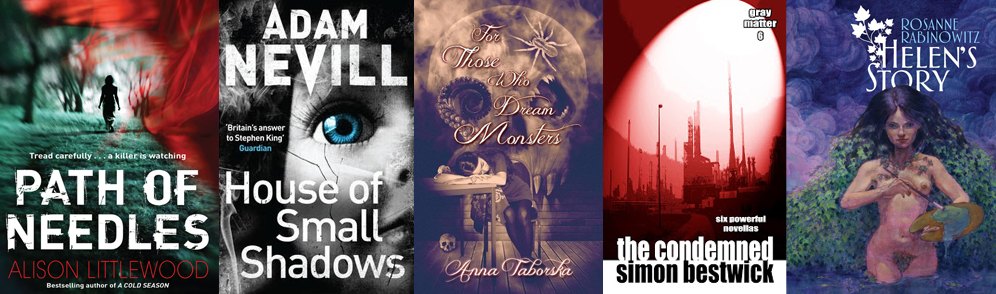
Regarding novels, I’m glad I picked up Alison Littlewood’s Path of Needles. Essentially an English crime thriller featuring a fairy-tale obsessed serial killer and set in the moody landscape of West Yorkshire, it’s compelling and exquisitely told. I also loved Adam Nevill’s House of Small Shadows. It’s the claustrophobic and creepy story of a troubled auctioneer of oddities, and the eponymous house is a perfectly sinister creation.

Special mention also goes to the lustrous Helen’s Story by Rosanne Rabinowitz. Functioning as an update/sequel for Arthur Machen’s “The Great God Pan”, it will please anybody who enjoys a thoughtful reworking and fresh point-of-view on a classic.

Hellforge Best of 2013 1

For single author collections, two spring immediately to mind. These are For Those Who Dream Monsters by Anna Taborska and The Condemned, a book of novellas by Simon Bestwick. Both deeply evocative storytellers, they’re on top form here, bringing humanity, cruelty and chills in stories that leave their ghosts with you long after reading.

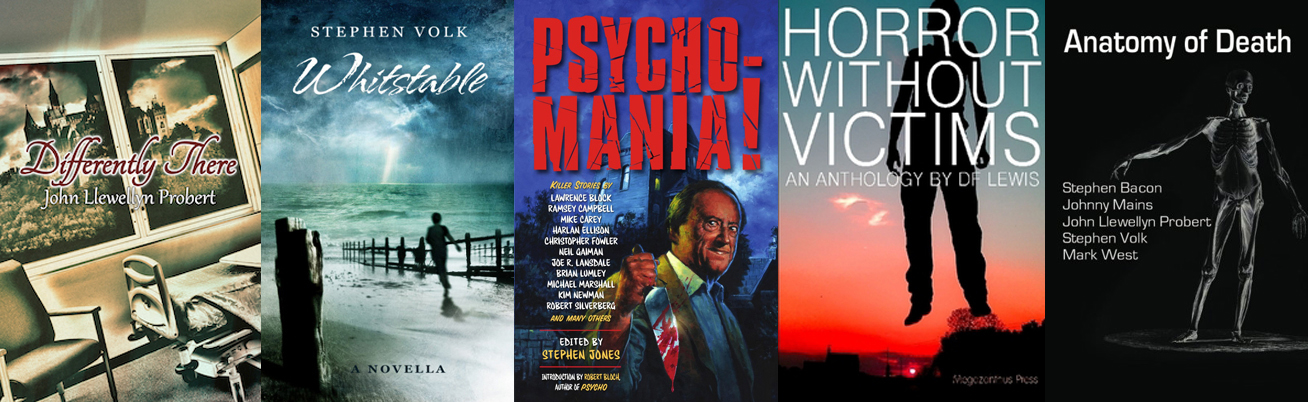
I’ve read a lot of single novellas this year, and again, there are two that particularly stood out. Firstly, the beautiful and poignant Whitstable by Stephen Volk stars horror legend Peter Cushing, mourning the death of his wife and becoming involved in a very human drama. Second is Differently There by John Llewellyn Probert: the dignified tale of a man about to undergo major surgery. Despite both authors being masters of the macabre, here they use extensive research and experience to go for the heart rather than the stomach, and produce essential reading whether you care for genre fiction or not.

On to anthologies, my favourite overall was the hefty and superb Psycho-Mania! edited by Stephen Jones. Themed around murderers of all kinds, it has no passengers and contains a couple of my favourite short stories of the year. It was quite difficult to pick a second, as there were several muscular contenders for the slot. But because it forced authors to really earn their place with a tricky concept, I have to go with Horror Without Victims edited by DF Lewis.

Hellforge Best of 2013 2

The last category is single stories from anthologies or collections. The School House by Simon Bestwick (The Condemned) blew me away: a story of madness, bullying, and ghosts from the past that has shocks and feeling in droves. I’m not sure if it should count, it being a reprint from a BFS anthology in 2008. But as it’s the finest story I read this year, the rules can hang.

Of the new 2013 tales, the two that really stuck were both from Psycho-Mania! Firstly, Essence by Mark Morris is the engrossing tale of an ageing couple of serial killers patiently luring a new victim. Fun yet genuinely disturbing, its characters linger as though I’ve actually met them. Secondly, Let My Smile Be Your Umbrella by Brian Hodge is the incredibly immersive dialogue of somebody planning to murder a miserable blogger, and subtly layers in themes and reflections without it once becoming anything less than slick.

And that’s almost your lot. I’d just like to add a special mention for Anatomy of Death, edited by Mark West, for two reasons. It was a strong contender for best anthology, and it contains Stephen Volk’s ultra-sharp The Arse Licker: the most darkly humorous and unpleasant thing I’ve read all year.

Keep reading and writing the dark stuff in 2014, folks.

Cheers!