Review – “Samurai and other stories” by William Meikle

0

I’d read a couple of William Meikle stories before, but this was the first time I’d tackled them en masse. Crystal Lake Publishing have presented 16 recent tales from this prolific author’s catalogue, and it turned out to be just the kind of book I’d hoped. A melting pot of SF, fantasy, hardboiled, historical fiction and horror, Samurai… is a colourful ride and presents plenty of wry humour and derring-do along with the blood and chills.Samurai-and-other-stories-FB-sizeThere are no weak tales, but here I’ll mention a few of my particular favourites. One of those is the title – and opening – story in which we meet the Scottish survivors of a shipwreck on Japanese shores. They find an ancient temple, deserted yet strangely hospitable, and are tempted by the treasure it holds despite the suspicious lack of security. I was immediately drawn into this period piece by the action and witty dialogue – delivered as it is by strong characters – and it all kicks off before long, the action cemented by themes of honour and deft clashes of culture. I particularly like how the author introduces sudden violence with such elegance that it made me do a double take, matching the confusion of the protagonists. Stylishly written and building to a double-twist finale, this is a muscular start to the collection.

“Rickman’s Plasma” is a wild but self-aware B-movie about a man’s disastrous attempt to create music using his own dreams. And by disastrous, I mean carnage of international armageddon proportions. I liked the repetitious style of the escalating threat, and despite the casual gore, it still has a light tone and a pay-off that inspires a grin.

I especially enjoyed “The Toughest Mile”, a breathless fantasy in the style of “The Running Man”. We meet Garn – a successful gladiator owned by a witch queen – who is allowed a stab at freedom by facing the Challenge: a 10-mile dash along a tunnel, pursued by the queen’s terrifying bred-to-kill female assassins. Garn’s plight is made more interesting by his sexual relationship with the witch queen overseeing his ordeal, and as this author has a real knack for inspiring anticipation and tension, we’re very much along for the adrenaline-fuelled ride. Faultless in structure and sense of place, this cinematic blast builds to a surprisingly elegant conclusion.

It’s back to 1605 for “The Havenhome”: a ship visiting a colonial outpost in which everybody has been frozen, apparently by some malevolent evil force. The captain’s journal entry style works well, the 17th century language rings true, and I enjoyed the pervading sense of peril as the crew become trapped in the remote outpost and menaced.  We’re treated to some very dark moments, and the God-fearing attitudes add to both the supernatural unease and the historical milieu. An exciting contribution that’s ultimately rather elegiac.

The lights are turned down for “Living the Dream”, a moody modern story about a disturbed man who has grim nightmares and becomes obsessed with a woman from the factory where he works. Sexual, nasty and visceral, this piece draws you in whether you like it or not, and a sharp finale ties it together.

This collection boasts several solid ghost stories, but “The Haunting of Esther Cox” is the best of the bunch. We visit the 1870s to find our eponymous heroine narrowly avoiding rape, after which her attacker mysteriously goes missing. Cleverly told through the diary entries of Esther and her brother in law Daniel, it soon descends into a clamour of poltergeists and possession of the noisy hellfire variety. A scary experience that succeeds with the required suspension of disbelief.

“Dancers” stuck in my mind, beginning with an old man showing us the ghost of his lost love. Through his gentle voice, we learn of a bitter wartime romance that involved murder, jealousy and guilt, and this perfectly-crafted tale manages to fit in a huge of amount of plot and feeling for its short length.

Referencing Sir Walter Scott’s 19th century poetry, “The Young Lochinvar” introduces Julia, a young woman on a train journey through a dark and windy Scottish night. Stuck with her father and the ghastly bore to whom she is unwillingly betrothed, she meets an enigmatic and alluring stranger who might be the answer to her disillusionment. I didn’t quite understand the conclusion, but nevertheless found this a superbly evoked journey and my sympathies were very much snared.

Finally, I’d like to make special mention of the two stories that present an old creation of the author. Derek Adams is a droll and weathered Glaswegian PI with all the gallows humour, attitude and unhealthy habits that a hardboiled hero requires. In “Home is the Sailor” we find him investigating a cursed seaside hotel and in “A Slim Chance”, he tackles a case involving a fatal diet pact and a parasitic monster. Our ascerbic protagonist carries both 1st-person tales as the macabre mysteries unfold, and as “A Slim Chance” is the last story in the book, the conclusion ends things on a very wicked and pleasing note. I’ll be sourcing more tales of PI Adams and their seamless hybrid of crime and horror.

I rather enjoyed Samurai and other stories. The humour and horror temper each other to the right degree, and rarely have I come across such a breadth of imagination in one publication. From fantastic realms to the world of the Spanish Inquisition, from the high seas to haunted Appalachian mines, there’s swashbuckling and spinetingling aplenty in equal measures. The writing is crisp and unintrusive, often letting the characters and dialogue do the driving, and the period voice and place is without fault throughout.

Although a couple of the conclusions didn’t quite work for me, there’s no true disappointments, and it’s also pleasant to hear an authorial presence through the Scottish culture and folklore he drizzles into the mix. Overall, this book put me in mind of the adventure collections I used to read as a boy, albeit with the addition of adult themes and grisly shenanigans. This makes it a rip-roaring read for those of us who might have grown older, but still like a bit of intrepid charm with our darkness.

If you’re not familiar with William Meikle, this is a pretty good place to start.
Hellforge Horror Picks of 2013

3

There’s been some great releases this year, particularly on the small press anthology front I think, but here’s a couple of each category that won’t be forgotten in a hurry.

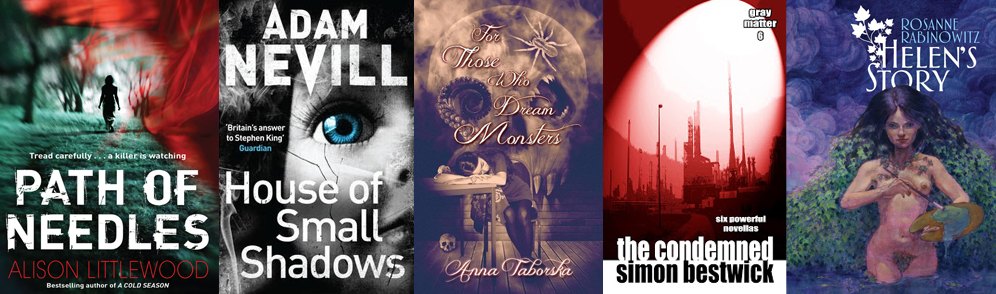
Regarding novels, I’m glad I picked up Alison Littlewood’s Path of Needles. Essentially an English crime thriller featuring a fairy-tale obsessed serial killer and set in the moody landscape of West Yorkshire, it’s compelling and exquisitely told. I also loved Adam Nevill’s House of Small Shadows. It’s the claustrophobic and creepy story of a troubled auctioneer of oddities, and the eponymous house is a perfectly sinister creation.

Special mention also goes to the lustrous Helen’s Story by Rosanne Rabinowitz. Functioning as an update/sequel for Arthur Machen’s “The Great God Pan”, it will please anybody who enjoys a thoughtful reworking and fresh point-of-view on a classic.

Hellforge Best of 2013 1

For single author collections, two spring immediately to mind. These are For Those Who Dream Monsters by Anna Taborska and The Condemned, a book of novellas by Simon Bestwick. Both deeply evocative storytellers, they’re on top form here, bringing humanity, cruelty and chills in stories that leave their ghosts with you long after reading.

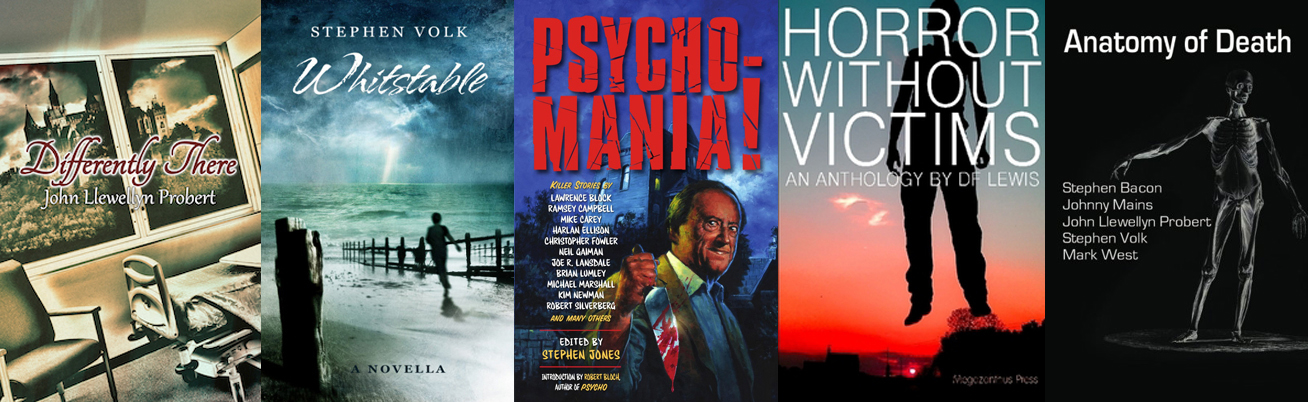
I’ve read a lot of single novellas this year, and again, there are two that particularly stood out. Firstly, the beautiful and poignant Whitstable by Stephen Volk stars horror legend Peter Cushing, mourning the death of his wife and becoming involved in a very human drama. Second is Differently There by John Llewellyn Probert: the dignified tale of a man about to undergo major surgery. Despite both authors being masters of the macabre, here they use extensive research and experience to go for the heart rather than the stomach, and produce essential reading whether you care for genre fiction or not.

On to anthologies, my favourite overall was the hefty and superb Psycho-Mania! edited by Stephen Jones. Themed around murderers of all kinds, it has no passengers and contains a couple of my favourite short stories of the year. It was quite difficult to pick a second, as there were several muscular contenders for the slot. But because it forced authors to really earn their place with a tricky concept, I have to go with Horror Without Victims edited by DF Lewis.

Hellforge Best of 2013 2

The last category is single stories from anthologies or collections. The School House by Simon Bestwick (The Condemned) blew me away: a story of madness, bullying, and ghosts from the past that has shocks and feeling in droves. I’m not sure if it should count, it being a reprint from a BFS anthology in 2008. But as it’s the finest story I read this year, the rules can hang.

Of the new 2013 tales, the two that really stuck were both from Psycho-Mania! Firstly, Essence by Mark Morris is the engrossing tale of an ageing couple of serial killers patiently luring a new victim. Fun yet genuinely disturbing, its characters linger as though I’ve actually met them. Secondly, Let My Smile Be Your Umbrella by Brian Hodge is the incredibly immersive dialogue of somebody planning to murder a miserable blogger, and subtly layers in themes and reflections without it once becoming anything less than slick.

And that’s almost your lot. I’d just like to add a special mention for Anatomy of Death, edited by Mark West, for two reasons. It was a strong contender for best anthology, and it contains Stephen Volk’s ultra-sharp The Arse Licker: the most darkly humorous and unpleasant thing I’ve read all year.

Keep reading and writing the dark stuff in 2014, folks.

Cheers!

Review – “Demons & Devilry” edited by Stuart Young

0

Everyone has things that stoke a warm familiarity, and the cover (and title) of this book from Hersham Horror made me nostalgic.D&DNot only does a similar image adorn many a beloved metal album, but it also reminds me of big white smocks, suspicious chanting and Peter Cushing looking terribly serious.

This niche of horror isn’t as popular nowadays, as the focus has shifted and demonic chills are rarely sought from the likes of Dennis Wheatley. But quaint though it may seem, there’s nothing finer than a bit of gleeful devilry (I love that word) whether you have fond memories of it or not. I was pleased to discover that this solid line-up have done diabolism proud and brought plenty of new tricks to keep the concept fresh.

Kicking things off is “The Abhorrent Man” by Peter Mark May. This colourful tale takes us back to the sacking of Carthage in 146BC and a search of the “Eye of Hannibal”, a treasure said to contain a djinn. One that may well cause terrible trouble years later when the site is subject to an ill-advised excavation by Dr Marsden and his supernatural researchers. With exotic locales, powerful talismans and all kinds of hellfire, this is an appropriate opening to such a book, and the theatrical dialogue and knowing pay-off made me smile.

Next up, childhood chills abound in “Little Devils” by Thana Niveau. We meet Arabella and her younger sister Pippa exploring a building site with friends. It’s forbidden fun and scares at first, but things start to get out of hand when they find dead rats and a campfire strewn with bones. And even more so when one of them suddenly starts to speak Latin. The characterisation is crisp, the pecking order and peer politics of children are spot on, and I felt rather sorry for the tag-along Pippa. Very well written, this piece descends into a black magic spectacle, full of all the blood and goat-horns you could wish for.

The relentlessly superb John Llewellyn Probert is up next with the “The Devil in the Details”. This begins with a subtly humorous description of a Welsh coastal house – at midnight naturally – that’s been modified for satanic sacrifice. We then meet our heinous protagonist, Maxwell Chantry, who with the help of an equally nefarious surgeon and torturer, is repeatedly attempting to raise the devil and failing. Or has he failed? This splendid piece brims with ivory-handled sacrificial daggers, naked virgins, and amusing dialogue, but don’t be fooled into relaxing too much by the tone. There’s plenty of nastiness and a definite chill beneath the playful twist.

David Williamson’s “The Scryer” introduces Dan, who lives in a council flat with his low income family. After inheriting a manor house in the countryside from a distant relative, he finds an ornate mirror in the enormous cellar along with some black mass paraphernalia. I love an evil mirror story, and this one is pleasingly Pan-esque and features a great aura of malevolence and nails the corruption of the susceptible. Dan’s not the nicest of people anyway, and his descent into darkness– and the hesitant unease of his previously confrontational wife and daughter – is well presented. Although the tale has a fairly standard finale for this kind of thing, it’s a well crafted and enjoyable piece.

Last up before the black velvet curtain closes is Stuart Young’s “Guardian Angel”. This is the longest tale – a novella no less – involving Becky and Sajid, a shelter and youth worker. Having being led to believe they’re meeting clients to secure funding, they find themslves caught up in some horrific satanic shenanigans in a seedy S&M stripclub. This is a sexually charged piece that doesn’t hold back, featuring some wild and trippy scenes that involve raped angels, airbourne detached septums, and the most ghastly and original use of a scorpion I’ve ever encountered. The scenes of violence are striking and written with flair, and the tension is built through some deft scene-switching between earthly and hellish realities. The characters are tangible, particularly ex-pimp and converted Muslim Sajid, whose internal conflicts ring true. And I loved his prison/street demeanour, especially when confronted with a demon and deciding that the “fucker was all front”. The pace was occasionally dulled by some confusing religious lore, which seemed unnecessarily complex and included details not crucial to the plot. But the story is full of sharp phrases, vivid description and twists, and it concludes the anthology with a flourish.

If Demons and Devilry sounds like your particular chalice of virgin’s blood, then you’ll find plenty to satisfy here. Despite the old-school theme, these tales aren’t dated or stale, they’re contemporary homages to the cause of all things arcane and infernal. And with such a stark appearance and title, it’s also a fun book to brandish in public. Dig out the black candles and enjoy.

Review – “Psycho-Mania!” edited by Stephen Jones

0

This highly anticipated tome arrived on my doormat with a thud that made the cat jump. An appropriate entrance for a book of over 500 pages that promised “twisted tales of psychos, schizoids and serial-killers, many with a supernatural twist.” And that it is. Psycho-Mania! is a splendid mix of old and new stories, and if my finger-counting is correct, contains 34 altogether (not including the framework pieces), more than half of which are brand new to this collection.psycho-maniaIt begins with a pleasant previously-unpublished introduction from Robert Bloch, before John Llewellyn Probert kicks off with a fun and creepy scene. I love a good framework story, and if you need one to transform your anthology, he’s your proven man. With much experience of portmanteau fiction, asylums and all things ghastly, he’s the perfect choice with his lauded talent for merging classical and contemporary styles and themes. It concerns Dr Stanhope, a medical journalist, visiting a Victorian asylum to collect information for an article. But he finds that the mischievously sinister Dr Parrish has other ideas, and wishes to play a game involving the cases of his patients, these being the individual stories of the anthology. Full of masterful dialogue and attention to detail, these framework segments are scattered throughout and tie it all together nicely.

On to the tales themselves, I found no passengers in this anthology – all deserved their place – but the following are those that particularly stood out for me and still linger after the book was closed.

Reggie Oliver’s “The Green Hour” is a sumptuous period piece that resurrects Poe’s detective C. Auguste Dupin (of Murders in the Rue Morgue fame). We are treated to an absinthe-themed murder mystery with shivers, a tight plot and a twist. The author has done a splendid job of capturing the detective’s manner – in fact the introduction in which he puts an enquiring police commissioner in his place made me laugh out loud – and Poe would’ve approved of his sense of place.

Steve Rasnic Tem’s “The Secret Laws Of  The Universe” begins with a man having a conversation with a toaster. Yes, you read that right. What follows is the superb descent of a precise and polite man planning to kill his wife for strangely benevolent reasons, who engages in dialogue with inanimate objects in his home. The black humour lends whimsy to what is actually quite a dark and sad tale.

I had read Basil Copper’s “The Recompensing Of Albano Pizar” many years ago, and it took me right back to my childhood. A stylish 70s classic, it concerns the wealthy widow of a writer who plans spectacular revenge upon the agent that duped her. I enjoyed the educated prose even more this time around, and while the plot seems somewhat familiar now – as is the case with several of the older stories gathered here – it’s important to remember that they did it first, and it’s rewarding to see how genre tropes started out.

I loved “Let My Smile Be Your Umbrella” by Brian Hodge. This piece is the gripping dialogue of somebody deeply upset with the narcissistic doom and gloom generation. He seeks out a particular blogger for her refusal to embrace life and its generosity, and plans murder. Somehow depressing yet uplifting, this story has powerful voice, a blinding conclusion and plenty of layers regarding opportunity, entitlement and disillusion for readers to get their teeth into.

Scott Edelman’s “The Trembling Living Wire” introduces a meticulous choirmaster who believes that his talented pupils really shine when suffering deep personal tragedy. He takes it upon himself to provide that for them, and the results are an elegant and chilling piece with plenty of tricks up its sleeve.

I imagine Robert Silverberg had quite a glint in his eye when he penned “The Undertaker’s Sideline”. It’s exactly that, featuring a town mortician with an additional and highly nefarious use for corpses. Naturally, things get way out of hand, and I loved the traditional prose and the gloriously cold villainy of our protagonist.

Another favourite was read with sadness, for it’s the work of Joel Lane who passed away earlier this year. “The Long Shift” presents a disgruntled employee seeking late night revenge on an old boss in the Welsh countryside. I love this author’s prose – “gulls scream like fading pornstars” and “local beers called to him in melodic accented tones, the optics added their higher voices to the choir”. There’s amazing evocation of the surroundings, and also of human ugliness – terror, rage, bitterness – which makes for a slick read cemented with a strong pay-off. RIP, sir.

Lisa Morton’s “Hollywood Hannah” is the 1st person account of a film school graduate who lands the job of assistant to a notoriously tough female producer. With tangible characters and an inventive surprise at the end, this tale is a reflection on how Hollywood and backstabbing businesses in general can sap the souls of anybody. Lured by its disarming voice and sense of humour, I enjoyed how this tale ultimately became much darker than the sum of its contents.

Even darker is Paul McAuley’s “I Spy”. It’s the engrossing account of an intense and voyeuristic man who had an abusive upbringing and now has a defining passion for spying on other people’s lives. This is vivid and muscular storytelling, delivered via matter-of-fact prose that suits our storyteller’s mindset, and I loved the suckerpunch halfway through when we realise what we’re actually dealing with here.

If you will pardon the film reference, Mike Carey presents what felt like a cross between the Saw franchise and Theatre of Blood in “Reflections On The Critical Process”. Here, a deranged critic seeks homicidal and ostentatious revenge on our eloquent and unruffled narrator. I tore through this story without pause.

Introduced by one of John Llewellyn Probert’s links regarding ripper syndrome is “The Gatecrasher” by R. Chetwynd-Hayes in which a séance leads to blood. A spooky and visceral piece, it shows the old school can still rock it with the kids – even with something that seems hokey and quaint at face value – and the conclusion is a pleasing bookend.

In Robert Shearman’s “That Tiny Flutter of The Heart I Used To Call Love”, two odd souls come together: a quiet downtrodden man and a young woman who has an unhealthy relationship with dolls and sacrifice. Fully fleshed characters make this study of damaged psyches shine, and with themes of belonging and love, it’s also quite poignant beneath the creeps.

“Essence” by Mark Morris is one of my favourites. A horribly engrossing piece, we find a murderous middle-aged couple patiently hunting a young girl in a nondescript British pub. The attention to detail in their manipulative technique is genuinely disturbing, and just when you think it might have unfortunately all got a bit familiar, it jacknifes from your grip with a cackle. World class horror.

Ramsey Campbell maintains his standard with “See How They Run”. This is an exceptionally written account of a multiple murder trial – and its aftermath – from the point of view of a juror. With plenty of mood and palpable emotion, it soon becomes a claustrophobic descent of obsession and misery.

Conrad Williams is on fine form with “Manners”: a short about a strange loner who lives in an abandoned farm hut and scavenges for food. It’s deceptively gentle and rustic at first, but the finale is anything but that. I had to reread the last few paragraphs again, just in case I was mistaken as to what had happened. I wasn’t. Brilliant stuff.

Christopher Fowler brings back a couple of his old characters from the peculiar crimes unit in “Bryant & May And The Seven Points”: a humorous yet nasty tale of shady Russian politics and a sideshow carival dwarf. Although I guessed the gist of the finale before it came, I think I was supposed to, and certainly didn’t want it to end. It’s got fine narrative voice, entertaining dialogue and all the twists, malevolent criminals and jeopardy you want from a murder mystery.

I don’t think I’ve read any Rio Youers before, but certainly will again after the grim and gripping experience that is “Wide Shining Light”. A man on the brink of divorce meets old school friend at a reunion, reignites their friendship, but it turns out he’s not all that he seems. A nimble and layered piece, it riffs on opportunity, life, trust and betrayal, and paces towards a tense finale.

Neil Gaiman provides a quirky change of tone with “Feminine Endings” – a stalky loveletter with a beautifully chilling finale – before Peter Crowther puts us back on the edge of our seats with “Eater”. Here, we meet a jaded New York City cop one late night with the unenviable job of babysitting a captured cannibal in a quiet precinct. He becomes paranoid, and the skilful prose ensure we share his well-founded unease in this genuinely unnerving thriller.

Michael Marshall dabbles with his old straw men conspiracy in “Failure”, which concerns a parent worried about the behaviour of his son towards women. Don’t be the least bit put off by what seems like much infodumping at the outset, as I initially was. This is an engaging and troubling tale that plays with perceptions and loyalties towards a sour reward.

Kim Newman presents a wonderfully irrevent piece starring Alfred Hitchcock in “The Only Ending We Have”. We meet the fed-up shower scene body double from Psycho, who makes off with a film negative and ends up staying in a motel run by a dysfunctional mother and son. With plenty of resourceful parallels and film references, this is a very nicely tied-up package.

There’s also flair aplenty in Richard Christian Matheson’s “Kriss Kross Applesauce” which takes the form of a family’s annual Christmas letter. A fun and original little piece, it keeps us guessing, and doesn’t pan out the way we might think.

Finally, special credit also goes to John Llewellyn Probert for his epilogue. It’s back to Dr Parrish’s asylum for “A Little Piece Of  Sanity” which concludes both the anthology and the framework story of Dr Stanhope in gleefully ghoulish style. Despite us knowing full well it isn’t going to end well for our ill-advised medical journalist, it still manages a few surprises, and never has extreme villainy been so delightful.

Its no exaggeration to say that this is my favourite anthology of 2013. Also including reprints by Joe Lansdale, Harlan Ellison, Brian Lumley, Dennis Etchison, Lawrence Block, Robert Bloch and Poe, and solid new pieces from David A. Sutton, David J. Schow, Jay Russell and Michael Kelly, Psycho-Mania! is a winner. There’s haunting mood, lurid nastiness, and everything in between. Regardless of the genre, Stephen Jones has gathered some very talented writers – each at the top of their game – which makes for extraordinary value and an essential buy for any fan of the macabre.

Highly recommended.

Review – “Ill At Ease 2”

1

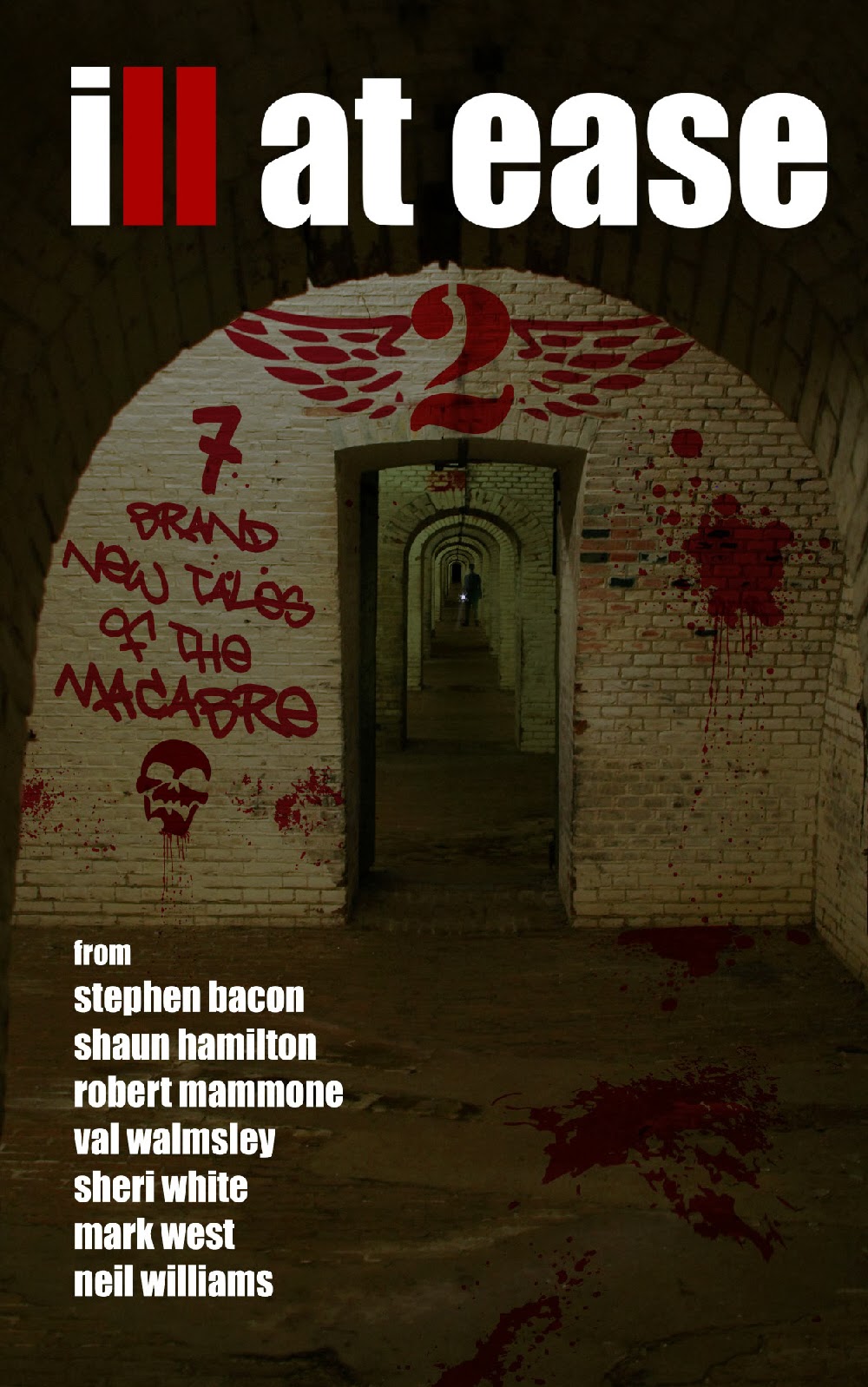
The original Ill At Ease was released a couple of years ago: a small anthology featuring Mark West, Stephen Bacon and Neil Williams. It presented three strong tales in which peril lurks behind the ordinary, so I was pleased to hear news of a sequel from Penman Press. Another four authors have been added to the original line-up and although the vibe is similar, this time you get a bit more variation and a few horrible surprises.Ill2 Cover ImageStephen Bacon is a fine purveyor of quiet horror and “Double Helix” kicks things off with a tale that showcases his trademark mood, character and prose. We meet Claire, a terminally ill woman on a trip to rural Scotland with an old ex who believes he can help her find treatment. This story engages at once through our protagonist’s fears and frustrations, and there are strong themes of guilt and regret. It’s ultimately less dark than I expected, actually quite sweet at times, but we’re never far from that heart-breaking human reluctance to let hope blossom as youth and health slip away. It still finds room for some seriously creepy atmosphere and the finale took me by surprise. It was something that both story tone and author familiarity hadn’t led me to expect, but it cements a beautifully-written piece with a memorable otherworldliness.

This assured start is followed by something of a very different flavour. “The Shuttle” by Shaun Hamilton involves Sally and Paul, a pleasant couple who move to rural Wales to start a family. Unfortunately, their parental plans are soon to be affected by the eponymous shuttle: a concrete tower that overlooks from a nearby quarry. I was deceived by the gentle start and the normal lives of these folk, but soon enveloped by the aura of unease. It made me guess as to if the supernatural was playing a part, and both visceral and emotional shocks combine as everything falls into place. I found it occasionally over-descriptive, especially during dialogue, but this is countered by some superb turns of phrase. Perhaps rather unsubtle for some, I loved the jugular-pouncing horror – in concept and delivery – and it’s a great contrast to Stephen Bacon’s opener.

Somewhere betwixt the two is “Masks” by Robert Mammone. We are introduced to Harry, the fiancé of a presumed dead girl, who discovers that she might have been spotted in the train station where she disappeared. We’re treated to a literal and metaphorical descent into the station’s lower levels of grime, dripping walls and threat, every detail of which is exquisitely painted. During the opening scene in a funeral parlour, I was briefly confused with character identities, but after this small false start I was gripped. This piece toys with our suspicions, layering on the chills as we’re dragged deeper towards a tense and unpleasant finale. Ill at ease, indeed.

“One Bad Turn” by Val Walmsley plunges us straight into the plight of Tim, a boy on the run from bullies. He finds refuge beneath an old yew tree – a place of local folklore with a grisly past – where he dreams of murder and everything spirals from there. Young Tim’s hurt and rage is very well conveyed, and understandable, providing the pathos that this kind of tale requires. Although I found the descriptive showdown slightly overlong, it’s far from predictable and I was swept along by this ghastly bag of horror tricks.

A familiar parental terror rises in “The Bureau of Lost Children” by Mark West. We meet Scott, who loses his seven year old son in a shopping mall, and his search soon takes a terrifying turn. The initial panic is perfectly captured (gleaned from experience, the afterword explains) and this tale teases with moments of hope amid the escalating strangeness. It makes you wonder what goes on behind closed doors, and I loved the superficially banal but chilling menace. Perhaps I’d have liked a little explanation for its nefarious intentions, but then maybe it works better with the mystery intact: the whole thing becomes reminiscent of 70s and 80s science fiction. Very cleanly written, I didn’t see any part of this story coming, which makes for a great horror thriller.

A gruesome short, “Paradise Lost” by Sheri White is the account of a man on a paradise beach holiday that suddenly becomes a snapshot from hell. It doesn’t hang about before family normality gives way to gore, and cranks up the claustrophobia of impending doom towards a horrific pay-off. With no background to the events, this is a glorious horror snippet that had me turning pages like some ghoulish voyeur and it lingers like the memory of a nightmare.

Finishing things off in thoughtful style is “There Shall We Ever Be” by Neil Williams. In this haunting piece, we find Mark – a discontented man – returning home to Warrington for a family funeral. He meets a familiar old man en route who tells him of a boarded up tunnel that’s a strange link to the past. The scene is set for a spooky build-up that provides incredible place, taking us right there into Mark’s ill-advised adventure into the darkness. I quite liked our downbeat protagonist, and the layers of the tale – urban evolution, childhood memory and fear – add plenty of depth. It takes its time, rightly so, towards an appropriately gauged finale that I wouldn’t dream of spoiling with any clues.

Given the obvious time and effort that went into the first volume, I was pleased to find that Ill At Ease 2 has the same stamp of quality. With an interesting authorial afterword for each, all seven stories are slick, emotionally investable, and deliver a range of genre textures. Whether you like slow-burning unease or a nasty kick in the pants, there’ll be something to satisfy your dark passenger.

Go on, let’s have a third.

Review – “For Those Who Dream Monsters” by Anna Taborska

1

Remember that name I said to myself the first time I was recovering from one of Anna Taborska’s  stories. It was a tale that drew blood, evoked with haunting imagery and almost unbearably poignant.

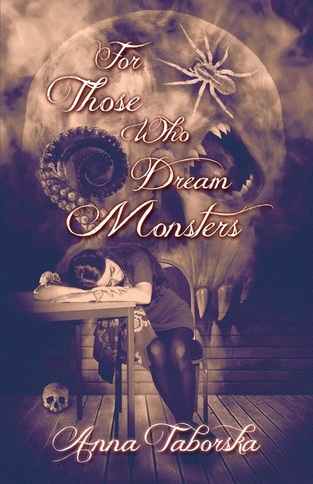
A few years later, Mortbury Press have done the only sensible thing to do, and put her name on the cover of a full collection. This was eagerly anticipated here, and as well as enjoying some excellent new tales, I also discovered that the familiar ones were just as good the second time round, sometimes even better.TaborksaAfter a bang-on introduction by Reggie Oliver – who also provided a perfect black and white illustration for each of the stories – the book gets off to a strong start with “Schrödinger’s Human”. This concerns a professor with a horrendous penchant for cruelty and killing whose life changes when a scruffy black cat arrives on his doorstep. This tale really appealed to my car-crash-peering ghoul as it ratchets up the nastiness until the Pan-esque finale, bringing expert touches of black humour to counter the sourness of tone.

Next is “Little Pig” which begins with Adam, a nervous man waiting to meet his Polish girlfriend’s grandma Irena for the first time. The story then whisks us back to Irena’s childhood, fleeing wolves through the snow of wartorn Poland with her siblings and mother. As well as the pure adrenaline rush, this section packs an emotional punch when a hideous choice has to be made for the family to survive. The conclusion is elegant, functioning as a neat bookend, and the whole thing demands much investment for such a short piece. I also liked the juxtaposition and glimpse into the hidden layers of people’s lives, and perhaps there’s also a reflection on the relative triviality of our first-world troubles.

A lighter but violent revenge story, “Fish” concerns the exploits of a wrongly-murdered postman. Playing out like an episode of  Tales from the Crypt, it left me slightly wanting, but is well paced and cemented with dark humour.

We visit a poor village in Africa for “Buy A Goat For Christmas”. The locals receive a decommissioned tank from charity, intended to be dismantled and fashioned into farming tools by the local blacksmith, but then a visiting backpacker begins to display lycanthropic tendencies. The scene is set for quirky gruesomeness, and it sits well with the next tale, “Cut!”, which features a film director who’s a bit of an arse. He hires a bad actress on a whim, gets much more than he bargained for, and I smiled at the unashamed, old-school horror punchline.

“Arthur’s Cellar” is an interesting and memorable experience. It describes a man hunting an escaped creature his grandfather kept in the cellar of his remote forest house. Particularly evocative, there’s a strong pay-off, and I never quite managed to decide if was meant to be fun or disturbing. Which is no bad thing.

Cruelty and humanity abound in “The Apprentice”, a historical account of a violent village baker who hires a mute apprentice. It’s a slick read, and the finale – once again – is pleasingly dark.

Turning down the lights further is “The Girl in the Blue Coat”. A journey of discovery drizzled with the supernatural, we follow a travelling journalist wishing to interview Jewish people about their experiences of the holocaust. Horrible but elegiac and respectful, this is one of those rare pieces that manages to be both humble and humbling.

“A Tale of Two Sisters” is a Shakespeare-themed pair of stories, set in rural Poland. Part I is “Rusalka” in which a young man is bewitched by a village girl. It was tainted for me by a personal annoyance – elusive figures that invite pursuit – but the trope was well handled and I was still drawn into his obsession. I preferred Part II – “First Night” – in which friends Dan and Henry end up holidaying in a place where betrayal killed a broken-hearted village girl escaping the lust of a local Count. It really brings the folklore to life, and rouses just anger amid all the striking cinematic imagery.

A couple of lighter genre pieces follow. In “Halloween Lights”, we join a lost soul approaching a rural town on Halloween. It triumphs by forcing us to guess throughout what happened to our baffled protagonist. Is it a man who’s been in an accident? Perhaps it’s a confused werewolf or some other night creature? Following this is “The Coffin”, in which a man takes a shortcut through a cemetery and spies an unattended coffin that begins to cause him much distress. I found the concept a bit odd, and the ending was rather too familiar, but it’s impressively creepy for a story so short.

The author’s talent for evocation soars for “The Creaking”, involving a forest, a gentle herbalist named Alice, and some villagers with a violent paranoia regarding witchcraft. A well rounded piece, there’s brutality, kindness and a terrible shock. It’s nice to read a proper adult fairy tale sometimes, and this ticks all the boxes right down to the benevolent heroine and the destructive power of ignorance.

The 2nd in this trio of stories touching on gender egos and sexuality is “Dirty Dybbuk”. We meet Mitzi, a prudish Jewish student who succumbs to some kind of nympho-possession. It seemed a bit rough towards the end, and I was jarred slightly by some stylised narration, but it’s a wry and a self aware distraction from the heavier tales that loom either side of it.

Which brings me to the memorable “Underbelly” in which we find Anna, a woman dying of cancer. She encounters a demonic bat-like carnivore in the cellar of her building that promises to take away her pain, but for a terrible price. It’s so well executed that the somewhat familiar set-up didn’t spoil the intensity, and there’s just the right balance of bleakness and hope. The characters particularly shine, and moments of sweetness and humanity occur when we might’ve been hoping for brutal revenge: extra credit to the author for this deft emotional play.

“Tea With The Devil” is exactly that: an endearing discussion occurring in a rough estate on Halloween where it seems that the great horned one may be having a change of outlook. I feel unqualified to properly review “Elegy” – a poetic short about a magic lake on the site of a sunken inn – as it is a homage to Bruno Schulz, with whom I’m not familiar. I suspect nuances may therefore be lost, but I still enjoyed this colourful showcase of folklore and atmosphere.

Save the best ’till last the saying goes, and that’s certainly the case here. “Bagpuss” is the tale of a 12 year old girl, Emily (of course), who moves with her mum and beloved pet cat from the city to the countryside, bringing new fears and freedoms for all. This story wields such evocation and place that it’s like memory, aided by enormous emotional investment. The characters are perfectly realised, including the cat, and I even loved the dream sequences, which I often dislike in fiction. There’s so much going on here – themes of cause and effect, loneliness, innocence, the fragility of life – that it makes for compulsive reading and builds to an unforgettable finale. I still keep thinking about it and feeling sad, and might actually be slightly traumatised. But I’m going to read it again.

For Those Who Dream Monsters is a rewarding collection with its contrasts of compassion and cruelty, submission and hope. Anna Taborska is a superb storyteller, capable of extraordinary sense of place, characterisation, and rarely have I been floored with such poetic punches. Relationships are poignant, in so few words, and she can switch between the male and female voice without a stutter.

As Reggie Oliver said in his introduction, it would be exhausting to list the variations of location, theme and tone in this book. I agree, and suggest that you take the journey for yourself.

Recommended.

Review – “Horror Without Victims” edited by DF Lewis

2

DF Lewis has always proved himself to be a thoughtful editor that ensures that his books become more than a sum of their parts, and this latest publication from his Megazanthus Press is no exception. It brings an intriguing concept to the table and I couldn’t wait to see how the authors had worked with it.horror-without-victims_thumbnailHorror Without Victims must’ve been difficult to write for as well as edit. It would be challenging to produce a book of any genre that did not contain a victim in some sense of the word, and while the definition can be debated, I didn’t detect any glib dismissal of the niche guidelines. It has clearly forced authors to think outside the box regarding their submission, and also – I imagine – pruned the editorial slush of trunk stories.

As expected, there’s an interesting mix of traditional and leftfield, elements of the sublime, and stories poignant and disturbing. I was pleased to discover that there wasn’t actually a piece I particularly disliked, but the following are those that stood out for me.

“Clouds” by Eric Ian Steele introduces Evan, a restless and dissatisfied man with a lifelong affection for the sky. He notices while cloud-staring that the buildings of a nearby street – and perhaps the people – seem to be disappearing. He naturally questions his own sanity, and becomes very trying with his concerned and loving partner Emma: a convincingly troubled relationship already. The author’s matter of fact style is peppered with lush but subtle metaphors, and cements an odd but absorbing tale of existentialism that builds to an appropriately inconclusive and ethereal finale.

We meet the gentlemanly Mr Devlin in “The Carpet Seller’s Recommendation” by Alistair Rennie, taking up his first overseas post with a large Istanbul carpet merchant. He takes a river trip along the Bosphorus that takes a terrifying turn, and this 1st person account says much about the protagonist and his attitudes through educated prose. It’s tense, has a grand aura of doom, and a slick pay-off that riffs nicely on the anthology concept. Upon finishing, I immediately read it again.

“For Ages and Ever” by Patricia Russo is an adult fairy tale that bravely succeeds with a 2nd person point of view. It’s set in a strange and strictly rule-based city where nobody is allowed to cry or even touch in public, and concerns a sinister red house that seems to change or even devour people. Asking questions of the reader as myths merge with themes of identity, death and perception, it provides a very colourful journey.

“The day we went down to the beach, Slater insisted that his interest in torture was of a scholarly nature.”

Thus begins “Night in the Pink House” by Charles Wilkinson in which a wheelchair bound blind man and his bidding carer, Topcliffe, are dissecting the anatomy of the scream. It provides a great clash of the erudite and nasty, sinking darker as it progresses and drawing the reader along to a solid and sour-tasting conclusion.

“Point and Stick” by Mark Patrick Lynch is an immediately engaging account of a cash-strapped man who rents a cheap room. Having seen an obese woman in the flat below through a hole in the broken floor, shuffling about and appearing never to leave, he begins to wonder is she’s a prisoner. Voyeuristic and ultimately less dark than I was expecting, this story adroitly puts the reader’s assumptions under the microscope.

Another favourite is the exquisitely evoked “The Cure” by John Travis. This tale follows Lionel, a terminally ill man with nothing to lose who pays a wad of cash to visit a mysterious island via a private plane with blacked-out windows for exclusive treatment. The course begins with new age reflections and hippy ramblings, and as Lionel’s hopes for direct interventions and medicine start to fade, the threat begins to grow. Sometimes the title of this anthology gives us clues as to how things might pan out, but John Travis dodges this pitfall with aplomb and presents a clever, compulsive piece that will please fans of the grisly as well as those of mood and menace.

Continuing the atmosphere of mystery and alien surroundings is “We Do Things Differently Here” by David Murphy. A “meet the parents” situation, it concerns Sally, a young woman visiting the potential in-laws in Efferentia: a picturesque but strange harbour town in which the locals seem to do things back to front. While she finds this quirky in some regards, such as their books being in reverse chronological order, attending a local funeral blows her mind. Despite being grounded in the fantastic, this story becomes quite intense through her increasing sense of being trapped, and tackles some interesting questions to attitudes about death.

“Lord of Pigs” by DeAnna Knippling is a beautifully written yet ghastly and surreal tale involving a child’s uncle – Uncle Chuck – who gets eaten by pigs. There’s an unsettling innocence at play due to the youthfully recalled point of view, and plenty going on beneath the layers of visceral horror for the reader to get their teeth into.

Another strong contribution is “Like Nothing Else” by Chris Morris. This introduces James, a man remembering his first sexual experience in the barn of a dilapidated farmhouse with a reptilian creature, overseen by a scraggy local squatter. There’s some genuinely unpleasant moments, and it questions the essence of humanity and desire, maintaining a psychological and nightmarish tone through to its ugly conclusion.

I loved “Scree” by Caleb Wilson. An excellent concept, it features a man stuck on an ever-sliding diagonal scree of boulders and rocks due to some catastrophic shifting of tectonic plates. We find him and the rest of the crumbling world sliding towards the “maw” as he refers to it: the vast darkness of the earth into which all shall tumble. He passes his weeks scavenging the detritus of civilisation drifting down along with him – half collapsed buildings, flat pack furniture, musical instruments – while being careful not to fall into the vicious current of scree and be ground to pieces. Well told, I didn’t want it to finish, and it very much nails the loneliness and strange serenity of any quality apocalyptic story.

Possibly my single favourite of the anthology is “Vent” by L.R. Bonehill. It is the poignant and elegant tale of Imogen, the daughter of a ventriloquist who suffers a personal tragedy. The author doesn’t miss the opportunity to utilise the natural creepiness of ventriloquist’s dummies, and peopled by very solid characters, the narrative deftly weaves a picture both through reminiscence and Imogen’s current situation, where we find her alone with a knife. There’s nostalgia and grief, tremendous humanity and pain, shocks both physical and psychological, and a breath-taking conclusion that I didn’t see coming. Immaculately told, “Vent” ticks all the boxes. Superb.

Following this is “The Yellow See-Through Baby” by Michael Sidman, a quirky ghost story and a veritable triumph of voice, told as it is in the present tense from the point of view of a young toddler. Through the author’s skill, we find ourselves engaging with the child as he sees the titular figure in his room, and it’s through this filter of innocence – the child’s hopes and fears – that this story very much succeeds where it could so easily have failed.

The anthology concludes with a sequence of very short pieces, and of these, I was particularly impressed by Tony Lovell’s “The Callers”: a sad episode of encroaching dementia and its effect on a family. Gentle but quietly powerful, the dignified but downbeat conclusion sums up the nature of such illness. Similarly tackling the ephemeral and fragile nature of our existence is “Still Life” by Nick Jackson. More a flash vignette than a story, it describes a room succumbing to time, detailing the mould and decay. Reminding us that all shall fall, it encompasses the concept of the book nicely.

Overall, I very much enjoyed Horror Without Victims. Although I was occasionally left slightly wanting, there are no bad tales, and several of them are truly exceptional. While it may be cliché to say there’s something for everyone, in this case it’s true. The bleak and grim elements contrast the lighter and more hopeful, and there are mood pieces and snippets of life as well as more traditionally structured stories. And with DF Lewis at the helm, there is always going to be plenty to think about as each story glides seamlessly into the next.

Although most contributors have done a sound job of avoiding predictability, a small problem arises from the theme. It can be quite restrictive and sometimes dilutes the shock of a twist ending as we start to second guess what might prevail, given that there won’t be any victims. Which of course brings us to the question… is this even possible? Horror Without Victims is a quite a concrete statement, so much is down to personal interpretation of what constitutes a victim, both generally and in the context of the fiction. But I think to get too bogged down in this discussion, fun though that can be, is counterproductive. If we simply accept it to mean victim in the brutal genre sense – in that people tend not to end up getting killed, tortured or savaged by something monstrous – then we can kick back and enjoy the eclectic and unusual ideas that these authors have presented.

And I suppose that’s the essence of Horror Without Victims. A selection of talented writers throwing themselves into a provocatively tricky concept, the resultant gestalt of which is a very respectable addition to the editor’s canon.

Recommended.

Review – “The Power of Nothing” by Richard Farren Barber

0

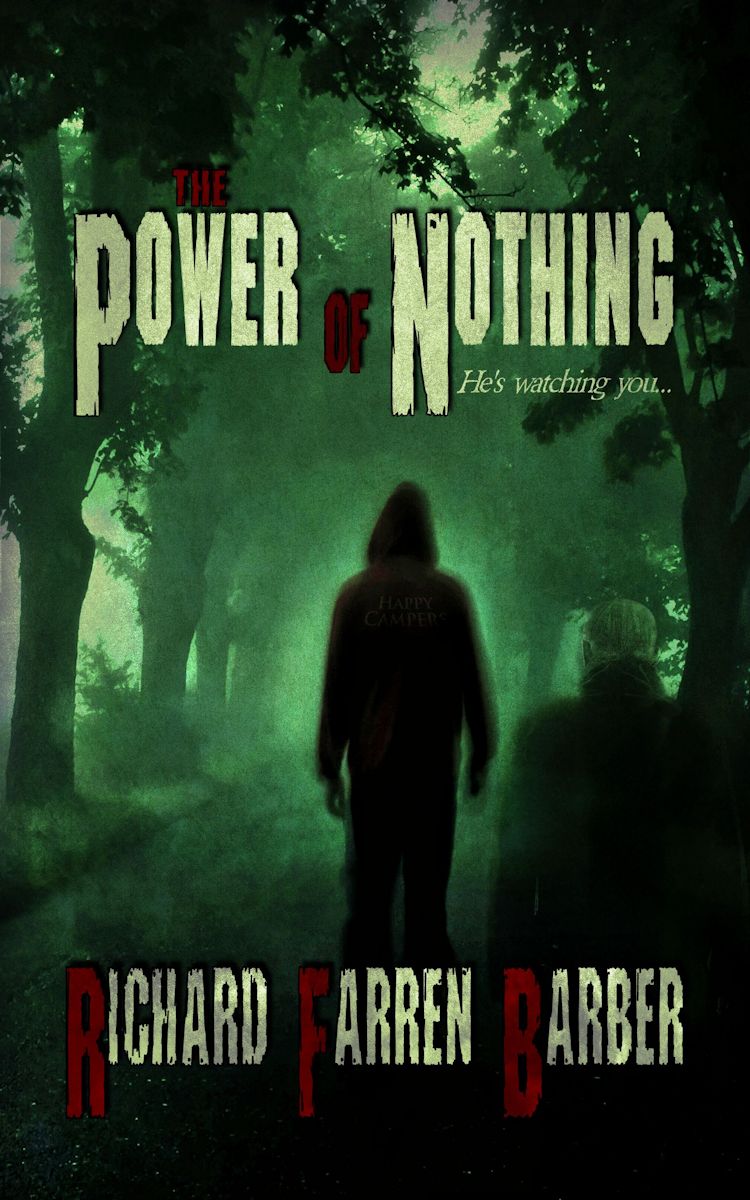
I’ve only read a story by Richard Farren Barber once before – the excellent reflection of war that is “Last Respects” from the Derby Scribes anthology of 2011 – and it stood out for its pathos and evocation. His new novella from Damnation Books is more of a horror genre piece, and I was pleased to discover that beneath that atmospheric cover is a slick and involving work.The Power of NothingSteve is a normal young man who works on a flagging high street that seems to be frequented by bored hoodies more than shoppers. One day while working, he spots a pale, wispy-haired stranger outside – the gray man – who seems to be staring at him.

This silent and unnerving figure keeps reappearing in Steve’s life – when he’s walking home or helping out at the local youth club – and he starts to question if it’s even really there. He’s soon driven to rage, but discovers that even violence won’t keep his ghostly stalker at bay.

I quite liked Steve. He’s sensible with his social conscience, and empathises with the disaffected kids that feature in his routine. His grounded attitude drew me into the story immediately, and also helped with the necessary identification as he battles with his pragmatic side against what he can actually see.

The growing menace of this story is strong and never ebbs whether our troubled protagonist is at work in the shop, walking the lamplit streets at dusk, or in a boisterous club. This creepy vibe really keeps the pages turning, especially when Steve’s grip starts to falter, and the ongoing presence of disenfranchised youth as well as the gray man keep us guessing as to how it’s all going to pan out.

Sometimes a prose style is worthy of remark due to it being particularly poetic or flamboyant, but I love it that this author is largely invisible. His attention to detail is brilliant, as are his turns of phrase, but there’s never any intrusion to the experience and he lets the characters, plot and sense of place take command of the storytelling.

I enjoyed “The Power of Nothing”. It has an uncluttered concept and the themes of inevitability and control add a bit of substance, as does subtle social commentary. My only real gripe was that the pace dipped towards the end, and a couple of these chapters could perhaps have benefitted from a trim. Several scenes involving Steve telling the gray man to fuck off and leave him alone became quite repetitive, but this lull precedes a splendidly downbeat and unpredictable finale that meant my complaint was instantly forgiven. Richard Farren Barber pulls off that difficult feat of a conclusion that inspires wry reflection and also throws light – or is that darkness – back across the story as a whole.

Well played, sir. I’ll be back for more.

Review – “The Condemned” by Simon Bestwick

1

It was about 5 years ago when I first read a story by Simon Bestwick, and at the time I had no idea what I was in for. That story was “The Narrows”, a truly immersive experience with genuine chills and aching pathos, so the bar was set absurdly high from day one. But over the last few years of reading his fiction, I’ve discovered that this wasn’t a chance one-off and this exceptional collection of six novellas from Gray Friar Press proves that he’s one of the strongest voices in contemporary British horror.The CondemnedFirst up, “Dark Earth” tackles the brutality of the First World War, colloquially regaled by Private Bill Sadler who’s under court martial for desertion. This grim and bloody period of history is compounded by the infestation of no man’s land with mud-dwelling, toothy worm-like monsters that devour and possess the frontline soldiers, and possibly have influence even further up the ranks. I was completely absorbed into the death and desperation, and believable characters inject real humanity into the story. It’s also pleasing – and respectful – that the monstrous elements don’t detract from the real horror of trench warfare, instead combining the two to create a powerful and action-packed adventure that forms a sterling start to the book.

Next up is the aforementioned “The Narrows”. Gripping from the off, it’s the present tense account of Paul, a secondary school teacher during a nuclear holocaust. Having survived the initial blast, he somewhat unwillingly leads a small group of surviving children and fellow staff underground to avoid the radioactive fallout. They find refuge in a network of subterranean canals and caverns known as the Narrows, but something malevolent seems to be down there with them. Or is it the actual tunnels themselves? Or even a creeping madness from the radiation? A deeply moving piece, we feel our protagonist’s pain, knowing that his girlfriend has inevitably perished in the blast, as have the others’ families and loved ones, and that combines with the relentless claustrophobia to form a very memorable experience. It cranks up the hopelessness of their situation, turning down the lights until there’s nothing left and you have no choice but to join them in the descent. A superbly evocative piece and a deserved addition to one of Ellen Datlow’s best-of horror anthologies.

Following this classic is “A Kiss of Old Thorns” which introduces Andrew, a young man out of his depth and on the run with a tough bunch of bank robbers. After a car accident on an isolated road, they seek sanctuary in the beachside home of an old hermit who fashions wreaths from thorns in order to keep some kind of supernatural evil at bay. A tight story peopled by some believable and nasty characters, there’s plenty of menace from both the baleful presence and the thugs themselves, and I was very much along for the ride.

“The Model” sees Ella – a cash-strapped student in Salford – answering a call to be a life model. But rather than an art class, she’s unnerved to discover it’s one hulking, almost-unseen man in a quiet empty building that also seems haunted by strange wraith-like presences. After repeated visits, she becomes increasingly ill and afraid, but is drawn by the money and more importantly, some kind of sinister hold that the artist seems to possess over her. She is unable to resist his call, even after a suspicious death, which is made more chilling by her being quite a sensible girl. While the finale is appropriately bleak, it is somewhat less concrete than I would’ve liked, but there’s tremendous sense of place, as always, and the story oozes a grim inevitability.

Despite not thinking that “The Narrows” could be topped, I found “The School House” to be The Condemned‘s crowning glory, blindsiding me with incredible emotional and physical clout. We are introduced to Danny, a man who works at a psychiatric home and is plunged into the past after a childhood friend is committed for burning down their old school. Danny soon starts to have nightmares that resurrect suppressed memories of bullying and violence, and he begins to wonder if he’s losing his sanity. I don’t want to give too much away, but with its themes of control, power and broken minds, this story blew me away. There are some real surprises and twists in store – both brutal and genuinely heartbreaking – proving that this author is an intelligent, reflective writer at the very top of his game. This is a horribly unputdownable piece of work, full of dextrous literary tricks and tragic, terrifying portrayals of both mental illness and our darkest natures. Brace yourself and be damned.

Finally, the scene is one of urban deprivation for “Sleep Now in the Fire”. Our unwitting hero is Sean, an ordinary man visiting a block of flats in a sinkhole estate to look for his missing brother. He bumps into a surprisingly pleasant young woman, but this reassurance is soon soured by the appearance of a local nasty piece of work who might be behind his brother’s disappearance. After his car is stolen, Sean finds himself trapped in the squalid streets and beset by some taloned vampiric creatures called the Blueboys. This piece begins brilliantly with a palpable sense of threat, plenty of twisting action, and the author builds you up and knocks you down emotionally in subtle ways. It’s not without flaws, however. I found the political metaphors a bit clunky and the potential romance angle didn’t quite work for me. The science of the Blueboys seemed a bit complicated and took some explaining, and occasional segments of dialogue are a bit cheesy, robbing the grittiness of the outset: is this meant to be social realism or just fun? But these gripes are not so important in such a rollercoaster of a tale, and the scene is set for a showdown of fireworks and blood. There’s a soul-restoring fightback of good versus evil, and an epilogue that concludes both the story and the collection itself on a refreshingly positive note.

I very much enjoyed The Condemned. With brief and revealing story notes, there’s not a bad tale to be found, and this deep but never turgid book is more than worth the cover price for “The Narrows” and “The School House” alone. Simon Bestwick’s prose is sharp and the investable protagonists bring life and humanity to every piece. He can turn his hand to all elements of modern horror fiction whether eerie or shocking, supernatural or earthly, and even when he just sets out to entertain, thoughts are always provoked.

If you’re familiar with this author, then you can look forward to enjoying some of his finest work. If not, then The Condemned is a grand place to start. Rarely is the macabre so satisfying.

Review – “Soul Masque” by Terry Grimwood

1

This is a slightly unusual offering from Spectral Press in their chapbook series of mostly spooky and haunting tales. “Soul Masque” is a stark nightmare of drugs, macabre sexuality and demons, but despite the deviation in both style and content, it still packs a punch.soul-masqueThe story paints a grim picture of London as a battleground between heaven and hell. The main players are a morphine addicted reverend who wields the celestial power of “the Glory”, a powerful dominatrix, a woman who has a divine deal to keep her cancer at bay, and a guilt addled loser trapped by the will of his nefarious masters. They’re tied together by “The Singer”, an angel no less, but one with more of an unholy personality than one would traditionally expect.

The author’s prose is full of frank description that works well on the whole. It fosters a traditional feel that collides nicely with the sado-masochism, profanity and blood, and there’s plenty of chilling turns of phrase that galvanise the aura of menace and make things much darker than they seem at face value.

The tale begins unconventionally with an intense epilogue that describes a demonic invasion of a nightclub. I rather enjoyed this, and was urged to venture on and see how that came to be. And what an adventure that is. The London of the story – its warehouses, streets, and grubby bedsits – has tremendous sense of place, and the whole tale seems tainted by the sleazy malevolence.

This is a fast moving story which means that although it’s never dull, it can be disorientating. The plentiful cast of characters meant that sometimes I had to check back to see who was whom, but there’s still empathy to be found which is impressive in a piece of this length and style. The demons are beautifully painted; nasty, spindly creations presented in just the right amount of detail to let your imagination fill out the rest.

“Soul Masque” is a solid piece. It kept me along for the ride and concludes with a prologue – bookending the bleak epilogue at the outset – that neatly ties it all together. There’s little fun to be had, the vibe being more one of hopelessness, and the overall experience is made memorable not by specific characters or events, but by the supernatural darkness and more importantly the fear. It leaks from the pages, defining many of the characters, settings, and lurking behind every phrase.

Credit goes to Spectral’s editor Simon Marshall-Jones for not being afraid to wander from the beaten path. While perhaps not to everybody’s taste, I enjoyed this sojourn into Terry Grimwood’s urban, shadow-strung hell on earth. And never has the word Glory been so pleasingly deceptive in its application.