Favourite Genre Reads of 2011

6

Hope you all enjoyed Christmas and had a happy new arbitrary-moment-in-time-the-same-as-any-other, and all that.

Another vintage year for all things imaginative and ghastly, and it was tough to whittle a mere top 10 from the heap. There’s a couple of works here that spilled over from 2010 – too many books, not enough hours – but nothing older than that. So here they are in no particular order, and you can click on the title of the first 8 for a thorough review.

  • “Do Not Pass Go” by Joel Lane A beautifully produced, sturdy little chapbook of addictive crime fiction. I was right there in the city streets, drifting through the garbage, cigarette smoke and darkness. Brilliant.
  • “Push of the Sky” by Camille Alexa A relaxing pleasure to read, this is an impressively colourful fantasy/sf collection, and a real melting pot of styles and subgenres. She’s a talent to watch.
  • “Weirdtongue: A Glistenberry Romance” by D.F. Lewis A book that seems to divide its critics like Marmite. Thick with wordplay, outrageous characters, layers and textures, I found this oft-baffling linguistic art piece to be a real treat.
  • “End of the Line: An Anthology of Underground Horror” edited by Jonathan Oliver Just in case you needed more reasons to dislike travelling on the tube. An impressive line-up run wild with the concept, leaving a host of unpleasant, lingering memories.
  • “Angels of the Silences” by Simon Bestwick A modern and alternative ghost story full of humour, horror and pathos. “Bestwickian” is a phrase that should have caught on by now.
  • “Where the Heart Is: A Guided Tour of British Horror” edited by Gary Fry And what a chilling yet elegant tour that is. Some of Britain’s most interesting horror writers don’t disappoint in what was certainly my favourite anthology of the year.
  • “Fearful Festivities” by Gary Fry Being a bit of a bah-humbug when it comes to things sentimental and twee, this is my kinda Christmas story. Intelligent, creepy and character driven. With claws.
  • “Ill At Ease” by Stephen Bacon, Mark West & Neil Williams A truly faultless ebook featuring 3 equally memorable, macabre and highly polished tales. There are even clowns to upset any fellow coulrophobic masochists.
  • “Dark Matter: A Ghost Story” by Michelle Paver Journal-style writing at its best, this evocative Arctic ghost story reminded me of how much fun it is to be actually scared by a book.
  • “It Knows Where You Live” by Gary McMahon Very glad I bagged one of this limited-edition collection, in which the lights are turned down from the start. And then swiftly off. Rumour has it that the author’s underpants are made of Countess Bathory’s shroud, and his shadow cries in its sleep.

And although it’s only a short novella download, special mention also goes to “Butterfly Winter” by Weston Ochse, a breathtaking and beautifully written tale of war and human nature that still haunts me months later.

And there it is. There’s plenty of supernatural in the list, which isn’t always to my taste, so thanks to the authors for reaffirming my love of the spooky. It’s too difficult to pick an overall winner, so I’m going to cop out and just leave it at top 10. Which was tricky enough itself.

Cheers.

Keep reading and writing in 2012, folks.

Review – “Fearful Festivities” by Gary Fry

1

It was a chilled but sunny December morning when I opened a parcel to discover this beautiful jacketless hardcover from Screaming Dreams.

I tend to dislike jackets anyway – they just snag and look tatty – and even after being read, dropped on the floor and pounced on by the cat, this sturdy book still looks pristine, festooned with its fantastic artwork from Steve Upham. And it turned out to be a great distraction from the pre-Christmas chores that I should’ve been doing. Having enjoyed several of Gary Fry’s short stories, I was pleased to discover that Fearful Festivities is a thoughtful and well paced horror novel, brimming with the season of ill-will.

It begins on a strangely warm December 22nd in the gentle Yorkshire village of Hitherton, when several of the residents receive a dragon-stamped invitation in the mail.

“Christmas is a time for miracles. Tell us what you want.”

Delivered by an elusive but nightmarish postman, could these tempting requests possibly be the answer to their woes? There’s Tom, a cash-strapped family man with a failing bookshop, and Graham, his unemployed academic brother. We also meet a lonely and obese woman, a wannabe internet tycoon, and a boy who misses his soldier father who’s away fighting in Afghanistan… and all of them have a deep longing for something that traditional gifts can’t provide.

Along with some other desperate folk, they’re lured into making wishes against their rational judgement. The miracles start to take form, yet things seem increasingly askew and sinister. Before long, it’s clear dark forces are at work and all kinds of devilish trickery ensue, which I don’t want to spoil.

Initially, I wasn’t bowled over by this book. The prologue concerns the 8-year old boy, Kevin, who misses his dad and is frightened of the closet monster. It delivers the requisite horrors and excitement for a curtain raiser, but seems slightly over-described and didn’t quite hook me as it should. Regarding this character, there are plenty of nice moments when we, as readers, realise certain things that have eluded his 8 year old perspective. But I also thought there were a couple of times when his ruminations were expressed in a form that seems far too adult.

I became much more engaged when we start to meet the other residents going about their daily routines, and the oft-familiar problems of their lives in which the grass is always greener. This is one of several deft themes, and we don’t have long to wait before it all starts to kick off.

The semi-rural village’s sense of place is neatly evoked and the inhabitants themselves are mostly likeable and flawed. They’re painted in some detail so that after a while, the reader knows them intimately enough to allow slightly odd changes in behaviour to become noticeable. This complements the feeling of unease and  makes this homage to small-town old-school horror work so well.

The book is full of clever turns of phrase, and some startling visions that unsettle in a single sentence. This author also has the knack of wry one-line teasers at the end of a chapter, which makes for some theatre. The plot threads are nicely linked and I liked the way that the characters’ individual wishes are not all immediately revealed. They’re teased in as the tension mounts, letting us wonder what manner of hellish trouble they might have accidentally invoked.

Although entertaining, the loud, showcase finale was not quite to my taste, and includes a paragraph of explanatory narration that I found intrusive and unecessary. But I certainly wasn’t disappointed, and the monstrous conclusion provides plenty of surprises and ties up some good concepts with a flourish.

Fearful Festivities is a layered, strongly-themed novel, and manages to dissect the envy and hope that come at this time of year without getting bogged down or losing the sense of grisly fun. It makes for compulsive reading with investable characters, shocks, and that classic feel of lurking menace that should be the essence of any horror tale.

Switch off that Christmas repeat on the telly and read this instead. You’ll never look at a child’s misspelling of Santa Claws the same way again.

Available from Screaming Dreams here

Review – “Where The Heart Is” edited by Gary Fry

1

I’m a bit late with this Gray Friar Press book review, but I enjoyed it too much to merely slot it back onto the shelf without fanfare.

Where The Heart Is promises an alternative tour of Great Britain, in which the 19 British contributors wrote about what they know best… home. From faded northern industrial towns, violent urban sprawls of the south, and the bleak and sublime countryside in between, this promising TOC delivers a convincing journey through the sinister side of this sceptred isle.

Where else to start but the capital? The opener is “Ticker” by Allen Ashley, which transports us through the tube lines, streets and pubs of London from the perspective of a man who’s recently lost his father. He’s drawn into an urban “clothes war” in this clever presentation of modern urban behaviour, both tribal and cynical. This is a well written, multi-layered tale with pathos and menace in equal measures.

Next, “A Killing in the Market” by Stuart Young takes us to Romford and introduces Dave, an ill man deeply suspicious of the medical community. And for good reason. Another expert pen delivers plenty of seamlessly real dialogue, but don’t be lured by the reassuring humour and warmth, because you’re in for a real horror finale.

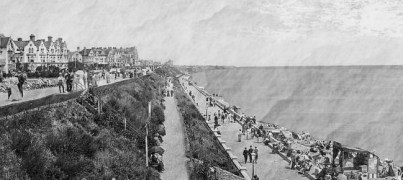
If you haven’t read any of the inimitable DF Lewis, then this is a good place to start. “So” (referring to the local pronunciation of “sea”) is a mood piece set in the traditional resort of Clacton-on-Sea. As everything closes down at the end of the holiday season, there’s an overwhelming atmosphere of ebbing time, transience and final journeys. It gives such a flavour of the place that it feels like I’ve been, even though I haven’t.Norfolk is the stage for “The Onion Code” by Andrew Hook: a remarkably original tale of a woman who can read onions, and manages to predict an earthquake. Told in a distinctive style, it has a wry sense of humour, and a less concrete finale than expected, the satisfaction of which will depend upon your taste. It has memorable moments, including an entertaining good cop/bad cop duo, and scores extra for a deeply chilling moment in a fashion shop changing room.
Following is “Easter” by Stephen Volk. Here we visit a quiet Bristol suburb and meet Martin – a middle-aged unconfrontational man – and his frustrated wife, Cheryl. The council arrive to conduct some work, and soon they have a crucified man in their front garden. “Easter” has a very English flavour, and despite the strange and slightly nightmarish content, it’s rendered normal by the couple’s believable relationship and their extraordinary diffidence: the essence of the tale. Very pleasingly tied up, this is one of my favourites.

Next we cross the border into South Wales. In “The Cuckoos of Bliss” by Rhys Hughes, Swansea is the canvas for this wild tale in which a jobless man is selected to be safety officer in heaven. Full of stunning turns of phrase, this extraordinary fantasy bursts with colour. Managing to be fun, then suddenly deeply disturbing in turns, this is a razor sharp piece of fiction, if perhaps slightly overlong.

From Swansea, our tour heads west into the mist-shrouded marshes of the Welsh Gower Peninsula. “Summerhouse” by Mike O’Driscoll begins with a wall of descriptive text, which initially put me off, but I was soon drawn into the mood. A married man revisits the location of childhood love, and the result is a triumph: nostalgia, ritual and loss collide to deliver a powerful conclusion.

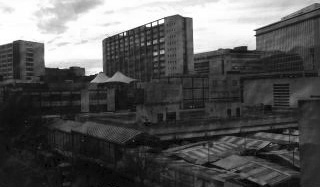
After this sobering piece, we head back into England for “The Last Witness” by Joel Lane. Set in the hulking city of Birmingham, it features a nefarious property developer who’s no stranger to violence and murder, and a derelict house with dark forces at work. The tale made me feel for even the minor characters – the author has a talent for conjuring real people from a sentence or two – and it’s a solid meld of crime, noir and horror that keeps us guessing.More urban clautrophobia follows in the excellent “The City in the Rain” by Mark West in which he paints a sagging, rain-lashed Leicester. A master of empathy, the author introduces Andrew, a man who recently lost his wife and is lured into an alleyway after hearing cries for help. Despite being ever-so slightly marred for me by that old trope of a glimpsed figure from the past that then slips away and invites pursuit (just a personal irritation), at least here it was an important part of the plot. Andrew’s grief is palpable, and forms the spine of a good old-fashioned horror story and another of my favourites in this anthology. And the final sentence made me grin.
Another treat is “Last Summer” by Stephen Bacon. Set in an old colliery village near Sheffield, this is a moving piece that harks back to the miner’s strike of 1984, the Margaret Thatcher years and the distinct troubles of the time. The plot concerns missing children, possibly by the hand of a serial killer, and there are moments of horrible realisation but no punchlines: this is understated storytelling with no exclamation marks, but it packs more punch than the loudest scream of a tale. The narrator is reflective and gentle, seamlessly switching between childhood past and present, and this perfectly constructed descent into darkness brims with nostalgia. Bittersweet and memorable, “Last Summer” is the book’s crowning glory for me, and I would recommend it to anybody whether they like horror/dark fiction or not.

“Winter’s End” by Simon Bestwick presents both the urban and rural landscapes of Greater Manchester. A man begins a relationship with a girl in a band, falls in love, but then to his frustrated dismay, she starts to drift away from him. The story really captures that heartbreaking feeling of clutching at smoke, and is full of characterisation and style. But although I enjoyed the grisly showdown, I had the feeling that I’d missed something.

A stretch of ex-colliery wasteland in Wigan is the scene for “The Daftie” by the ever-reliable Paul Finch. Here, a young lad on a school cross country run is exhausted and left behind. He decides to take a short cut, despite the risk of bumping into the Daftie: a mentally disturbed man said to haunt that bleak and lesser-travelled route. His ill-advised decision soon descends into terror, and becomes a real adrenaline kick of a story. It has a sharp pay off, and is certainly the most tense page-turner of the anthology.Then we head east to Wakefield for “A Victim of Natural Selection” by John Travis. This sums up the author’s askew take of the world, concerning a man named Crocus who lives in abandoned urban desolation. To reveal any more would either spoil it, or not give sufficient credit to the weird and wonderfulness of it all. So I won’t. Just read, and enjoy this extraordinary vision.

We travel just a few miles to Dewsbury for “Ways Out” by Mark Patrick Lynch. This is a solid tale that presents colour and individuality amid an ambitionless, deprived populace. Brought to life by sharp dialogue and a pleasant yet strong ethnic narrator, it’s less depressing than it initially seems, and has the air of a modern fairy tale and much to digest for a story so short.

Lingering in Yorkshire, we visit Leeds for “Quarry Hill” by Michelle James. This is a modern ghost story featuring a couple of theatrical friends, and some modern buildings constructed on a site that once held flats in which people lived in terrible squalor. More light-hearted than many of the stories here, it begins well with a bit of mystery and gentle deliberate confusion. But it really starts to impress when you twig what’s happening through the clever structure of tense-switching, and it all falls nicely into place at the end.

Set near Morecambe Bay, “Scale Hall” by Simon Kurt Unsworth brings child abduction and hellfire to a gentle Lancashire conurbation. Although perhaps a little too wordy for my taste, the tale is bookended perfectly by the narrator’s troubled reflection. There’s a tremendous sense of location, and the aura of the evil supernatural is just as ice-cold and malevolent as it should be, which is no mean feat.

It’s back out into the sticks for “The Welcoming” by Gary Fry, specifically the wind-swept North Yorkshire Moors. Here we find that old cliche of a man breaking down in the middle of nowhere, which might have been a problem in the hands of a lesser writer, but not here. Parker, our unfit protagonist, trudges through the night to discover an isolated house of warm, welcoming folk, but is suspicious of their open arms. The author delivers educated prose, injected with humour and feeling, and plenty of metaphor that manages to not be invasive in the slightest. Also remarkable is the escalating threat, achieved in subtle ways that one can’t quite pin down, before a delightfully pan-esque finale. Some people scoff when anthology editors include a piece of their own, but when they’re more than good enough to rub shoulders, I’m not seeing a problem.Continuing north, we find ourselves in a snow-flurried Sunderland for “We Are The Doorway” by Gary McMahon. This has the author’s stamp of a bleak urban stage and exquisite attention to detail, as we follow Sangster: a drunk miserable man who carries a literal door to something inside him. It’s an odd but beautifully told tale, and thoughtfully explores the true concept of home.
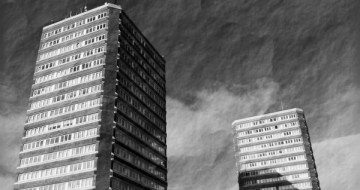
Last of all, we head into the heart of Scotland for “Stamping Ground” by Carole Johnstone. Set in the bustling centre of Glasgow, it tells the increasingly desperate plight of a man stalked by homeless people. As the weeks go by, it masterfully evokes that grim feeling of being alone in a crowd, and also helpless despite the presence of those who might assist, including the police. The tale kept me guessing throughout before delivering a climax that I though I’d predicted, but it managed to wriggle free at the last moment. A quality finale to the book.

The tour concluded, I was happy to discover that there isn’t a poor contribution. The locales all have a firm grounding and flavour, presented as they are by natives. Some also explore the very nature of home, yet even when the physical stage is arbitrary, it doesn’t detract from the enjoyment. En masse, the geographical description can intrude slightly, but that’s the nature of the theme and a location-based anthology inevitably has scenes to set.

The editor Gary Fry has selected a great bunch of strong voices here. Despite the odd spelling mistake, the stories are well written, staffed by believable characters and true motives, and even the supernatural elements seem tangible. Several are 1st person tales, which all work well, lending them a traditional storytelling vibe.

If you’re British, then you’ll no doubt recognise much in location, character and tone. If you’re not, then this is a fascinating journey through the darkness of the country’s heart via the prose of some of its finest dark fiction authors. Highly recommended.

Where The Heart Is is available from Amazon and the like, as well as direct from Gray Friar Press here.

Review – “Room Service”, “Bernie’s Bargain” and “A Little Knowledge…” by H.K. Hillman

1

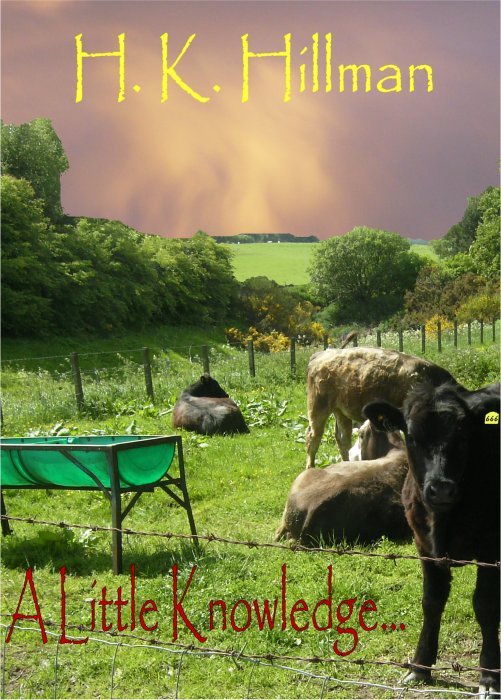
While sifting through Smashwords for some new gruesome fiction, I’d quickly bailed on a couple of amateurish pieces before stumbling across H.K. Hillman. I wasn’t familiar with this author, but as they were free, I downloaded the three short stories on offer and found some literate, vivid and rather entertaining old-school horror.Room Service begins with tongue-in-cheek licence notes, warning readers that the events of the story probably won’t happen to them. This sets an appropriately wry tone before we meet Bob – a jaded cemetery nightwatchman – and his colleague, trudging through their nocturnal routine. But in this necropolis, the coffins are fitted with emergency buzzers should anybody be accidentally buried alive, and one of them starts to go off. One that’s been buried for several weeks. Grisly goings on ensue of course, and it turns out to be an engaging ride that could’ve been an old episode of Tales from the Crypt. The dialogue is strong, despite being interrupted occasionally by excess description, and the tale has a likeable lead and a grim pay-off.It’s Halloween in Bernie’s Bargain, a shorter tale, and we’re introduced to an elderly gentlemen angered by a late night trick or treater. A skeletal figure wearing a black robe and wielding a scythe, no less. But the old fella isn’t the least bit impressed, and a genuinely amusing comversation ensues. This piece has an eye for detail and a clever biblical take on the legend of the grim reaper. It’s probably the lightest of these 3 tales with shades of Pratchett, and the conclusion delivers a wicked tweak. A Little Knowledge…  tells of Jimmy and Javier, two hardworking brothers who run a farm. But when Javier, the brains of the pair, introduces his brawny, poorly educated brother to the library and the joys of reading, we discover just how dangerous misunderstood or partial knowledge can be. Although I was jarred by a couple of clunky informative paragraphs, it rolls along nicely and becomes a solid meld of whimsy and hellfire.

Overall, H.K. Hillman’s fiction breathes with a sense of devilish fun and the dialogue gives it life. The characters are well realised, so there’s empathy to be had, though I noticed that the cast of these stories is exclusively male.

The author has a tendency to over-explain situations, and also to describe what has been inferred. But these tales are well paced with a sting in the tail, and none of the twists are predictable, nor those annoying stories that rely solely on their punchline.

Click the links above for the Smashwords freebies, and if you like, visit the author’s site here. He has a novel and a couple of collections for sale, and I’m rather tempted.

Review – One Buck Horror Vol. 3

2

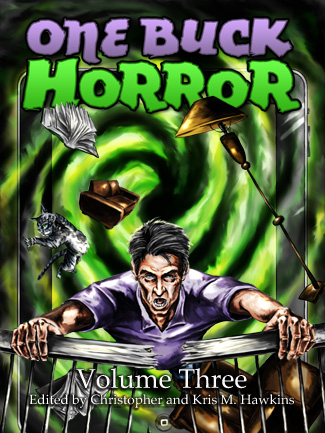
Sporting a sharp psychotronic cover by Shawn Conn, the latest issue of this relatively new e-pub is exactly what the title proclaims. You pay your buck, you get horror. Edited by Christopher and Kris M. Hawkins, a lot of effort has clearly gone into this magazine, and it shows.

Kicking off is “Helpers” by David Steffen in which we find a nefarious character stalking children in the night. Basking in the aura of a grim fairytale, it was marred for me only by a moment of awkwardly whispered dialogue, but is a very promising start to the issue with a well executed – if slightly derivative – pay off.

Next up is “Home” from Augusto Corvalan. This is a triumph of evocation that paints an uneasy world with barely any description. It opens with a domestic family scene littered with sinister teasers, before introducing us to a grim apocalypse. With shades of The Road and even The Texas Chainsaw Massacre, it keeps a few surprises up its sleeve.

Despite a dodgy opening line that put me off, John F. D. Taff’s “Child of Dirt” is an intriguing read. It presents the psychological descent of a man’s journey through the pregnancy and birth of his son. Is the child his? Is it even human?  I found the flow broken up by too much description between lines of dialogue, and a few adjectives too many, but that said, the style does lend it an old-school horror flavour that works here. The tale never lags, oozes a discomforting atmosphere and evil tone throughout, and handles the moments of horror with aplomb.

A more unusual contribution is “The Catman Blues” by Leisa K. Parker. Devoid of dialogue, this first person tale concerns a strange feline musician who brings death to a smoky blues club. I don’t normally favour this informal, anecdotal style of storytelling, but I was happy to find it a colourful and beautifully told piece.

In “Vacation” by J. Tanner we meet a young girl reluctant to go on holiday with her family, so much so that duct tape is employed, and we slowly learn why through her grave reminiscing. Gripping from the off, this is an original tale that doesn’t just rely on concept and shocks, full of real characters and dialogue.

Finally, Mark Budman brings the issue to a satisfying close with “Off With His Head”, a flash piece about a man who awakes to discover he has quite literally lost his head. It’s an odd and brave story, but well executed and palpably real, and owes more to Kafka than bizarro.

Despite the occasional flaws, this is a robust mix of horror fiction. It doesn’t have a specific theme, but certainly its own flavour: the stories all possess a  wickedly gleeful streak beneath the darkness that prevents the magazine from sinking into bleak. The lay out and editing are perfect – credit to the editorial team –  and although a relatively slim volume, it’s great value for 99c, and I’ll certainly be sampling again.

One Buck Horror is available for 99c from Amazon, Smashwords and all usual e-book venues.

Anthology Release

0

Today I received my contributor copies of The Best of Necrotic Tissue from Stygian Publications, featuring stories from all 14 issues of the sadly now defunct magazine. It’s available from Amazon in both print and Kindle versions, and also B&N and Smashwords.

It contains probably the most ghastly story I’ve written, The Narcslaag, a cybersex nightmare set in the Red Light District of Amsterdam. And against all moral and psychological recommendations, I was thinking of writing a second installment. If I can dare myself into it, that is :)

Another ASIM acceptance

0

My dark sf story “Welcome to New London, Population: 1” will be appearing in Andromeda Spaceways Inflight Magazine. Set on earth in the distant future, it features an intergalactic pilot who finds herself embarking on a subterranean and increasingly sinister adventure.

I had a story with ASIM last year, and I’m looking forward to being in the pages again. They’re a great team, and a pleasure to work with. And the stories ain’t bad either ;)

The Demise of Murky Depths

0

Sad news. Murky Depths, the anthology of graphically dark speculative fiction, has closed its doors after an 18 issue run.

It’s always been a favourite of mine, and I was lucky enough to have a story appear in the final issue. But despite great reviews and a British Fantasy Award, it has gone the way of many small press publications before it. Visit the site here for lots of great offers on back issues. Fortunately, the publishing arm of the House of Murky Depths will continue to produce paperbacks and graphic novels.

I salute editor and publisher Terry Martin for his perseverance in such a difficult field.

Review – “Thursday Thistle” by August V. Fahren

0

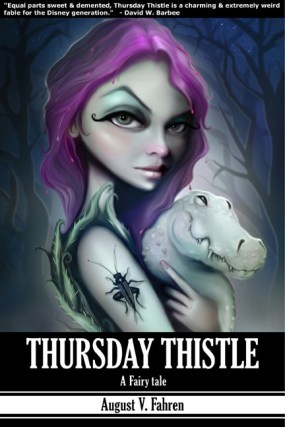
This bizarro e-fairytale comes courtesy of relative newcomer August V. Fahren. I was put off slightly by a familiar concept, but it’s clear within a couple of pages that the writing is crisp and the tale easy to engage.Thursday ThistleThe title refers to our heroine: a downtrodden Cinderella-esque misfit who lives with her sneerful stepsisters and likes drawing robotic mermaids. Her humdrum life is interrupted one day when she’s led into the land of Lethe by a two-headed talking mouse, and discovers that a cannibal witch queen is destroying the paranormal princesses, each named after a day of the week. Like herself.

The “Alice in Wonderland” structure is a well beaten path in this genre, and such formulas need investable characterisation and depth otherwise even the most outrageous ideas become bland. I was pleased to discover that although a couple of the set pieces didn’t quite have the substance or staying power of others, Thursday Thistle is on the whole an entertaining tale.

Along the way we encounter – amongst other things – tarantulas on methamphetamine, a breadcrumb trail of lamb foetuses, a spider-cow man, and a bunch of racist dwarves who keep princesses as sex slaves. The whole thing feels ever-so slightly cluttered, but then the format does allow for this to a degree, and the characters we meet are well realised. I particularly enjoyed the Zen monk who manages to confuse himself with his philosophy, as well as our patient protagonist. Thursday herself is a likeable, feisty guide, and her reactions provide much of the irreverent humour as she becomes accustomed to – and slightly jaded by – her threatening, otherworld surroundings.

“I am the lion prince,” he said.
“Good for you.”

The prose has a wry innocence, sharp with contemporary culture references, and it becomes quite unsettling when the whimsy takes a turn to the dark side.

I’ve read some bizarro that clearly rated psychedelic and weird above plot and personality. But this book is never turgid, flush with dialogue that ensures that it keeps moving, and the characters’ natural human responses prevent it from wandering from the reach of both our grasp, and our interest.

It has a cartoonish feel at times, like Disney’s long-suppressed dark side has suddenly leaked through the facade. The author also uses music to good effect, describing the dramatic orchestral accompaniment to scenes of action and fighting, like a film score, in which the instruments also become involved. This was a risk, but it definitely pays off.

There are a couple of spelling mistakes unfortunately, and a couple of the segments were by the numbers, whereas others would’ve been better expanded, but it’s a colourful and effortless read. I expected it to be more twisted, having read similar fayre more devoted to horror, though it certainly isn’t for kids. There are still moments of sour nastiness that balance it out nicely and ensure it stays the right side of the watershed.

Carroll meets Mellick, Thursday Thistle is a good value buy from Amazon and available now.