Review – “Helen’s Story” by Rosanne Rabinowitz

5

*WARNING: This review contains spoilers and a synopsis of Arthur Machen’s “The Great God Pan”

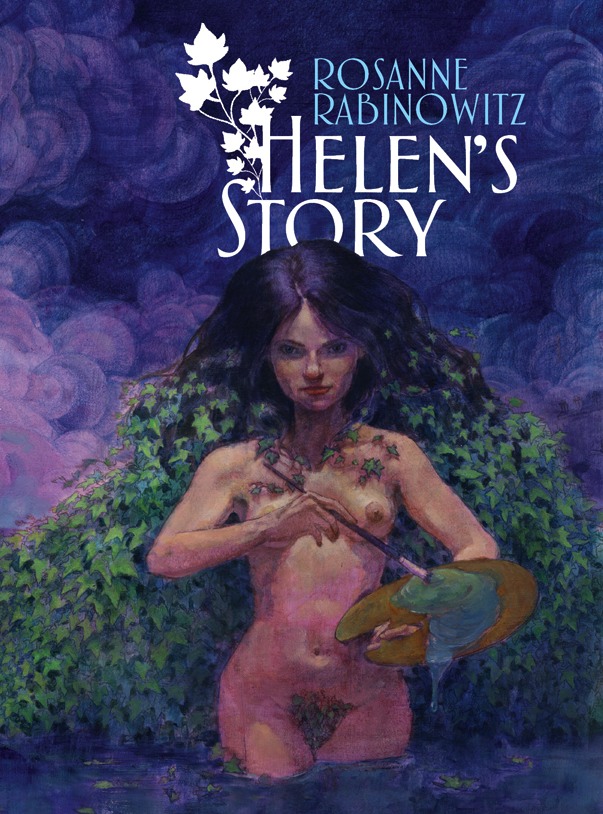
“Contrary to rumours of her death, Helen Vaughan is alive and well and living in Shoreditch. Some readers might have met Helen in Arthur Machen’s classic novella “The Great God Pan”. Now she gets to tell her side of the story.”Helen's StorySo says the rear cover of this immaculate hardcover from PS Publishing, and I was immediately intrigued. Machen’s story is a great blend of primordial horror and mystery, full of intensity and haunting evocation. But like many tales from this late Victorian period, the gender attitudes can be jarring to the modern sensibility – full of entitled male egos wounded by the evils of female sexuality – so it’s a fantastic choice of mythos for a thorough reworking.
For those not mindful of Arthur Machen’s piece, the novella introduces a Dr Raymond who conducts an alarming neurological experiment upon Mary, an orphan girl. She enters a strange dimension and meets “The Great God Pan” and after her experience with this sensual figure of forbidden experience, Mary is left a gibbering wreck. She gives birth to a child 9 months later, Helen, but the terrible stress of the delivery kills her.

20 years later, a London gentleman named Villiers stumbles upon an old friend who has been “corrupted body and soul” by his wife. Villiers discovers that some kind of siren by the name of Helen Vaughan has blazed a trail of destruction, from causing madness and death as a child to a string of male post-coital suicides as an adult. He eventually confronts her and rather than face the law, she agrees to hang herself and transforms into her true beastly nature at the point of death.

And so on to “Helen’s Story” in which our modern day heroine is far from dead, as the blurb declares, and living as a hipster artist. She wants to use her paintings and pagan powers to take the art world by the throat, and the tale begins by switching between her childhood with Dr Raymond and the present. This brings fresh suppositions regarding her upbringing and development, but although much of the plot is new, “Helen’s Story” is carefully crafted with the Machen’s world in mind. Rosanne Rabinowitz paints the otherworldly moments with vivid strokes and effortlessly transports us between Victorian and contemporary London. She captures the character and nuances of both periods and proves herself a great evocator in the Machen tradition.

As for Helen herself, it’s great to meet this shape-shifting, seductive half-deity as a fully fleshed being. She received very little characterisation in Machen’s work, the point of view being from the important male players, obviously. But here, rather than us knowing Helen only through austere opinions and a list of monstrous charges, we get the first person voice of a woman constantly struggling with – yet fascinated and empowered by – what she truly is. Respect goes to the author for not just playing her as a lonely and transient victim but emphasising her curiosity, sharp intelligence and humanity.

Another Machen tradition that is cast aside, along with the “male gaze”, is leaving everything off-camera. Too little or too much can be a fine line, but I think the author has gauged it right. Darker themes of need and otherness are tackled head on, both through Helen’s actions and the magic of her art, and scenes of sexual awakening and physical transformation are detailed but never lurid. The author also revisits Helen’s coming of age in a rural town and bravely explores her teenage relationship with Rachel, a friendship that led to the girl’s fate. In Machen’s piece, this relationship was regarded as impure; a nymph and victim. Here, it is presented as erotic, troubled and poignant.

I also like that “Helen’s Story” acknowledges the actual existence of Arthur Machen and his “The Great God Pan” publication. It gives a mischievous warmth to the proceedings as Helen recalls meeting both the “characters” from the book and even Machen himself. Dr Raymond and his serious-mindedness are perfectly captured, as is Villiers’ pomposity, fondness for booze and general self-righteousness. Helen occasionally pans the latter with such humour and razor wit that its impossible not to cheer her on, and although purists may bristle, there are no unnecessary cheap shots. The 21st century characters – such as socialite Nao and the punky Rory for whom Helen has feelings – are also believable and realised by great dialogue. And as for the enigmatic Great God Pan himself, I wouldn’t dream of spoiling what happens when he turns up.

The story builds with an understated intensity as Helen pieces together her past and the scene is set for a powerful conclusion at an art show in which she plans to showcase her sexually-charged talents. The ethereal finale is dark and dreamlike, rewriting the world as we know it and riffing on Machen’s ultimate question. How do you live a normal existence once you’ve seen?

I found “Helen’s Story” unpredictable and emotionally satisfying. Rosanne Rabinowitz writes muscular but succinct prose, injecting flair when required, and pleasingly fills in some of the more frustrating gaps of “The Great God Pan” yet still leaves plenty to ponder. Helen’s perspective brings thoughtful contrasts, particularly the lush sensuality to Machen’s turn-of-the-century patriarchy, and while the author does not disrespect his milieu, she doesn’t excuse his gender politics either. I like it when books set out to tell the story of an underdeveloped “villain” from a horror classic. This one very much succeeds as both a speculative homage and an enlightened update of Machen’s original vision.

Review: “Anatomy of Death” edited by Mark West

1

Bacon, Mains, Probert, Volk and West. Now there’s five names I’m always happy to see and here they are, lured together to form this ghastly anthology of short stories from Hersham Horror. The binding theme is sleaze, which sounded splendid to me, and is born of editor Mark West’s fondness for the lurid films and gruesome paperbacks that exploded onto the scene during the early 70s.AODWriting for such a theme unshackles an author from any pesky constraints of morality and reality, so prudes and gentle souls bolt for the exits now. The gents don’t hold back and the pages bleed with sex, violence and all manner of unnatural monstrosities. And hurrah for that! But Anatomy of Death (In Five Sleazy Pieces) has much more to offer, and provides plenty of humour and substance along with the base thrills.

First up is “Pseudonym” by Stephen Bacon. One of the quieter tales, as expected, this concerns a childhood fan of a horror novelist, now grown up, who finally gets the chance to interview his old hero. The visit to the writer’s gothic mansion is a joy – straight out of Hammer – and there’s plenty of mood and a sobering shock. This tale reflects on how the past infiltrates the present, and also the evolution of horror; old school versus the new. Effortless to read, the author’s genre passion shines through, and perhaps we were all terribly wrong in thinking that those books we used to love were just intended to be a bit of fun…

A complete contrast follows, and Johnny Mains – editor, writer and general sage of this niche of horror – delivers with the gloriously titled “The Cannibal Whores of Effingham”. This about sums it up, concerning a brothel where men disappear, staffed as it is by beautiful carnivores. But they might’ve bitten off more than they can chew when somebody visits who’s even better at the art of murder. Shamelessly rude and gory but tongue-in-cheek with it, this tale has little characterisation, but that’s not the point and it’s carried instead by the possibilities of the premise. And although the shock value dwindles as the story progresses, the curiosity of how it will pan out just keeps growing. A cartoon nasty with a twist, the author also has a treat in store for readers familiar with his previous works.

“Out of Fashion” by the inimitable John Llewellyn Probert presents yet another change in tone. A shorter piece, it concerns a Victorian doctor who invents medical devices and is worried about current trends towards aesthetic plastic surgery. One night, he is called upon to perform a terrible operation, and the repercussions of the menace he discovers daren’t even be breathed. I had high hopes for this story and John ticks all the boxes with elegant surroundings, intrigue and monstrous horrors from the depths. His warm, educated style is perfectly suited to the content, and as Mark said in his introduction, it’s impossible not to imagine Peter Cushing as the lead.

Next up is my favourite. I can’t even write this without grinning and shaking my head at the gleefully offensive wedge of unpleasantness that is “The Arse-Licker” by Stephen Volk. It’s narrated by an underwhelming businessman who relies on shallow ingratiation rather than effort to succeed, but one day finds that a new staff member is threatening his carefully crafted web of bullshit. Immediately engaging and cleverly told, the author manipulates our sympathies back and forth to a drawn-out climax of cringe-inducing black comedy. This story is far better than it has any right to be. The ingredients are wrong – a protagonist lacking in investable traits, a plot that relies on its outrageously vulgar showdown – but the author refines it into a very impressive piece of fiction. And I still can’t get the taste out of my mouth. Cracking stuff.

Finally, Mark West neatly rounds of the book with a trip back to the long hot summer of 1976. In “The Glamour Girl Murders”, a London photographer is hunting the right model for a shoot with Penthouse magazine, but accidentally stumbles across a kidnapping that involves some kind of beast. The story opens bravely with a girl being chased, and manages to snare the reader despite not having yet had the opportunity for characterisation. The cast is strong, the dialogue and storytelling tight, and I loved the aura of sleaze that clings to the pages like the sweltering temperature; heat waves can be used to great effect to induce sticky claustrophobia in the reader, and Mark succeeds admirably. To me, it resembles a British version of Spike Lee’s “Summer of Sam”: the sweat, the paranoia, the cultural attention to detail. To quote the beast: “Lovely…”

I really enjoyed Anatomy of Death; in fact I demolished it in one sitting. “Just one more, then I’ll get up and do stuff…” was the repeated cry, but this slim, well-ordered volume had other plans. It’s deftly edited, the genre tropes are handled with affection, and there’s plenty of variation despite the specific theme. The stories shine with the quirks and particular strengths of each author, and if you’re not familiar, you could do worse than getting acquainted here.

This is a professional anthology for readers who like their horror sleaze delivered with a wry, self-aware wink.

Recommended.

Review: Spectral Press Chapbooks – Volumes VIII & IX

1

The delivery of a Spectral chapbook is always one of life’s little ups: a pearl on the doormat amid the bills and other straight-to-shredder offal. The single-story issues are generally of creepy tone rather than visceral, and the most recent two volumes continue that tradition by merging melancholy, loss and memory with exactly what makes reading horror so much goose-bump inducing fun.David-TallermanVolume VIII sees David Tallerman’s “The Way of the Leaves” narrated by a broken man. He succinctly whisks us back to his childhood to meet Charlotte – a friend and fellow misfit – as the two of them climb a hill one summer afternoon in search of a place to relax and read. I was immediately struck by the evocation, almost blinking against the sun and prickled by gorse scratches on my legs. And things soon turn beautifully menacing when they discover the entrance to a barrow.

“The shadows behind were too black, too deep.”

From that moment on – and the ensuing claustrophobic adventure into the barrow – the tale oozes menace from every angle. I won’t spoil what unfolds, but the author is a sound judge of how much to show and how much to leave steeped in malevolent mystery, keeping our imaginations on their toes.

I completely empathised with the protagonist and his actions as a youth, and his poignant, troubled relationship with Charlotte could’ve been expanded into a novella, perhaps even a novel. But that’s not to say “The Way of the Leaves” is rushed. This is perfectly paced storytelling with some splendid turns of phrase, and I’ll keep my eye out for David’s work in future.CreakersVolume IX brings “Creakers” by Paul Kane. Here we meet property developer Ray, alone and unsettled in the middle of the night after landing the task of renovating his old family home. He soon realises that it’s a creaker: a property prone to late-night, nerve-jangling groans regardless of the building’s age or construction. But this seems to have meaning, and may be connected to his recently deceased mother and the childhood upon which he’s deliberately turned his back.

From its spine-chilling opening in the house, this muscular tale holds the interest throughout with crisp prose and chills, and I enjoyed Ray’s developing friendship with an attractive, lonely neighbour. As well as character development, this element also served to balance the haunting moments with some cold light of day.

I found the overall concept familiar, but the piece still builds to an assured – if not breathtaking – finale. As with the previous chapbook, the author keeps us guessing as to whether events are concrete, psychological or supernatural, or even a combination of them all. And tip-toeing around a scary house at midnight by torchlight is always a blast in safe hands like Paul Kane’s.

If you like thoughtful horror with heart and darkness in equal measure, then visit Spectral Press. With each volume signed and limited to 100 prints, these superbly edited chapbooks sell out fast, and should please collector and reader alike. I’ll certainly be renewing my subscription ad infinitum.

James Herbert 1943 – 2013

1

I was saddened to read today that James Herbert has passed away, aged 69.

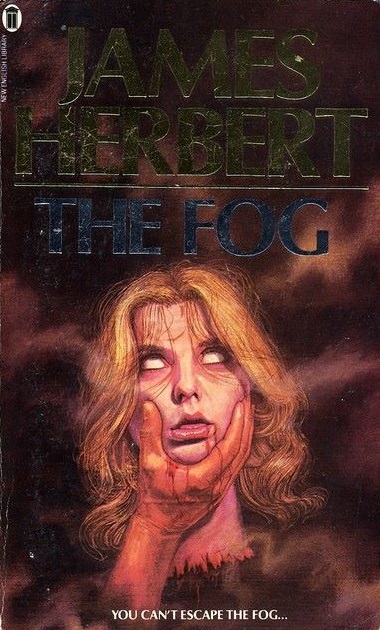
A British horror author who had a huge impact on the whole genre, he doesn’t need lengthy introduction here at the Hellforge. I’m not going to explain the nature and history of his influence as it has been done many times by better scribes than myself. But everyone who has read and loved an author’s novels has a personal journey and for me, James Herbert was a predominantly formative part of my lifelong love of the macabre.The FogIt began as a kid when merely seeing the cover of “The Fog” in a bookshop gave me a genuine night terror. I was smitten before I’d even read a word and a couple of years later, even when I was a little more seasoned, many a sleepless night would be inflicted by “Moon”.

Well-thumbed copies of “The Dark” and “The Rats” were passed around the playground and you only had to let the paperback fall open to find the most visited and lurid passages. I can’t imagine it happening now, but a small group of 11 year old boys could be reduced to hushed, attentive silence when one of them pulled a copy of “The Fog” and started to read the school gym massacre. Or the lesbian scene, obviously.

Not unreasonably, I wasn’t allowed the extreme ones by my folks at a young age. But I eventually managed to talk my mum into letting me buy “Fluke” and “The Survivor”, explaining that they weren’t really horror (true), “The Magic Cottage” and “Shrine” as they were just about ghosts and not that bad (hmmm… partly true) and “The Spear” because that was just a historical story, like the war films I watched with my dad (an utter lie). The others were easily borrowed and smuggled, naturally enjoyed more by their forbidden nature, and as time went by, the ban was either forgotten or abandoned and my shelf filled with all those glorious black paperbacks with the stark titles and ghastly artwork.James Herbert AuthorDue to the content of his work and the slightly creepy author photographs, which was all I had to go on, I’d imagined him to be quite a sinister bloke. But one Halloween, I stayed up late to watch a horror special and saw him in interview. From then on, I understood him to be an eloquent, polite and engaging man with a warm twinkle in his eye. The mystery died a little, but the respect grew.

He was also a huge creative inspiration to me at this time, and I churned out many a derivative excercise-book novel, complete with short titles involving the definite article and covers that swiftly depleted my red and black felt tips.

I continued to enjoy his books after school, though mostly lost touch after the excellent “48” in the mid 1990s as his output slowed, and revisited last with “The Secrets of Crickley Hall”. But despite his reputation, I always appreciated the way he strove to improve and expand his craft rather than just treading water with the same-old through the years. The explanations for his graphic beginnings always made perfect sense, but his passion and professional attitude drove him forward.

I recently reread “Domain”, being a fan of apocalyptic fiction and giant rats, and was pleasantly surprised at how well it had aged. I particularly enjoyed the set-piece deaths from briefly introduced survivors: ghastly intermissions from the main action. The first time around, the chapter involving a man trapped in a bunker with the neighbour’s despised cat didn’t even require an appearance from the rats to have a tremendous effect on me. It began a slightly masochistic obsession with entombment that still manifests itself – worryingly often – in my own writing today. Reading it again was an extraordinary combination of nostalgia, therapy and realisation.

I never met James Herbert, and had toyed with the idea of attending FCon last year – at which he was a guest – but it was not to be. There’s more than a few amateur stories in a box in my loft that wouldn’t exist without him, and he is responsible for many good times to which a weathered section of my bookshelf will attest. And as I still have a couple of his later works to read, the journey isn’t over yet.James Herbert OBEMy thoughts go out to his family and friends, and I’m glad at least that his passing was peaceful. A pioneer, a gentleman and a very fond slab of many a childhood.

RIP, sir.

Hellforge Horror Picks of 2012

3

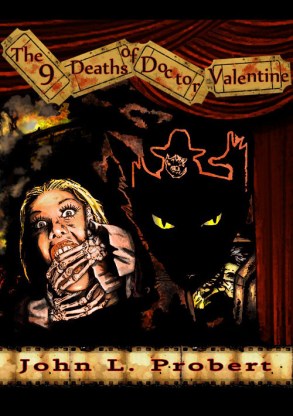
9DeathsThe last book I read in 2012 actually turned out to be a favourite, so before a quick overview of the year, it’d be rude not to say a few words about that.

“The Nine Deaths of Dr. Valentine” by John Llewellyn Probert is a tribute to Vincent Price films, in which the Bristol police are baffled when somebody starts killing doctors in the manner of some of the great actor’s most theatrical and nefarious villains.

With Price being my favourite horror actor, this short novel had a bit of a head start, but it contains all the author’s best trademarks: a wry sense of humour, rich prose, and the seamless merging of old-school and contemporary. And of course, plenty of outrageous deaths. The killer’s nemesis – DI Jeffrey Longdon – is pleasingly jaded and dry, and Sergeant Jenny Newham proves to be a solid foil for dialogue.

I loved the switching between the set-piece executions – in which fans of the films will have a great time spotting the references and trying to guess the impending fates – and the efforts of the law: very much in the Phibesian tradition. But despite being a delightfully ghastly tale, it has an ultimately harmless twinkle in its eye.

There’s also a nice line concluding a chapter in which a police pathologist reveals the author’s self-deprecating passion for lurid horror cinema:
“There are a lot of very odd people around who like this sort of thing.”

But anyway, on to a handful of other 2012 favourites, and you can click on the links for more detailed reviews.

With novels, there’s two that spring immediately to mind for their all-consuming dedication to horror. In a similar vein to John’s Phibes tale, Hell Train by Christopher Fowler is a colourful and gorgeously rendered homage to Hammer that cranks up the adult content but never loses its wry sense of theatre. Flesh Worn Stone by John A Burks Jr takes a very different – and extreme – approach to the genre. With shades of Laymon and Lee, it’s a disturbing, gripping study of our most cruel and bestial nature.

I’ve read a few collections this year of varying quality, but there are two that definitely stand out. Peel Back the Sky by Stephen Bacon was highly anticipated by me, and more than delivered with its thoughtful depth and range. Enemies at the Door by Paul Finch is also a stayer. These are two high quality collections by writers who take pride in their craft, and it really shows.

On the anthology front, the nightmarish Darker Minds lingers as it should, and I loved the ethereal artistry and unique flavour of The First Book of Classical Horror Stories (Edited by DF Lewis). Both brim with quality fiction and maintain a coherence despite the varied contents.

Here’s to a horrific 2013.
Cheers!

Review: “Enemies at the Door” by Paul Finch

1

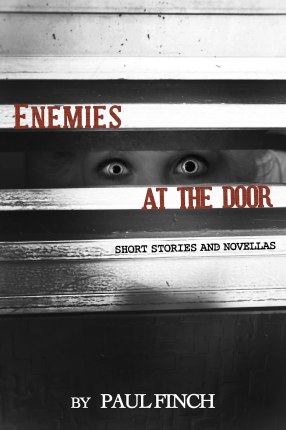
I seem to be reading a lot of Gray Friar Press lately, and there’s a reason why I keep going back. Enemies at the Door is no exception to the quality; a collection of short stories and novellas by the equally reliable Paul Finch. I associate this author with a sharp understanding of the human condition and engaging prose, so having read promises of baleful presences and murderous brutes, I couldn’t wait to get stuck in.Enemies_at_the_Door_cover“So which is the bigger sin, father?” the boy asked. “The fact that I wank or that I wank over my victims.”

And so the fun begins with one of the best opening lines to a collection ever. “When” introduces a priest attempting to correct an errant boy at a traditional grammar school, and its brave opening gambit heralds a wry short in which the discussion between holy man and tearaway turns chilly very quickly. It’s a strong start to the book and the finale made me do a double-take. In a good way, of course.

Next up, “Slayground” presents something of a wall of text, ultra-light on dialogue as it is, which can be a wince-inducing sight. But within a page I was gripped. Our hero is a rookie armed response copper thrown in at the deep end with a scene of unfolding carnage in the centre of London. This author excels at violent action, which is what “Slayground” is all about. It may not be for all, but I loved the escalation of terror, making us realise how helpless we might be in the event of such an attack. The sense of unstoppable menace is superb, and many writers would struggle to maintain interest with such a one-track whirlwind, but I was swept along to a conclusion that makes me smile to think about it now.

“Those They Left Behind” begins with a lighter tone. We meet Elsie, an elderly widow missing her son, but the mood soon turn dark when she purchases a hangman’s dummy from an esoteric  market stall and we start to learn about her past. Reflecting gently upon themes such as care of the elderly and capital punishment, this is a solid piece.

A dose of the cold supernatural follows with “We Who Live in the Wood”. It introduces David, who ill-advisedly rents a remote cottage on Dartmoor for his wife Sonja’s convalescence, but she soon becomes obsessed with a local legend surrounding an adder-infested wood. Although many of this story’s elements seem familiar, it’s saved by strong characters and jack-knifes out of predictable territory for a bleak finale.

It’s almost Christmas in “The Faerie”, and we meet Arthur, a divorcee absconding with his daughter across the Peak District on a wintry night. Naturally, the weather and darkness conspire to render them lost, and they stumble across a very strange sanctuary. Although beautifully evoked, this story didn’t reward the intrigue for me, but it’s still a decent dark fairytale for the festive season.

Despite the jolly title, “Daddy was a Space Alien” brings a grim change of tone, narrated by a gutter press journalist who arranges a photo shoot of disfigured people for a lurid article. It’s a reflective piece with seamless voice, but don’t read it if your mood is low; it harbours a quietly depressing vibe.

“The Doom” is the only tale in this collection that I’d read before, and also my favourite. Here we meet Reverend Bilks, a young priest with a pretty wife and a rural church that boasts a tourist attraction: an ancient piece of hellish art depicting the 7 deadly sins. But when a sinister stranger arrives to discuss moral and criminal responsibility, he realises he’s out of his depth. “The Doom” brings a contemporary voice to a traditional Wheatley-esque setting, and presents intelligent themes of sin, moral choice and consequence. But it’s the helpless, shattering payoff that makes it so memorable. Even though I knew what was coming this time, it still disturbed me. Perhaps deep down I was hoping that the author might have since revised it into something less devastating. Fortunately, he hadn’t. Brilliant, horrible stuff.

One of the longer tales, “Blessed Katie” introduces Madeleine, a woman moving into her old childhood home with her husband and baby. But soon it seems as though she’s being beset by a ghost from her past: a crazy Victorian apparition whom she thought was a creation of her imaginative brother. Using his talent for swift character investment, the author cracks on with the plot, and we’re treated to some beautifully nightmarish set pieces and a faultless Rosemary’s Baby feeling of helplessness despite the crowds. I was expecting the conclusion to be more gleefully dark than it was, perhaps in the vein of “Slayground” or “The Doom”, but what initially presents as a standard ghost story still has plenty of tricks up its sleeve.

“It was to Chockton’s advantage that he looked so innocent.”

Thus opens “Elderly Lady, Lives Alone”, which gives a grim clue as to what’s coming. A sour-tasting short about a granny-bashing thief who scours the deprived areas of town for the vulnerable, this story has its roots firmly in the old school. With the unusual angle of a protagonist who’s a bastard, it still manages to be nasty fun.

More urban squalor follows in “The Ditch”. It begins with Nicolette, an unfortunate sex worker and ex-addict, being picked up by a couple of local hardcases. In pleasing Finch style, she’s soon in a subterranean chase to avoid a ghastly execution, one with extraordinary historical overtones. This tale just keeps piling on the darkness and adrenaline, and also contains a moment so expertly crafted that it made me physically jump and my stomach lift with the sensation of falling. Only once before have I ever had such a reaction to the written word, and that was while reading Stephen King.

“The Poppet” tells of a couple of old student friends meeting in a quaint village in the Lake District. The story concerns a jealous love triangle and a shop that sells poppets: strange wooden dolls attached to a lesser-known myth of local witches. The author begins with spooky menace then slowly cranks it up into breathless pursuit – two areas of style in which he succeeds mightily – and rounds it off with another wicked and pleasingly neat conclusion.

Finally, “Enemies at the Door” features a retired soldier, shrapnel-damaged and paranoid in imaginative ways that I wouldn’t dream of spoiling. The tale delivers a convincing relationship with his partner, despite them commanding very little page time, and I liked the seamless tense shifts for passages of recollection. An intriguing climax, it leaves things appropriately open.

Enemies at the Door is a quality collection. A modern horror tour of this green and pleasant land, it effortlessly transports us to scenes of urban deprivation, the beautiful but unforgiving countryside, and every nook in between.

Paul Finch is a master of the male and female voice, and the dialogue is real, delivered by characters we feel. They’re generally struggling, whether against their own fears, moral issues or an internal crisis of some kind, which ensures plenty of heart and substance.

The author also has the knack for a magnetic opening line. The prose is crisp and addictive whether presenting atmosphere, the mundane, or explosive action, and the details paint detailed vistas to which the succinct wordage has no right. The only fault that springs to mind is the genre tropes and moments of familiarity to be found, but even then, the storytelling is never less than muscular. And if you love a good finale, there’s several award-winners in this book.

I used to believe in ghosts. I don’t anymore, and part of me misses what it was like: that chill of unknown malevolence that sharpens the senses. Well, Paul Finch’s supernatural stories take me right back to that place. And as for his human monsters, there’s no hiding from them on any level.

Review: “Peel Back The Sky” by Stephen Bacon

1

It was about six years ago when I first encountered Stephen Bacon’s fiction. That story was “The Trauma Statement” in the Horror Library II anthology, and I remember that it stood out with crisp writing, a thought-provoking concept and devilish pay off. Since then, his name has been one that always raises a smile when scanning a table of contents and I was delighted when Gray Friar Press announced his debut.Peel Back the Sky spoils us with 21 short stories (6 of which are previously unpublished) and there’s a rich variety of fictional landscapes for a genre collection. From spooky period atmosphere and bittersweet nostalgia to sf-tinged horror and contemporary tales of child abuse, they’re drawn together by investable characters and heart along with the chills. But don’t let your guard down. Stephen’s insightful and deceptively gentle voice disguises razor-edges, making him the perfect guide for an exploration into what makes the dark or dangerous mind tick.

First up is “Last Summer”. This is one of my previous favourites and still strong in the memory from when I first read it a year or so ago. Set in an old colliery village of Yorkshire, this spellbinding story transports us back to 1984 where we meet the folks whose lives are blighted by the miners’ strike and political troubles of the time, compounded by the abduction of local children. The evocation is sublime as it forces investment through nostalgia and characterisation, switching between childhood past and present without the slightest judder. Perfect in construction, this emotional story doesn’t try to make you jump, it lets you peer under the stones yourself. Superb.

Another winner is “The Trauma Statement”. Narrated by an increasingly isolated woman forced into a hideous game of deciding the fate of others, this is one of those stories that makes the reader question what they would do in such a situation. We share the protagonist’s desperation regarding how far she will go to protect her family, and although things aren’t quite explained, it’s a great idea and compelling to the sharp conclusion.Next it’s time for some classic shivers with “The Strangled Garden”. The first of two Victorian gentleman’s club tales, it concerns a walled-off, overgrown garden where a child once disappeared. I was particularly impressed by the seamless period language, and the adventure into the twisted vines and foliage provides plenty of theatrical peril, rounded off with a flourish that put me in mind of Poe.

After that creepy but fun fireside yarn, “Catch Me If I Fall” caught me out. Introducing an old couple who discover they’ve hit their lottery numbers, it seems relatively benign in content, but bites with its pointless cruelty and leaves a sour taste. It proves that the author doesn’t need ghosts or murderers to get under the skin.

“Persistence of Vision” is the first of a couple of pieces dealing directly with child abuse. Told by a man remembering his childhood, it paints an instantly heart-breaking picture of the death of his mother, but the descent really starts when he and his father have to move in with Uncle Keith. The subject matter is exceptionally well handled, never inappropriately lurid, and our sympathies ensure that the clever finale is nothing short of pitch black.

“Girl Afraid” is presented as the diary entries of Laqueesha, a likeable and intelligent 9 year old girl who lives with her troubled mother in a rough block of flats. Perspective is used to grand effect as she reports her life with youthful innocence, notching up the discomfort as we learn the depth of her dysfunctional circumstances. This paves the way for a moment of ice-cold horror as we witness something terrible that has completely sailed above our narrator’s head. A brave story in both content and style, I think it succeeds.

“The Other Side of Silence” moves us from the urban present and into apocalyptic science fiction. A virus that erodes the senses has brought the world to its knees, but Vernon seems to be in remission, regaining his vision under the care of the enigmatic Eleanor. But all isn’t quite what it seems, and the author brings humanity – both tender and cold – to a haunting vision of the future.

It’s back to the smoky ambience of the gentleman’s club for “A Solace of Winter Rain” to regale us with phantasms of murder in an old Cornish cottage. I found this somewhat in the shadow of “The Strangled Garden”, but it’s still a solid ghost story with a twist that seems obvious at first, then inspires a double take and pause for thought.

“The House of Constant Shadow” is a triumphant study of human resentment and cruelty. Ernest is a bitter man stuck with the job of caring for his obese and blind wife, and I was completely drawn into his shadowed world of entitlement, opportunities lost and guilt. Trapped by duty, Ernest aroused my sympathies then snatched them back numerous times, and the sense of redemption slipping inexorably away is fantastic. Plenty of darkly humorous touches never spoil the intensity of this story in which the mundane is perfectly balanced with the vile.Shifting the tone, “With Black Foreboding Eyed” is a pure old-school terror tale. Set in 1900, we meet two men trapped on a Scottish lighthouse in a blizzard whose colleague seems to have been slaughtered by something monstrous. Beautifully evocative and dramatic, the text envelopes us in cold fog, swaying lanterns and dread. I found the closing scene just a bit too easy, and it feels somewhat lightweight regarding its peers in this collection, but this short tale serves as a breather and is fun to read.

But such fun was never going to last and “Daddy Giggles” certainly sobers the mood. In this present-tense piece we meet Duffy, a man visiting his dying mother. He’s ready to confront her and clutching Daddy Giggles as evidence; a child’s toy that holds memories of abuse. A powerful journey, it weaves tainted nostalgia into our damaged protagonist’s anger, and reflects on the frailty of human life, both physical and psychological.

We travel back to a taut pre-war Europe for “The Toymaker of Bremen” in which Scott, a young English boy, loses his parents on holiday. He is adopted in bizarre circumstances by a rural story-book toymaker, soon settling into home life with the white-haired man, his children, and the family cottage filled with creepy dolls and toys. There’s a great atmosphere of wrongness, and as with “Girl Afraid”, the child’s innocent point of view provides plenty of discomfort. I was with young Scott all the way and didn’t want it to finish.

“The Shadow Puppets” is a flash piece narrated by a possibly disturbed man who discovers a cathartic talent for shadow puppetry, but soon realises that his creations seem to know more than him. I found it only mildly interesting at first, but was grinning by the time I reached the gleefully ghastly parting shot.

It’s back to 1953 for “Room Above The Shop”. We meet Jenny, a girl visiting her grandmother’s gloomy dress shop in a quaint Derbyshire village, spooked by creepy mannequins in the store upstairs. Although a polished story, it left me slightly wanting. Perhaps I’d hoped for more explanation regarding the supernatural shenanigans, but the tale is carried by strong characterisation and the malevolent presence of the mannequins.“Inertia” tells of a woman who lives in self-imposed isolation and discovers a terrified bird trapped in her chimney. An elegiac and brittle mood piece, this is impressively unsettling for its short length.

More wounded souls follow in “Hour of Departure”. This introduces Ellie, struggling with the aftermath of an accident that killed her husband and injured her young son. She has to juggle the guilty complications of an affair with the damaged behaviour of her boy, making for a claustrophobic tale of relationships with an understated, chilling finale.

“I Am A Creation of Now” is a quirky if slightly uneven presentation of floundering romance and altered time. Named after an REM lyric, it hooks immediately with the story of a man’s budding relationship with his intelligent but troubled girlfriend. I expected the ending to be a light-hearted twist, but it surprised me with its poignant depth.

An old Nemonymous favourite, “The Devourer of Dreams” is the nightmarish story of a writer. He tells of his upbringing as a coastal innkeeper’s boy where his father kept a beetle-like monstrosity in a box: a hungry creature that drains victims of something far more terrible than blood. A story strong on themes – guilt, reward, success, inevitability – it still manages to be a fun and physically icky horror tale and much more than a sum of its parts.

“Concentric” is an intriguing story in which a vast sinkhole appears in the middle of the ocean, baffling and terrifying the world’s experts. It has an apocalyptic, blockbuster feel that bursts from the page but although I was along for the ride, the finale didn’t pack any surprises.The end times continue in a slightly different vein for “Forever Autumn”: the diary of an isolated man trying to care for his sick and wheelchair-bound wife after a zombie-style outbreak. Suitably grim, with a focus on fear and reflection rather than gore, it oozes suspicion and threat. And there’s a few tricks up its sleeve.

Taking the final spot and more than rising to the responsibility is “Cone Zero”. It begins with a dreamlike fall of blood-red snow as we meet a lonely student who sees an advertisement for an art exhibition that links to his past. Curious, he tries to fill in the pieces in a tautly plotted adventure that delivers atmosphere in abundance. The ensuing collision of death and art forms a good climax to the story, and also the collection itself, drawing together several of the themes that have traced throughout the book.

I was sad when Peel Back the Sky was finished, but pleased that my hopes had been realised. These believable snapshots of lonely and angry lives are engaging from the first paragraph, and I was surprised to discover that revisiting the familiar was just as enjoyable as discovering new pieces. Reassuringly honed, these stories are often melancholy, but the book never becomes hopelessly bleak. There’s humour and warmth too, and Stephen populates it with tangible characters who are worth our time, particularly shining at 1st person, be that urban pre-teen or Victorian gentleman. This leaves us no choice but to descend into the shadows beside them.From Lovecraftian terrors to the silent damage of abuse, the author succinctly conjures landscapes of both place and mind, then casts ripples of slow-burning unease through the text. This is mature, thoughtful storytelling where compassion jostles with the venom and provides some very astute – and indeed sobering – insight into the human psyche.

Brave and beautifully painted, Peel Back the Sky is a debut collection masquerading as that of a veteran.

Review – “Darker Minds”

2

Just like Dark Minds – its predecessor from last year – this book is simply subtitled “An Anthology of Dark Fiction”. A solid, tactile paperback, it impressed me from the off with its cyberesque cover and decorated author and contents pages. There’s no editorial credit or introduction, the proceedings simply presented by Dark Minds Press, which whether deliberate or not, makes it a pleasingly mysterious entity. And that entity has gathered together an impressive collection of 15 disturbing stories.The theme is simply the power of the mind. There’s grim tales of abduction, mental illness and domestic paranoia. There’s wry tales of possession and graverobbery, and plenty of askew and threatening realities. It’s a book where nothing ever seems quite right, but is that really the case, or just the delusions of an unravelling mind?

So onto those stories that particularly stood out. First is “Reflections from a Broken Lamp” by John Travis, a violent murder mystery explained from varying points of view. But although it begins with an air of whimsy, the author gradually turns down the lights and establishes an appropriately dark tone. John Travis’s fiction has real personality, and this colourful creepshow makes a great curtain raiser.

Equally memorable is “Slip Inside this House” by Daniel Kaysen in which we meet Clive. He believes he’s being persecuted by some kind of note-scribbling “double” that’s causing havoc in his marriage. An intriguing piece cemented by convincing characters, it has plenty of tricks up its sleeve.

Stuart Young’s “Houses in Motion” is a well-written story narrated by a man who bumps into his former nemesis of a boss. But he soon realises that the old bully is now withered by dementia, setting the stage  for a poignant and sobering reflection upon reality and the consequences of detachment.

“The Way of the World” by Gary Fry introduces Oliver, a young student on holiday with his new girlfriend and her parents. The author doesn’t miss the opportunity for some awkward dialogue and sexually-charged scenes, which all serve to maintain the unease in this sharp and well realised story.

For me, two neighbouring pieces form the anthology’s peak. First is “The Man Who Remembered” by Stephen Bacon. Lisa is waiting for her boyfriend in a café and speaks to an old gentleman who claims to know the details of his own immiment death. This perfectly evoked tale is all about life, the intricacies and effects of existence, and concludes a thoughtful concept with a bang.

Second, I also loved “Waste Disposal” by Ray Cluley. This concerns Walter, a gentle widower, who is caught short walking his dog in the park and runs into some menacing youths. It begins with a melancholy yet stoical flavour, but soon descends into unease, and then sickly fear. Natural empathy, pathos and a masterful ratcheting up of the threat make this a very immersive experience, and I wouldn’t dream of spoiling the wild and grossly imaginative – or is that imaginatively gross – finale.

While we’re reeling from that, Robert Mammone takes us on a very uncomfortable journey with “Seeing Things”. This features a pair of lovers on a trip to winery, but our narrator is troubled by sinister shapes lurking in his peripheral vision, and a guilty accident ensues. Despite a couple of formatting and spelling errors, this is a heady and intoxicating experience that saves a grisly punch for the pay off.

The finale is a masterpiece of bleak cinematography. Gary McMahon leaves us with “Cinder Images”, a brutal short centred around the screening of a war film. It has all the author’s trademarks – satire, anger, vicious elegance – and also an intrusive conclusion that perfectly rounds off both this story, and the book as a whole.

I enjoyed this anthology. With a no nonsense attitude, it allows the fiction to speak for itself. There’s the occasional guessable twist, and a couple of the stories were slightly less conclusive than my tastes would’ve preferred, but there certainly aren’t any hangers-on. All 15 authors have worked the theme hard, and spoil us with crumbling sanities, nightmares and cruel consequences galore.

Darker Minds is recommended for those who like to find substance lurking in the darkness. Order here.

Review – “The First Book of Classical Horror Stories” Conductor: DF Lewis

6

Ah, classical music and horror. It’s not a new partnership, but having more than a passing interest in both, the theme of this anthology snagged my attention. I hoped that it wouldn’t just be full of superficial references, but of course with DF Lewis at the helm I needn’t have worried. The music is very much the heart and soul of the book, in concept, style and atmosphere. His previous anthologies have a thoughtful, literary edge and I was happy to discover that “The First Book of Classical Horror Stories” is up there with the best of them.ImageAs always, beneath the perfect cover is a superbly edited selection of stories, including several familiar “nemonymous” names, and all the contributors have done the theme justice. Music becomes the soundtrack to creation and love, to brutal murder and vengeful hauntings, and what soon becomes apparent is that every tale is well written, some of them exceptionally so. There’s a variety of horror – quiet, visceral, supernatural and wry – and although we have no weak links, there are several that particularly stand out for me.

Rachmaninoff scores the curtain raiser. “Chamber Music” by Rachel Kendall is a strangely claustrophobic fantasy involving a giant, the nuances of which I won’t spoil. A luscious and textured work, it’s one of the book’s more surreal adventures, but a welcome opener.

“Vertep” by DP Watt is narrated by a man whose passion is collecting Jack-in-the-Box toys. He discovers a damaged specimen that plays Stravinsky, and his life soon descends into visions and obsession. This author has a very listenable voice and we are transported by the magic to a shocking, sharp conclusion.

I enjoyed the visual vibe of “Rêverie” by Lawrence Conquest which stars Alex, a film score composer. He dreams the death of his family in a car crash to the tune of Debussy during an “intricate ballet of metal and flesh” and this music returns to haunt and usurp him. There’s plenty going on for a short piece – feeling, character and a deeply entrenched musical flavour – and it completes a pleasing circle of life and death.

“The Fourteenth” by Nicole Cushing refers to Shostakovich’s 14th symphony, and is bravely told in the second person past tense, almost as though revisiting a nightmare. This technique shines as we follow a widow into a vision of carnivals on a desert of human ash, and the author uses pain, nostalgia and tone to great effect.

Following this is Stephen Bacon’s “The Ivory Teat”. Metzler is a man who rents a grubby apartment and hears piano music – Chopin’s Nocturnes – coming from a reclusive tenant who then brutally takes his own life. I won’t reveal what ensues, but this cold, intriguing spiral floats between the sublime and deeply unsettling. The author paints such rich tapestries with so few, subtle words, and his work is always a pleasure to read. Brilliant.

Another definite favourite is “Excerpted” by Holly Day. A man finds a crumbling sheaf of tablature that was scribed by nuns, but the compositions have chaotic extra bars added “like terrible holes of sharpened pikes hidden in the middle of a peaceful forest”. And when played, these fragments seem to conjure hell itself. Gripping and handsomely written, this story keeps one foot firmly in the real and mundane which succeeds in hugely enhancing the horror. It gave me a chill, and deftly utilises point of view for a dark but knowing pay off.

“That section, like so many others in the sonatas, holds the mirror up to the blackness and emptiness within them. You play these pieces at your peril.” So says the piano tutor in Colin Insole’s “The Appassionata Variations”: a rich, moody reminiscence about music lessons during the war. This is evocative storytelling that reads like a classic and has plenty of gothic shivers in store.

Tony Lovell’s “The Holes” is a more contemporary chiller that concerns a family’s trip to a caravan. But the bland expectation of the holiday is upset by hundreds of mysterious holes that have opened up across Lancashire, all emitting an apocalyptic, orchestral sound. The author daubs a succinct, stylish tale with incredible unease.

I particularly savoured “De Profundis” by Daniel Mills. Damien is a student, loner and a dedicated musician, and is writing a new piece in the snow-dappled aftermath of his father’s funeral. But his composition seems to change and write itself, always returning to the same atonal and frighteningly soulless chords. Told in the present tense with a terse, informative style, we get a genuine feeling of otherness from our protagonist and become utterly absorbed into his intense microcosm. With everything coated in frost, isolation and catholic fear, this is a gem of quiet, descending horror.

Equally memorable is “Songs for Dead Children” by Aliya Whitely which introduces a dejected singer. After a disastrous attempt to perform the darkness of Mahler’s Kindertotenlieder in Vienna, she befriends a charismatic and understanding oncologist at the aftershow party. Spanning several years, this emotive journey concludes with a moment of realisation that is so horrifically ice cold it’s almost beautiful. Excellent, shudder-inducing stuff.

After this blow to the solar plexus, the mood of the anthology takes a more gentle tone for the final two tales. First, “He Had Lived for Music” by Sarah O’Scalaidhe tells of a ghost violinist who becomes more music than human, having wild consequences for a live performance. This segues nicely into “The Trilling Season” by Rhys Hughes: a single page flash twist on Vivaldi’s The Four Seasons that rounds it all off with a sardonic smile.

I very much enjoyed this book. Many of the 21 pieces, including those I haven’t specifically mentioned, have such haunting quality that they hang in the mind just like the exquisite music that inspired them. And while some of them require concentration – this editor always encourages depth and refuses to patronise readers – it’s an investment that is rewarded.

Trying to find fault, I would say that it’s probably slightly piano heavy, but such is the nature of open submissions, and better that than a dilutation of quality. I also wish that there was author information accompanying the stories. I know that DF Lewis prefers to present the fiction sans distraction, but I do like to read a brief bio, especially when it’s an author with whom I’m unfamiliar.

But I don’t have any genuine grumbles and “The First Book of Classical Horror Stories” is a very sound purchase. Don’t shy if you’re not familiar with this particular genre of music. While there’s plenty to delight the musos and classical aficionados, it’s not essential. Anybody with a love of quality macabre fiction can lose themselves in these perfectly formed pages.

And if the teaser in the title is to be taken literally, then a second volume is planned. It’s certainly got its work cut out.

Recommended.

Review – “Flesh Worn Stone” by John A. Burks Jr.

2

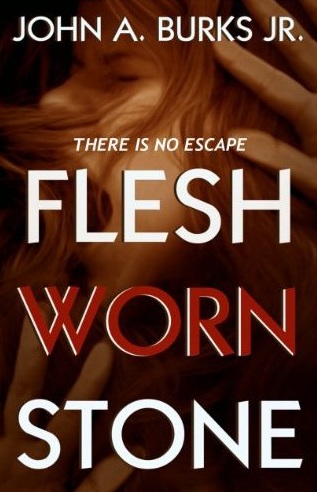
As well as having enjoyed the author’s short stories before, I was lured to this novel by a sharp title, snuff-esque cover, and a description that delighted my ghoulish soul. “Flesh Worn Stone” sounded lurid, Laymonian, and perhaps with a bit of Battle Royale thrown in. And it turns out, that’s exactly what it is. And much more besides.Our unfortunate main player is Steven, an ordinary suburban American. After witnessing the murder of his sons, he’s kidnapped along with his wife Rebecca and wakes up to discover they’ve been imprisoned in a cage on the edge of a beautiful beach with a handful of strangers.

The confused bunch learn that they’ve been brought to an isolated island, but their new home isn’t paradise. It’s a foetid, ghastly cave beneath the cliffs. Here they join countless others and must play “The Game”: a sickening revamp of the coliseum of ancient Rome in which the contestants murder, rape and self-mutilate for the entertainment of hidden masters. This world of violent slavery has been going on for a long, long time, and those not strong to enough to survive end up in the dinner pot.

“Flesh Worn Stone” piles straight in without dawdling and lets us discover our protagonists through action and motive. The characters are intriguing, carried by strong dialogue, and some clearly have a dark side that keeps us guessing. I particularly enjoyed the development of a mild Middle-American into a killer boiling with rage. It’s believable, and presents the theme that we’re all potential savages, which isn’t easily done without seeming clumsy. Despite one early scene when someone seems prematurely casual about witnessing atrocity, this is a deftly tackled angle.

I loved the thought-provoking manner in which the cave is actually policed. There’s lots of tribal psychology going on between the layers, and it’s fascinating to see the different responses to rules, peer-pressure, and how people will adapt to survive by working together or stabbing backs.

This novel is well structured. The pace is tight and questions slowly answered through character back stories, and while there are twists, they’re not cheap shots and I never felt cheated. Our character loyalties are bounced around, and the second half gathers even more momentum.

It’s also a very evocative read. Every time I returned, it was like stepping back into that stinking cave. The author also uses this talent to describe scenes of appalling violence with such elegance that it adds a whole new layer of wrong, without reducing the realistic impact. The fights are exciting and clear – where many writers fall – although there were a couple of scenes that didn’t add up. For example, one murder in which somebody briefly crawled on after death seemed so absurd that it completely took me out of the moment.

Which brings me to the flaws. I was occasionally jarred by odd turns of phrase that I’m sure could’ve been coaxed out with a keener edit, and one chapter confusingly began without establishing which character we were following. There are also quite a few formatting errors, typos and spelling mistakes. I don’t mind a couple throughout the whole book, but several in a single chapter is annoying.

I was also slightly confused by a few practical reality issues. I didn’t get how the waiting times to see the cave’s “doctor” were so long, unless this was a satirical joke. And with rotten meat being eaten and such terrible sanitation, people would be constantly exploding with diarrhoea, vomiting and dropping dead all over the place from infection and disease.

But these problems can’t topple a book built upon such a grim and outrageous concept – much of which we don’t discover until later on – and one that is so well executed that it all seems real. I particularly like the insinuation that once somebody has discovered their beast, there’s no going back. The cruelty is huge as the forces of control, natural selection and hunger come out to play, and builds towards a very satisfying finale that was both gleeful and ice-cold.

Despite its cracks, “Flesh Worn Stone” comes close to being a vicious horror classic. I loved it, and it’s been a while since I’ve been so writhingly impatient to return to a book between reads. The pages bleed with violence, and the first fight had me grimacing yet hungry for more. And when this kind of brutality is combined with strong characterisation, plot and an intelligent understanding of the human condition, it makes for a very powerful and memorable read.

The flesh worn stone awaits. It’s your turn to play the Game.

Ebook available from Amazon and other usual outlets.