Review – “For Those Who Dream Monsters” by Anna Taborska

1

Remember that name I said to myself the first time I was recovering from one of Anna Taborska’s  stories. It was a tale that drew blood, evoked with haunting imagery and almost unbearably poignant.

A few years later, Mortbury Press have done the only sensible thing to do, and put her name on the cover of a full collection. This was eagerly anticipated here, and as well as enjoying some excellent new tales, I also discovered that the familiar ones were just as good the second time round, sometimes even better.TaborksaAfter a bang-on introduction by Reggie Oliver – who also provided a perfect black and white illustration for each of the stories – the book gets off to a strong start with “Schrödinger’s Human”. This concerns a professor with a horrendous penchant for cruelty and killing whose life changes when a scruffy black cat arrives on his doorstep. This tale really appealed to my car-crash-peering ghoul as it ratchets up the nastiness until the Pan-esque finale, bringing expert touches of black humour to counter the sourness of tone.
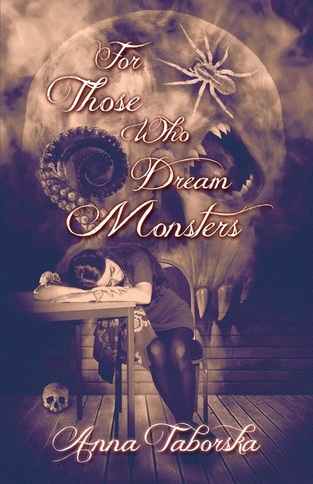
Next is “Little Pig” which begins with Adam, a nervous man waiting to meet his Polish girlfriend’s grandma Irena for the first time. The story then whisks us back to Irena’s childhood, fleeing wolves through the snow of wartorn Poland with her siblings and mother. As well as the pure adrenaline rush, this section packs an emotional punch when a hideous choice has to be made for the family to survive. The conclusion is elegant, functioning as a neat bookend, and the whole thing demands much investment for such a short piece. I also liked the juxtaposition and glimpse into the hidden layers of people’s lives, and perhaps there’s also a reflection on the relative triviality of our first-world troubles.

A lighter but violent revenge story, “Fish” concerns the exploits of a wrongly-murdered postman. Playing out like an episode of  Tales from the Crypt, it left me slightly wanting, but is well paced and cemented with dark humour.

We visit a poor village in Africa for “Buy A Goat For Christmas”. The locals receive a decommissioned tank from charity, intended to be dismantled and fashioned into farming tools by the local blacksmith, but then a visiting backpacker begins to display lycanthropic tendencies. The scene is set for quirky gruesomeness, and it sits well with the next tale, “Cut!”, which features a film director who’s a bit of an arse. He hires a bad actress on a whim, gets much more than he bargained for, and I smiled at the unashamed, old-school horror punchline.

“Arthur’s Cellar” is an interesting and memorable experience. It describes a man hunting an escaped creature his grandfather kept in the cellar of his remote forest house. Particularly evocative, there’s a strong pay-off, and I never quite managed to decide if was meant to be fun or disturbing. Which is no bad thing.

Cruelty and humanity abound in “The Apprentice”, a historical account of a violent village baker who hires a mute apprentice. It’s a slick read, and the finale – once again – is pleasingly dark.

Turning down the lights further is “The Girl in the Blue Coat”. A journey of discovery drizzled with the supernatural, we follow a travelling journalist wishing to interview Jewish people about their experiences of the holocaust. Horrible but elegiac and respectful, this is one of those rare pieces that manages to be both humble and humbling.

“A Tale of Two Sisters” is a Shakespeare-themed pair of stories, set in rural Poland. Part I is “Rusalka” in which a young man is bewitched by a village girl. It was tainted for me by a personal annoyance – elusive figures that invite pursuit – but the trope was well handled and I was still drawn into his obsession. I preferred Part II – “First Night” – in which friends Dan and Henry end up holidaying in a place where betrayal killed a broken-hearted village girl escaping the lust of a local Count. It really brings the folklore to life, and rouses just anger amid all the striking cinematic imagery.

A couple of lighter genre pieces follow. In “Halloween Lights”, we join a lost soul approaching a rural town on Halloween. It triumphs by forcing us to guess throughout what happened to our baffled protagonist. Is it a man who’s been in an accident? Perhaps it’s a confused werewolf or some other night creature? Following this is “The Coffin”, in which a man takes a shortcut through a cemetery and spies an unattended coffin that begins to cause him much distress. I found the concept a bit odd, and the ending was rather too familiar, but it’s impressively creepy for a story so short.

The author’s talent for evocation soars for “The Creaking”, involving a forest, a gentle herbalist named Alice, and some villagers with a violent paranoia regarding witchcraft. A well rounded piece, there’s brutality, kindness and a terrible shock. It’s nice to read a proper adult fairy tale sometimes, and this ticks all the boxes right down to the benevolent heroine and the destructive power of ignorance.

The 2nd in this trio of stories touching on gender egos and sexuality is “Dirty Dybbuk”. We meet Mitzi, a prudish Jewish student who succumbs to some kind of nympho-possession. It seemed a bit rough towards the end, and I was jarred slightly by some stylised narration, but it’s a wry and a self aware distraction from the heavier tales that loom either side of it.

Which brings me to the memorable “Underbelly” in which we find Anna, a woman dying of cancer. She encounters a demonic bat-like carnivore in the cellar of her building that promises to take away her pain, but for a terrible price. It’s so well executed that the somewhat familiar set-up didn’t spoil the intensity, and there’s just the right balance of bleakness and hope. The characters particularly shine, and moments of sweetness and humanity occur when we might’ve been hoping for brutal revenge: extra credit to the author for this deft emotional play.

“Tea With The Devil” is exactly that: an endearing discussion occurring in a rough estate on Halloween where it seems that the great horned one may be having a change of outlook. I feel unqualified to properly review “Elegy” – a poetic short about a magic lake on the site of a sunken inn – as it is a homage to Bruno Schulz, with whom I’m not familiar. I suspect nuances may therefore be lost, but I still enjoyed this colourful showcase of folklore and atmosphere.

Save the best ’till last the saying goes, and that’s certainly the case here. “Bagpuss” is the tale of a 12 year old girl, Emily (of course), who moves with her mum and beloved pet cat from the city to the countryside, bringing new fears and freedoms for all. This story wields such evocation and place that it’s like memory, aided by enormous emotional investment. The characters are perfectly realised, including the cat, and I even loved the dream sequences, which I often dislike in fiction. There’s so much going on here – themes of cause and effect, loneliness, innocence, the fragility of life – that it makes for compulsive reading and builds to an unforgettable finale. I still keep thinking about it and feeling sad, and might actually be slightly traumatised. But I’m going to read it again.

For Those Who Dream Monsters is a rewarding collection with its contrasts of compassion and cruelty, submission and hope. Anna Taborska is a superb storyteller, capable of extraordinary sense of place, characterisation, and rarely have I been floored with such poetic punches. Relationships are poignant, in so few words, and she can switch between the male and female voice without a stutter.

As Reggie Oliver said in his introduction, it would be exhausting to list the variations of location, theme and tone in this book. I agree, and suggest that you take the journey for yourself.

Recommended.
Review – “Horror Without Victims” edited by DF Lewis

2

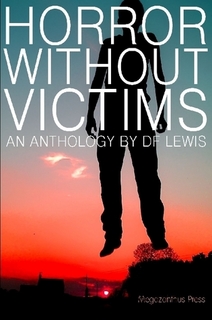
DF Lewis has always proved himself to be a thoughtful editor that ensures that his books become more than a sum of their parts, and this latest publication from his Megazanthus Press is no exception. It brings an intriguing concept to the table and I couldn’t wait to see how the authors had worked with it.horror-without-victims_thumbnailHorror Without Victims must’ve been difficult to write for as well as edit. It would be challenging to produce a book of any genre that did not contain a victim in some sense of the word, and while the definition can be debated, I didn’t detect any glib dismissal of the niche guidelines. It has clearly forced authors to think outside the box regarding their submission, and also – I imagine – pruned the editorial slush of trunk stories.

As expected, there’s an interesting mix of traditional and leftfield, elements of the sublime, and stories poignant and disturbing. I was pleased to discover that there wasn’t actually a piece I particularly disliked, but the following are those that stood out for me.

“Clouds” by Eric Ian Steele introduces Evan, a restless and dissatisfied man with a lifelong affection for the sky. He notices while cloud-staring that the buildings of a nearby street – and perhaps the people – seem to be disappearing. He naturally questions his own sanity, and becomes very trying with his concerned and loving partner Emma: a convincingly troubled relationship already. The author’s matter of fact style is peppered with lush but subtle metaphors, and cements an odd but absorbing tale of existentialism that builds to an appropriately inconclusive and ethereal finale.

We meet the gentlemanly Mr Devlin in “The Carpet Seller’s Recommendation” by Alistair Rennie, taking up his first overseas post with a large Istanbul carpet merchant. He takes a river trip along the Bosphorus that takes a terrifying turn, and this 1st person account says much about the protagonist and his attitudes through educated prose. It’s tense, has a grand aura of doom, and a slick pay-off that riffs nicely on the anthology concept. Upon finishing, I immediately read it again.

“For Ages and Ever” by Patricia Russo is an adult fairy tale that bravely succeeds with a 2nd person point of view. It’s set in a strange and strictly rule-based city where nobody is allowed to cry or even touch in public, and concerns a sinister red house that seems to change or even devour people. Asking questions of the reader as myths merge with themes of identity, death and perception, it provides a very colourful journey.

“The day we went down to the beach, Slater insisted that his interest in torture was of a scholarly nature.”

Thus begins “Night in the Pink House” by Charles Wilkinson in which a wheelchair bound blind man and his bidding carer, Topcliffe, are dissecting the anatomy of the scream. It provides a great clash of the erudite and nasty, sinking darker as it progresses and drawing the reader along to a solid and sour-tasting conclusion.

“Point and Stick” by Mark Patrick Lynch is an immediately engaging account of a cash-strapped man who rents a cheap room. Having seen an obese woman in the flat below through a hole in the broken floor, shuffling about and appearing never to leave, he begins to wonder is she’s a prisoner. Voyeuristic and ultimately less dark than I was expecting, this story adroitly puts the reader’s assumptions under the microscope.

Another favourite is the exquisitely evoked “The Cure” by John Travis. This tale follows Lionel, a terminally ill man with nothing to lose who pays a wad of cash to visit a mysterious island via a private plane with blacked-out windows for exclusive treatment. The course begins with new age reflections and hippy ramblings, and as Lionel’s hopes for direct interventions and medicine start to fade, the threat begins to grow. Sometimes the title of this anthology gives us clues as to how things might pan out, but John Travis dodges this pitfall with aplomb and presents a clever, compulsive piece that will please fans of the grisly as well as those of mood and menace.

Continuing the atmosphere of mystery and alien surroundings is “We Do Things Differently Here” by David Murphy. A “meet the parents” situation, it concerns Sally, a young woman visiting the potential in-laws in Efferentia: a picturesque but strange harbour town in which the locals seem to do things back to front. While she finds this quirky in some regards, such as their books being in reverse chronological order, attending a local funeral blows her mind. Despite being grounded in the fantastic, this story becomes quite intense through her increasing sense of being trapped, and tackles some interesting questions to attitudes about death.

“Lord of Pigs” by DeAnna Knippling is a beautifully written yet ghastly and surreal tale involving a child’s uncle – Uncle Chuck – who gets eaten by pigs. There’s an unsettling innocence at play due to the youthfully recalled point of view, and plenty going on beneath the layers of visceral horror for the reader to get their teeth into.

Another strong contribution is “Like Nothing Else” by Chris Morris. This introduces James, a man remembering his first sexual experience in the barn of a dilapidated farmhouse with a reptilian creature, overseen by a scraggy local squatter. There’s some genuinely unpleasant moments, and it questions the essence of humanity and desire, maintaining a psychological and nightmarish tone through to its ugly conclusion.

I loved “Scree” by Caleb Wilson. An excellent concept, it features a man stuck on an ever-sliding diagonal scree of boulders and rocks due to some catastrophic shifting of tectonic plates. We find him and the rest of the crumbling world sliding towards the “maw” as he refers to it: the vast darkness of the earth into which all shall tumble. He passes his weeks scavenging the detritus of civilisation drifting down along with him – half collapsed buildings, flat pack furniture, musical instruments – while being careful not to fall into the vicious current of scree and be ground to pieces. Well told, I didn’t want it to finish, and it very much nails the loneliness and strange serenity of any quality apocalyptic story.

Possibly my single favourite of the anthology is “Vent” by L.R. Bonehill. It is the poignant and elegant tale of Imogen, the daughter of a ventriloquist who suffers a personal tragedy. The author doesn’t miss the opportunity to utilise the natural creepiness of ventriloquist’s dummies, and peopled by very solid characters, the narrative deftly weaves a picture both through reminiscence and Imogen’s current situation, where we find her alone with a knife. There’s nostalgia and grief, tremendous humanity and pain, shocks both physical and psychological, and a breath-taking conclusion that I didn’t see coming. Immaculately told, “Vent” ticks all the boxes. Superb.

Following this is “The Yellow See-Through Baby” by Michael Sidman, a quirky ghost story and a veritable triumph of voice, told as it is in the present tense from the point of view of a young toddler. Through the author’s skill, we find ourselves engaging with the child as he sees the titular figure in his room, and it’s through this filter of innocence – the child’s hopes and fears – that this story very much succeeds where it could so easily have failed.

The anthology concludes with a sequence of very short pieces, and of these, I was particularly impressed by Tony Lovell’s “The Callers”: a sad episode of encroaching dementia and its effect on a family. Gentle but quietly powerful, the dignified but downbeat conclusion sums up the nature of such illness. Similarly tackling the ephemeral and fragile nature of our existence is “Still Life” by Nick Jackson. More a flash vignette than a story, it describes a room succumbing to time, detailing the mould and decay. Reminding us that all shall fall, it encompasses the concept of the book nicely.

Overall, I very much enjoyed Horror Without Victims. Although I was occasionally left slightly wanting, there are no bad tales, and several of them are truly exceptional. While it may be cliché to say there’s something for everyone, in this case it’s true. The bleak and grim elements contrast the lighter and more hopeful, and there are mood pieces and snippets of life as well as more traditionally structured stories. And with DF Lewis at the helm, there is always going to be plenty to think about as each story glides seamlessly into the next.

Although most contributors have done a sound job of avoiding predictability, a small problem arises from the theme. It can be quite restrictive and sometimes dilutes the shock of a twist ending as we start to second guess what might prevail, given that there won’t be any victims. Which of course brings us to the question… is this even possible? Horror Without Victims is a quite a concrete statement, so much is down to personal interpretation of what constitutes a victim, both generally and in the context of the fiction. But I think to get too bogged down in this discussion, fun though that can be, is counterproductive. If we simply accept it to mean victim in the brutal genre sense – in that people tend not to end up getting killed, tortured or savaged by something monstrous – then we can kick back and enjoy the eclectic and unusual ideas that these authors have presented.

And I suppose that’s the essence of Horror Without Victims. A selection of talented writers throwing themselves into a provocatively tricky concept, the resultant gestalt of which is a very respectable addition to the editor’s canon.

Recommended.

Review – “The Power of Nothing” by Richard Farren Barber

0

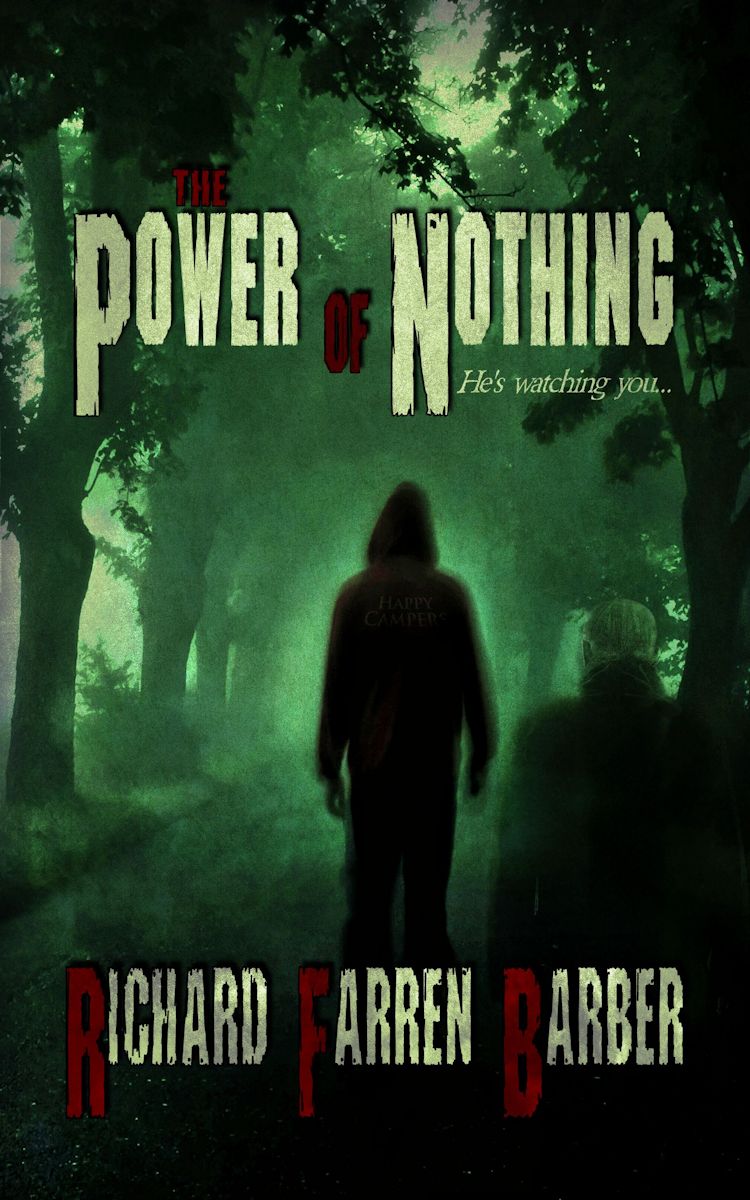
I’ve only read a story by Richard Farren Barber once before – the excellent reflection of war that is “Last Respects” from the Derby Scribes anthology of 2011 – and it stood out for its pathos and evocation. His new novella from Damnation Books is more of a horror genre piece, and I was pleased to discover that beneath that atmospheric cover is a slick and involving work.The Power of NothingSteve is a normal young man who works on a flagging high street that seems to be frequented by bored hoodies more than shoppers. One day while working, he spots a pale, wispy-haired stranger outside – the gray man – who seems to be staring at him.

This silent and unnerving figure keeps reappearing in Steve’s life – when he’s walking home or helping out at the local youth club – and he starts to question if it’s even really there. He’s soon driven to rage, but discovers that even violence won’t keep his ghostly stalker at bay.

I quite liked Steve. He’s sensible with his social conscience, and empathises with the disaffected kids that feature in his routine. His grounded attitude drew me into the story immediately, and also helped with the necessary identification as he battles with his pragmatic side against what he can actually see.

The growing menace of this story is strong and never ebbs whether our troubled protagonist is at work in the shop, walking the lamplit streets at dusk, or in a boisterous club. This creepy vibe really keeps the pages turning, especially when Steve’s grip starts to falter, and the ongoing presence of disenfranchised youth as well as the gray man keep us guessing as to how it’s all going to pan out.

Sometimes a prose style is worthy of remark due to it being particularly poetic or flamboyant, but I love it that this author is largely invisible. His attention to detail is brilliant, as are his turns of phrase, but there’s never any intrusion to the experience and he lets the characters, plot and sense of place take command of the storytelling.

I enjoyed “The Power of Nothing”. It has an uncluttered concept and the themes of inevitability and control add a bit of substance, as does subtle social commentary. My only real gripe was that the pace dipped towards the end, and a couple of these chapters could perhaps have benefitted from a trim. Several scenes involving Steve telling the gray man to fuck off and leave him alone became quite repetitive, but this lull precedes a splendidly downbeat and unpredictable finale that meant my complaint was instantly forgiven. Richard Farren Barber pulls off that difficult feat of a conclusion that inspires wry reflection and also throws light – or is that darkness – back across the story as a whole.

Well played, sir. I’ll be back for more.

Review – “The Condemned” by Simon Bestwick

1

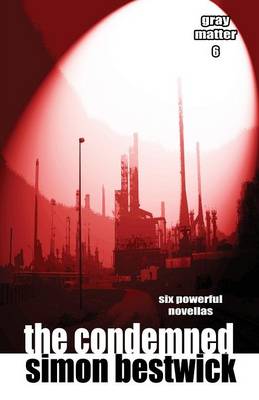
It was about 5 years ago when I first read a story by Simon Bestwick, and at the time I had no idea what I was in for. That story was “The Narrows”, a truly immersive experience with genuine chills and aching pathos, so the bar was set absurdly high from day one. But over the last few years of reading his fiction, I’ve discovered that this wasn’t a chance one-off and this exceptional collection of six novellas from Gray Friar Press proves that he’s one of the strongest voices in contemporary British horror.The CondemnedFirst up, “Dark Earth” tackles the brutality of the First World War, colloquially regaled by Private Bill Sadler who’s under court martial for desertion. This grim and bloody period of history is compounded by the infestation of no man’s land with mud-dwelling, toothy worm-like monsters that devour and possess the frontline soldiers, and possibly have influence even further up the ranks. I was completely absorbed into the death and desperation, and believable characters inject real humanity into the story. It’s also pleasing – and respectful – that the monstrous elements don’t detract from the real horror of trench warfare, instead combining the two to create a powerful and action-packed adventure that forms a sterling start to the book.

Next up is the aforementioned “The Narrows”. Gripping from the off, it’s the present tense account of Paul, a secondary school teacher during a nuclear holocaust. Having survived the initial blast, he somewhat unwillingly leads a small group of surviving children and fellow staff underground to avoid the radioactive fallout. They find refuge in a network of subterranean canals and caverns known as the Narrows, but something malevolent seems to be down there with them. Or is it the actual tunnels themselves? Or even a creeping madness from the radiation? A deeply moving piece, we feel our protagonist’s pain, knowing that his girlfriend has inevitably perished in the blast, as have the others’ families and loved ones, and that combines with the relentless claustrophobia to form a very memorable experience. It cranks up the hopelessness of their situation, turning down the lights until there’s nothing left and you have no choice but to join them in the descent. A superbly evocative piece and a deserved addition to one of Ellen Datlow’s best-of horror anthologies.

Following this classic is “A Kiss of Old Thorns” which introduces Andrew, a young man out of his depth and on the run with a tough bunch of bank robbers. After a car accident on an isolated road, they seek sanctuary in the beachside home of an old hermit who fashions wreaths from thorns in order to keep some kind of supernatural evil at bay. A tight story peopled by some believable and nasty characters, there’s plenty of menace from both the baleful presence and the thugs themselves, and I was very much along for the ride.

“The Model” sees Ella – a cash-strapped student in Salford – answering a call to be a life model. But rather than an art class, she’s unnerved to discover it’s one hulking, almost-unseen man in a quiet empty building that also seems haunted by strange wraith-like presences. After repeated visits, she becomes increasingly ill and afraid, but is drawn by the money and more importantly, some kind of sinister hold that the artist seems to possess over her. She is unable to resist his call, even after a suspicious death, which is made more chilling by her being quite a sensible girl. While the finale is appropriately bleak, it is somewhat less concrete than I would’ve liked, but there’s tremendous sense of place, as always, and the story oozes a grim inevitability.

Despite not thinking that “The Narrows” could be topped, I found “The School House” to be The Condemned‘s crowning glory, blindsiding me with incredible emotional and physical clout. We are introduced to Danny, a man who works at a psychiatric home and is plunged into the past after a childhood friend is committed for burning down their old school. Danny soon starts to have nightmares that resurrect suppressed memories of bullying and violence, and he begins to wonder if he’s losing his sanity. I don’t want to give too much away, but with its themes of control, power and broken minds, this story blew me away. There are some real surprises and twists in store – both brutal and genuinely heartbreaking – proving that this author is an intelligent, reflective writer at the very top of his game. This is a horribly unputdownable piece of work, full of dextrous literary tricks and tragic, terrifying portrayals of both mental illness and our darkest natures. Brace yourself and be damned.

Finally, the scene is one of urban deprivation for “Sleep Now in the Fire”. Our unwitting hero is Sean, an ordinary man visiting a block of flats in a sinkhole estate to look for his missing brother. He bumps into a surprisingly pleasant young woman, but this reassurance is soon soured by the appearance of a local nasty piece of work who might be behind his brother’s disappearance. After his car is stolen, Sean finds himself trapped in the squalid streets and beset by some taloned vampiric creatures called the Blueboys. This piece begins brilliantly with a palpable sense of threat, plenty of twisting action, and the author builds you up and knocks you down emotionally in subtle ways. It’s not without flaws, however. I found the political metaphors a bit clunky and the potential romance angle didn’t quite work for me. The science of the Blueboys seemed a bit complicated and took some explaining, and occasional segments of dialogue are a bit cheesy, robbing the grittiness of the outset: is this meant to be social realism or just fun? But these gripes are not so important in such a rollercoaster of a tale, and the scene is set for a showdown of fireworks and blood. There’s a soul-restoring fightback of good versus evil, and an epilogue that concludes both the story and the collection itself on a refreshingly positive note.

I very much enjoyed The Condemned. With brief and revealing story notes, there’s not a bad tale to be found, and this deep but never turgid book is more than worth the cover price for “The Narrows” and “The School House” alone. Simon Bestwick’s prose is sharp and the investable protagonists bring life and humanity to every piece. He can turn his hand to all elements of modern horror fiction whether eerie or shocking, supernatural or earthly, and even when he just sets out to entertain, thoughts are always provoked.

If you’re familiar with this author, then you can look forward to enjoying some of his finest work. If not, then The Condemned is a grand place to start. Rarely is the macabre so satisfying.

A Trove of Dead Horror Digests

0

I was rummaging about in a wardrobe in the back bedroom and found myself getting distracted by a large box full of small press publications from the early noughties.wicked hollowThe indulgent nostalgia was multiplied by the realisation that pretty much of all of them have since folded. Mostly A5, some immaculately printed, others rough bedroom-printer jobs, there’s a huge variation in editorial and authorial talent, but these played a role in what was a very formative time regarding my own writing.

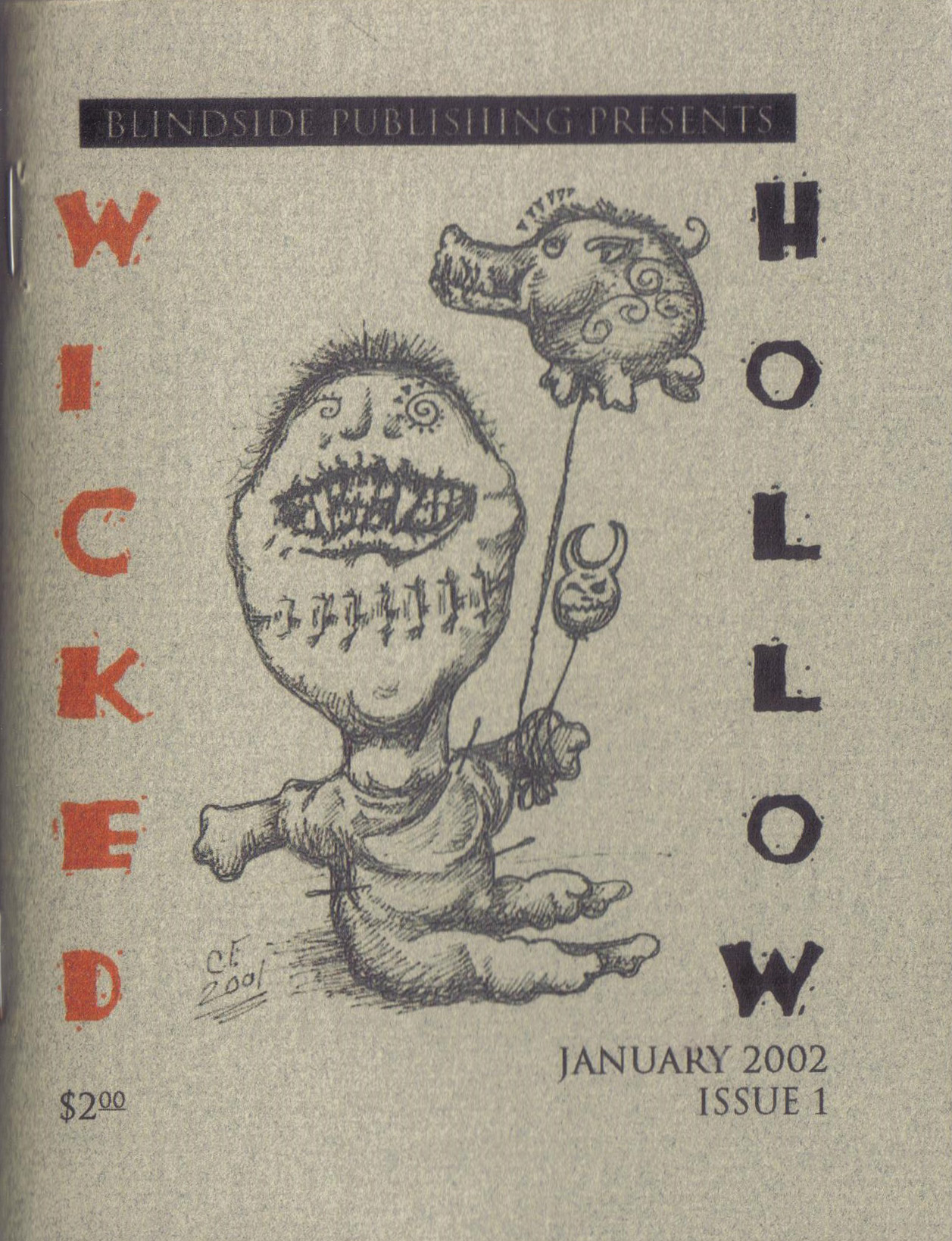
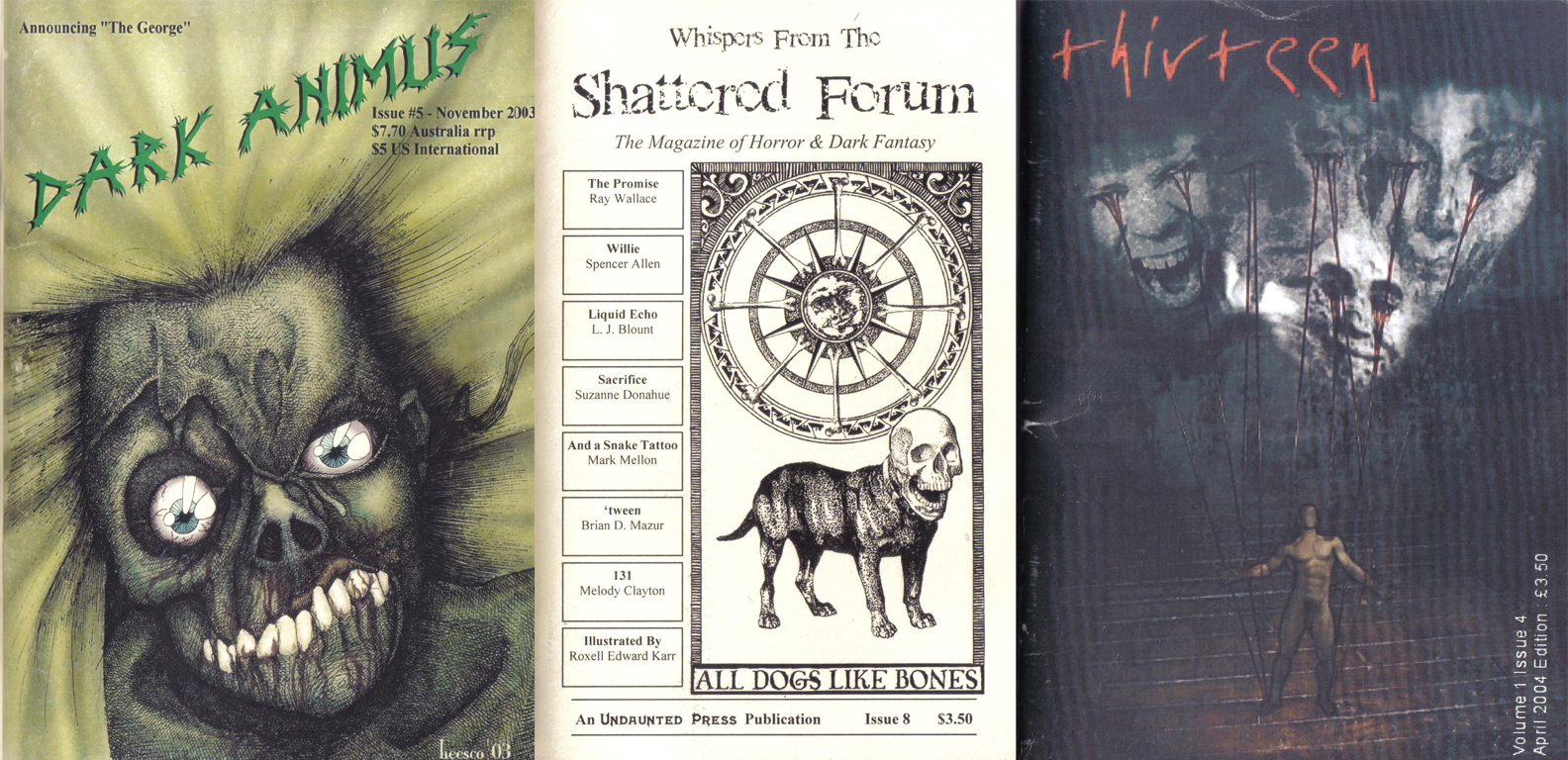
My favourite has to be Wicked Hollow from Blindside Publishing, a card-stock becovered magazine the size of a wallet that could be slipped into the back pocket to be read on the bus or during a quick break at work. Professionally finished and crafted, the last issue was #9 in 2005, and I see that the website still lives but hasn’t been updated since. It’s somewhat sad when a magazine folds without announcement and the site is left to moulder. I just revisited some quality tales from Simon Strantzas and Anderson Prunty, and it was here that I made my first paid sale with “Snuff Club” back in 2002. Reading that email acceptance from editor Jon Hodges was quite a moment, and to describe it as euphoric is no exaggeration. No writer ever forgets their first.

I enjoyed the sf horror of Burning Sky, edited by Greg Gifune, and discovered writers such as Darrell Pitt and Tim Curran. The exceptionally thoughtful Fusing Horizons introduced me to the likes of Gary McMahon and John Llewellyn Probert, both who have since become favourites. Editor Gary Fry very politely rejected me several times, and rightly so given the quality of these earlier scribblings, before he went on to greater things with the fantastic Gray Friar Press. I was also quite fond of the ultra-small press Dark Angel Rising. A monochrome and endearingly wonky zine from Cornwall in England, it had had real heart, editors who were a delight to correspond with and was my first taste of Amy Grech, Eric S. Brown and Rob Dunbar.

a1

Talebones, run by Patrick Swenson for many years, was one of the more glossy offerings with quality artwork and reader’s letters. Hit and miss was Andrew Hannon’s Thirteen which has the occasional gem and took an early flash story of mine. I never managed to get hold of that final issue unfortunately, and I believe the magazine folded after a flood at the editor’s office.

I have quite a few issues of the Australian pulp-fest Dark Animus, edited by James R. Cain, which aimed to showcase new writers and featured the early tales of many prolific scribes like Michael Arnzen, Cat Sparks and poet Christina Sng. This also taught me that rejection isn’t necessarily the end of the world – and also to aim high – as one of mine that wasn’t to the editor’s taste went on to be sold for a professional rate elsewhere.

a2

Others include the wonderfully titled Whispers from the Shattered Forum by Cullen Bunn of Undaunted Press, Flesh and Blood, Frothing at the Mouth and Black Satellite, and I’m thankful to them all for fuelling my love of writing. It was a fun time, discovering that there was much more to the genre than what high street bookstores had to offer, and also that it was possible to get my own work published without an agent or approaching the terrifying giants of the industry. And although some of these were token or “4-the-luv” markets, which attract a lot of heat, it’s how a lot of us started out. Born out of passion rather than an expectation of riches, these digests are gone but not forgotten.

Review – “Soul Masque” by Terry Grimwood

1

This is a slightly unusual offering from Spectral Press in their chapbook series of mostly spooky and haunting tales. “Soul Masque” is a stark nightmare of drugs, macabre sexuality and demons, but despite the deviation in both style and content, it still packs a punch.soul-masqueThe story paints a grim picture of London as a battleground between heaven and hell. The main players are a morphine addicted reverend who wields the celestial power of “the Glory”, a powerful dominatrix, a woman who has a divine deal to keep her cancer at bay, and a guilt addled loser trapped by the will of his nefarious masters. They’re tied together by “The Singer”, an angel no less, but one with more of an unholy personality than one would traditionally expect.

The author’s prose is full of frank description that works well on the whole. It fosters a traditional feel that collides nicely with the sado-masochism, profanity and blood, and there’s plenty of chilling turns of phrase that galvanise the aura of menace and make things much darker than they seem at face value.

The tale begins unconventionally with an intense epilogue that describes a demonic invasion of a nightclub. I rather enjoyed this, and was urged to venture on and see how that came to be. And what an adventure that is. The London of the story – its warehouses, streets, and grubby bedsits – has tremendous sense of place, and the whole tale seems tainted by the sleazy malevolence.

This is a fast moving story which means that although it’s never dull, it can be disorientating. The plentiful cast of characters meant that sometimes I had to check back to see who was whom, but there’s still empathy to be found which is impressive in a piece of this length and style. The demons are beautifully painted; nasty, spindly creations presented in just the right amount of detail to let your imagination fill out the rest.

“Soul Masque” is a solid piece. It kept me along for the ride and concludes with a prologue – bookending the bleak epilogue at the outset – that neatly ties it all together. There’s little fun to be had, the vibe being more one of hopelessness, and the overall experience is made memorable not by specific characters or events, but by the supernatural darkness and more importantly the fear. It leaks from the pages, defining many of the characters, settings, and lurking behind every phrase.

Credit goes to Spectral’s editor Simon Marshall-Jones for not being afraid to wander from the beaten path. While perhaps not to everybody’s taste, I enjoyed this sojourn into Terry Grimwood’s urban, shadow-strung hell on earth. And never has the word Glory been so pleasingly deceptive in its application.

Review – “Differently There” by John Llewellyn Probert

1

An ordinary hospital side room is the entire stage for this splendid new novella from Gray Friar Press.

We meet Paul Webster, a 41 year old man about to undergo major surgery for a rare and aggressive type of cancer that he may not survive. As night falls upon the eve of his operation, he attempts sleep but it is disturbed by distorted memories from his past. As the night progresses, the dreams become infiltrated with scenes from his lifelong passion for horror and fantastic fiction, and he realises that something very dark is using these memories to pursue him.DifferentlyThereI loved this novella. Told in the present tense to great effect, it begins with a thorough but delightful description of the unremarkable hospital room in which the story takes place. The author’s wit and natural storytelling lend this a slightly whimsical tone, but the humour is countered with blunt reminders of the terrible lows that such a room has witnessed as well as the highs.

A few pages in, Paul enters the room – overnight bag in hand – and the tone cools to a stoical, British melancholy. He proves to be a likeable, sensible fellow, so naturally we’re drawn into his world. The inevitable fears, fragilities and hopes of somebody about to undergo a life-threatening operation are perfectly rendered, drawn as they are from the author’s recent experience with major surgery, as explained in a heartfelt afterword.

In most fiction, I find dreams rather irritating, often as distractions from what’s really happening. But here, the altered recollections are both beautifully painted and satisfyingly tangible. This is aided by the intrusion of the supernatural menace and strengthened by our empathy.

I pondered a couple of potential twists half way through, as this author is no stranger to the wry finale, and there’s certainly nothing wrong with that. But I was pleased to discover on this occasion that “Differently There” isn’t that kind of tale. The finale is appropriate and powerful, and functions as a very pleasing bookend to the plot.

While it certainly has its sharp chills, there is not quite the gleeful ghastliness that fans of this author may expect. This is a much more reflective piece where memory and mortal fear collide, which isn’t surprising given the circumstances of its conception. There’s enormous heart and dignity to be found, and John Llewellyn Probert shows that he can take his craft in a slightly different direction and still very much deliver. As Ramsey Campbell said, horror is lucky to have him. “Differently There” shows exactly why.

Review – “Helen’s Story” by Rosanne Rabinowitz

5

*WARNING: This review contains spoilers and a synopsis of Arthur Machen’s “The Great God Pan”

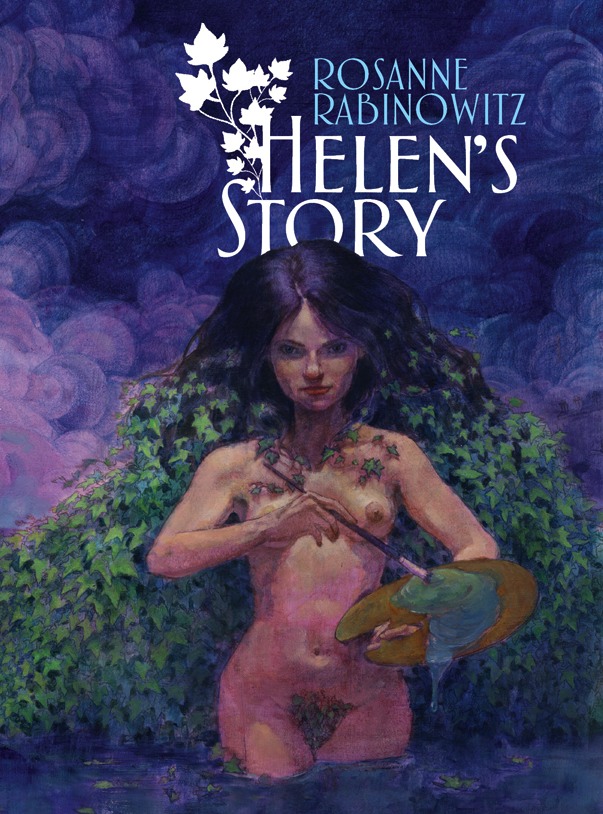
“Contrary to rumours of her death, Helen Vaughan is alive and well and living in Shoreditch. Some readers might have met Helen in Arthur Machen’s classic novella “The Great God Pan”. Now she gets to tell her side of the story.”Helen's StorySo says the rear cover of this immaculate hardcover from PS Publishing, and I was immediately intrigued. Machen’s story is a great blend of primordial horror and mystery, full of intensity and haunting evocation. But like many tales from this late Victorian period, the gender attitudes can be jarring to the modern sensibility – full of entitled male egos wounded by the evils of female sexuality – so it’s a fantastic choice of mythos for a thorough reworking.

For those not mindful of Arthur Machen’s piece, the novella introduces a Dr Raymond who conducts an alarming neurological experiment upon Mary, an orphan girl. She enters a strange dimension and meets “The Great God Pan” and after her experience with this sensual figure of forbidden experience, Mary is left a gibbering wreck. She gives birth to a child 9 months later, Helen, but the terrible stress of the delivery kills her.

20 years later, a London gentleman named Villiers stumbles upon an old friend who has been “corrupted body and soul” by his wife. Villiers discovers that some kind of siren by the name of Helen Vaughan has blazed a trail of destruction, from causing madness and death as a child to a string of male post-coital suicides as an adult. He eventually confronts her and rather than face the law, she agrees to hang herself and transforms into her true beastly nature at the point of death.

And so on to “Helen’s Story” in which our modern day heroine is far from dead, as the blurb declares, and living as a hipster artist. She wants to use her paintings and pagan powers to take the art world by the throat, and the tale begins by switching between her childhood with Dr Raymond and the present. This brings fresh suppositions regarding her upbringing and development, but although much of the plot is new, “Helen’s Story” is carefully crafted with the Machen’s world in mind. Rosanne Rabinowitz paints the otherworldly moments with vivid strokes and effortlessly transports us between Victorian and contemporary London. She captures the character and nuances of both periods and proves herself a great evocator in the Machen tradition.

As for Helen herself, it’s great to meet this shape-shifting, seductive half-deity as a fully fleshed being. She received very little characterisation in Machen’s work, the point of view being from the important male players, obviously. But here, rather than us knowing Helen only through austere opinions and a list of monstrous charges, we get the first person voice of a woman constantly struggling with – yet fascinated and empowered by – what she truly is. Respect goes to the author for not just playing her as a lonely and transient victim but emphasising her curiosity, sharp intelligence and humanity.

Another Machen tradition that is cast aside, along with the “male gaze”, is leaving everything off-camera. Too little or too much can be a fine line, but I think the author has gauged it right. Darker themes of need and otherness are tackled head on, both through Helen’s actions and the magic of her art, and scenes of sexual awakening and physical transformation are detailed but never lurid. The author also revisits Helen’s coming of age in a rural town and bravely explores her teenage relationship with Rachel, a friendship that led to the girl’s fate. In Machen’s piece, this relationship was regarded as impure; a nymph and victim. Here, it is presented as erotic, troubled and poignant.

I also like that “Helen’s Story” acknowledges the actual existence of Arthur Machen and his “The Great God Pan” publication. It gives a mischievous warmth to the proceedings as Helen recalls meeting both the “characters” from the book and even Machen himself. Dr Raymond and his serious-mindedness are perfectly captured, as is Villiers’ pomposity, fondness for booze and general self-righteousness. Helen occasionally pans the latter with such humour and razor wit that its impossible not to cheer her on, and although purists may bristle, there are no unnecessary cheap shots. The 21st century characters – such as socialite Nao and the punky Rory for whom Helen has feelings – are also believable and realised by great dialogue. And as for the enigmatic Great God Pan himself, I wouldn’t dream of spoiling what happens when he turns up.

The story builds with an understated intensity as Helen pieces together her past and the scene is set for a powerful conclusion at an art show in which she plans to showcase her sexually-charged talents. The ethereal finale is dark and dreamlike, rewriting the world as we know it and riffing on Machen’s ultimate question. How do you live a normal existence once you’ve seen?

I found “Helen’s Story” unpredictable and emotionally satisfying. Rosanne Rabinowitz writes muscular but succinct prose, injecting flair when required, and pleasingly fills in some of the more frustrating gaps of “The Great God Pan” yet still leaves plenty to ponder. Helen’s perspective brings thoughtful contrasts, particularly the lush sensuality to Machen’s turn-of-the-century patriarchy, and while the author does not disrespect his milieu, she doesn’t excuse his gender politics either. I like it when books set out to tell the story of an underdeveloped “villain” from a horror classic. This one very much succeeds as both a speculative homage and an enlightened update of Machen’s original vision.

Review: “Anatomy of Death” edited by Mark West

1

Bacon, Mains, Probert, Volk and West. Now there’s five names I’m always happy to see and here they are, lured together to form this ghastly anthology of short stories from Hersham Horror. The binding theme is sleaze, which sounded splendid to me, and is born of editor Mark West’s fondness for the lurid films and gruesome paperbacks that exploded onto the scene during the early 70s.AODWriting for such a theme unshackles an author from any pesky constraints of morality and reality, so prudes and gentle souls bolt for the exits now. The gents don’t hold back and the pages bleed with sex, violence and all manner of unnatural monstrosities. And hurrah for that! But Anatomy of Death (In Five Sleazy Pieces) has much more to offer, and provides plenty of humour and substance along with the base thrills.

First up is “Pseudonym” by Stephen Bacon. One of the quieter tales, as expected, this concerns a childhood fan of a horror novelist, now grown up, who finally gets the chance to interview his old hero. The visit to the writer’s gothic mansion is a joy – straight out of Hammer – and there’s plenty of mood and a sobering shock. This tale reflects on how the past infiltrates the present, and also the evolution of horror; old school versus the new. Effortless to read, the author’s genre passion shines through, and perhaps we were all terribly wrong in thinking that those books we used to love were just intended to be a bit of fun…

A complete contrast follows, and Johnny Mains – editor, writer and general sage of this niche of horror – delivers with the gloriously titled “The Cannibal Whores of Effingham”. This about sums it up, concerning a brothel where men disappear, staffed as it is by beautiful carnivores. But they might’ve bitten off more than they can chew when somebody visits who’s even better at the art of murder. Shamelessly rude and gory but tongue-in-cheek with it, this tale has little characterisation, but that’s not the point and it’s carried instead by the possibilities of the premise. And although the shock value dwindles as the story progresses, the curiosity of how it will pan out just keeps growing. A cartoon nasty with a twist, the author also has a treat in store for readers familiar with his previous works.

“Out of Fashion” by the inimitable John Llewellyn Probert presents yet another change in tone. A shorter piece, it concerns a Victorian doctor who invents medical devices and is worried about current trends towards aesthetic plastic surgery. One night, he is called upon to perform a terrible operation, and the repercussions of the menace he discovers daren’t even be breathed. I had high hopes for this story and John ticks all the boxes with elegant surroundings, intrigue and monstrous horrors from the depths. His warm, educated style is perfectly suited to the content, and as Mark said in his introduction, it’s impossible not to imagine Peter Cushing as the lead.

Next up is my favourite. I can’t even write this without grinning and shaking my head at the gleefully offensive wedge of unpleasantness that is “The Arse-Licker” by Stephen Volk. It’s narrated by an underwhelming businessman who relies on shallow ingratiation rather than effort to succeed, but one day finds that a new staff member is threatening his carefully crafted web of bullshit. Immediately engaging and cleverly told, the author manipulates our sympathies back and forth to a drawn-out climax of cringe-inducing black comedy. This story is far better than it has any right to be. The ingredients are wrong – a protagonist lacking in investable traits, a plot that relies on its outrageously vulgar showdown – but the author refines it into a very impressive piece of fiction. And I still can’t get the taste out of my mouth. Cracking stuff.

Finally, Mark West neatly rounds of the book with a trip back to the long hot summer of 1976. In “The Glamour Girl Murders”, a London photographer is hunting the right model for a shoot with Penthouse magazine, but accidentally stumbles across a kidnapping that involves some kind of beast. The story opens bravely with a girl being chased, and manages to snare the reader despite not having yet had the opportunity for characterisation. The cast is strong, the dialogue and storytelling tight, and I loved the aura of sleaze that clings to the pages like the sweltering temperature; heat waves can be used to great effect to induce sticky claustrophobia in the reader, and Mark succeeds admirably. To me, it resembles a British version of Spike Lee’s “Summer of Sam”: the sweat, the paranoia, the cultural attention to detail. To quote the beast: “Lovely…”

I really enjoyed Anatomy of Death; in fact I demolished it in one sitting. “Just one more, then I’ll get up and do stuff…” was the repeated cry, but this slim, well-ordered volume had other plans. It’s deftly edited, the genre tropes are handled with affection, and there’s plenty of variation despite the specific theme. The stories shine with the quirks and particular strengths of each author, and if you’re not familiar, you could do worse than getting acquainted here.

This is a professional anthology for readers who like their horror sleaze delivered with a wry, self-aware wink.

Recommended.