Review – “In Sickness” by LL Soares & Laura Cooney

1

I fancied something ghastly to read, so “Stories from a Very Dark Place” sounded like just the ticket.

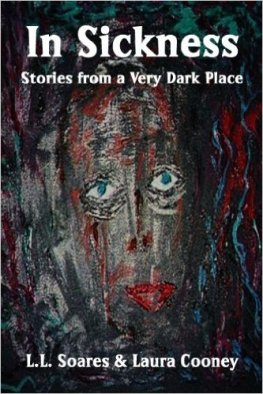
LL Soares and Laura Cooney are a husband and wife team, and reading this alarming book makes me wonder if they should ever have been allowed – for the good of humankind – to form such a terrifying partnership. Dubbed “the Bonnie and Clyde of the horror genre” by Brian Keene, they have very different voices, but both pack an equal punch, and many of the situations presented here will simmer long after the book is closed.In sickness“In Sickness”  is divided into 3 parts: a solo selection of stories from each author, followed by a collaboration. Laura Cooney is up first, and “Wasps” is a powerful curtain-raiser. Here we meet Clint, a young boy who can’t shake off the ghost of a slightly odd and embarrassing girl he’d been forced to play with before her brutal death. It evokes the guilty frustrations of childhood with an uncomfortable poignancy, and concludes with an ice-cold blow.
“The Hirsute You” is a solid monster story before we plunge into “Puppy Love”. For me the most chilling piece in the book, it’s a subtle study of a woman who plays constant psychology with both her rescue-shelter puppy and new girlfriend. It unsettled me for several reasons, and the atmosphere of control and abuse is just as disturbing as what actually occurs. An incredibly effective piece of writing.

Next is “A Crown of Mushrooms”, a slice of self-destructive desire starring Rasputin, the Mad Monk himself, before part 1 concludes with “Number 808”. This is a sharp story with a dystopian flavour about a lonely victim of abuse. The bitterness of exploitation drips from the pages; Laura Cooney writes with her finger on the pulse,whatever the subject matter.

While his wife infects your imagination and unsettles your conscience, LL Soares has more of a lurid attack to his stories, favouring direct jeopardy and letting the actions of his characters speak for themselves.

First we meet Julie in “Little Black Dress”. A nervous, straight-laced girl, she decides to don the fish-nets and dress up as a saucy witch for Halloween. Despite the initial liberation and empowerment, she gains perhaps more than she bargained for. It’s engrossing, with moments of palpable threat that we share thanks to the strength of the characters.

Location is also put to good use in LL’s fiction. “Second Chances” haunts us with a hardened drinker who is drawn back to a beach of blue clay, before we venture inside the “Mating Room”. Here a doctor uses unwilling women in his treatment of a lustful missing link called Billy, and it has a rewarding pay-off for those who can stomach the sexual violence.

“Head Games” is a grisly yarn featuring a troop of intelligent monkeys before we lose all hope in “The No! Place”. This is a triumph, the title referring to a mental refuge into which an abused woman retreats from her vicious boyfriend. Engaging right from the first line, it forces us to share in the helpless plight and makes for a very tense read: certainly not your average abuse/revenge tale. The pitch-black twist might have even made my jaw drop a little.

Closing part 2 is “Private Exhibition”, describing a human exhibit in a public gallery who aggravates her physical wounds and refuses to let them heal. Dealing with need and personal scars, it’s one of LL’s less visceral stories but leaves an appropriately bitter taste.

Part 3 is the collaborative title novella and I was fascinated to see what this marital hybrid entity would produce. “In Sickness” introduces a married couple, Zach and Maddy, deteriorating beneath the weight of their personal demons. They’ve suffered several pregnancy miscarriages, and Zach keeps a pregnant mistress while Maddy hits the bottle, both haunted by ghosts of what could have been. The dialogue is uncomfortably realistic, and the tale juggles rage and tenderness with aplomb. The inevitable descent slowly turns down the dimmer switch towards a conclusion that ends the book perfectly. And that’s in a very dark place indeed.

These two authors clearly love what they do, and that twisted passion has resulted in an unashamed horror collection with plenty of chills. The stories mostly fit the themes of obsession, damaged love and the cruelty that lurks in relationships of all kinds, and their varied styles complement each other. LL Soares makes you afraid of the darkness, and Laura Cooney makes you brood about why.

“In Sickness” indeed, and it’s a good job the authors neglected to include the rest of that particular marital vow. There’s nothing healthy to be found in these pages.

With creepy interior artwork, this collection is available now from Skullvines Press.
LL Soares

Laura Cooney

Coming Soon…

0

Just a couple of things to mention. I was very pleased to hear that my story “The Narcslaag” has not only been accepted by the good people at Necrotic Tissue, but that it will also be editor’s pick for issue 14. Set in the Red Light District of Amsterdam, it’s a story that was an unpleasant experience to write, though I’m very pleased with the results.

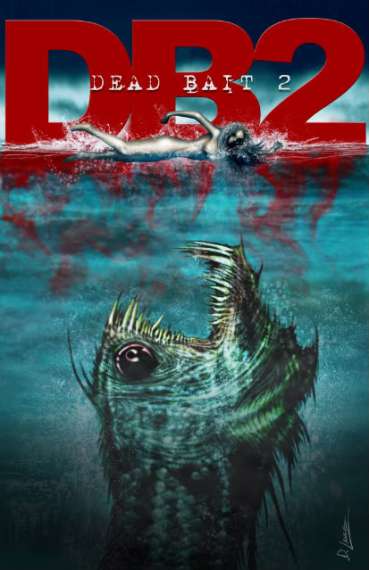
Secondly, here’s David Lange‘s artwork for Dead Bait 2, an upcoming anthology from Severed Press that will contain my story “Ternskull Point”. And it’s quite lovely…DeadBait2

Review – “Mostly Monochrome Stories” by John Travis

0

A couple of years ago, I was lucky enough to be in a pub on the edge of the Yorkshire moors one misty night and hear John Travis read an old story of his from an issue of “All Hallows”. I was struck by the prickly atmosphere his words created, the power and subtle humour of his literary voice.

With his gentle Yorkshire brogue whispering in the back of my head, I finally opened this book: his first collection from Exaggerated Press. John Travis writes thoughtful, precise and wildly entertaining stories. His ideas are sometimes utterly outrageous – his imagination has long since gnawed through its chain and escaped – yet this doesn’t prevent an extraordinary level of pathos. And while fun, this book is littered with traps that keep the reader on their toes. The prose is suffused with dark wit, not of the wiseracking variety, but the wry.

The author’s note explains the intriguing title: John has a medical condition named synesthesia, which is a kind of merging of the senses through which he sees colour in music and art. These Mostly Monochrome Stories are those he viewed as being akin to little black and white films, and there is a definite mood and resonance throughout. But onto the stories themselves. While there were none of the 23 that I disliked, a few certainly linger in my memory and I suspect will do for some time.MonochromeThe wild opener “Pyjamarama” gives a great taste of what’s to come, the title referring to a dimension of punishment where naughty children are supposedly sent when they refuse to sleep. Reading this tale is like watching a nightmarish animation, but it packs a sobering pay-off.
“Idle Hands” is in the form of an essay written in class. It’s an immediately intriguing piece that reflects upon the generation gap between young and old before the tone turns sinister and it leaves us guessing.

“Nothing” is a gem. A truly heartbreaking story of a man grieving his wife and child in a dingy flat, he deteriorates before our eyes into a figure of miserable delusion. The nostalgia is brittle as bone china, and all humanity laid bare. This is one of those rare stories that finds a dark nook of your brain where it will remain for good.

“The Happy Misanthropist” is an apocalyptic short take on genie in a lamp tales, in this case a discarded beer can, told with a wonderfully paranoid, bitter voice and concluding with a wicked flourish. I immediately reread the story, and enjoyed it even more once I was in on the joke. The same can be said for “Dance of the Selves”, which involves a devilish set of rubber-tipped pencils (I know!) and could’ve been one of the stranger segments in an old portmanteau horror movie.

Other definite peaks are “The Terror and the Tortoiseshell” and “The Mutt Who Knew Too Much”. Both are set in a speculative world after The Terror: an event that gave animals the size, abilities and intelligence of humans, and they’re now firmly in control. Our narrator is a noir detective cat by the name of Benji Spriteman, solving murders on the mean streets with his lieutenant, a scruffy basset hound named Dingus. They’re brilliant slices of droll crime fiction, and only improved by the fact that they’re cast with animals, especially ones so amusingly dead-pan. This just shows the author’s range of style and voice.

“Self Disgust” is an ice-cold piece of flash that inspires grave reflection, but we’re soon saved by the arrival of “The Arse of Dracula”. This bawdy homage presents an unearthed screenplay from 1970s “Anvil” studios, and is even more entertaining if you imagine Cushing and Lee in their pivotal roles.

“The Splintered Forest” is a old-fashioned, haunting tale that oozes a fractured reality, but it’s tales like “Reduced to Clear” that made me truly uncomfortable. Here, a discontented child and busy mum take us on a descent from hustle-bustle normal life into a nightmare of cynical consumerism and conformity. It left a bitter taste and the bleak undertones remind me very much of Susan Hill at her peak.

“The Strainer” is a 3-page delight, concerning the fate of a man who suffers from terrible constipation. The prose shines with ghoulish glee and while I expected the humorous tone, there’s a knowing menace to the imagery that rouses a shudder too. With shades of Pan, it would’ve sat nicely in one of Charles Black’s Books of Horror. The same goes for the drunken wild ride that is “Ode to Hermes #54”, rounding off the collection with a bang.

John Travis is a very gifted writer of weird fiction and possibly even ridiculous ideas are redeemed by his craftsman’s pen. We genuinely empathise with his characters, struggling to cope with the menace thrown at them, be it in the form of pyjamas, stationery or undead postmen. There is a Lovecraftian threat to many of the stories and several unpleasant truths are revealed along the way: themes of alienation and reflections on modern society.

John is an old-fashioned storyteller who cares not for rules or the beaten path, he strives only to take us on a journey that we will enjoy. His monochrome world shines with sharp dialogue and poignancy and we’re lucky that he has a whip vicious enough to tame his grinning imagination onto the page.

With a pleasant and revealing introduction from Simon Clark, “Mostly Monochrome Stories” is available from Exaggerated Press here.

Story posted…

0

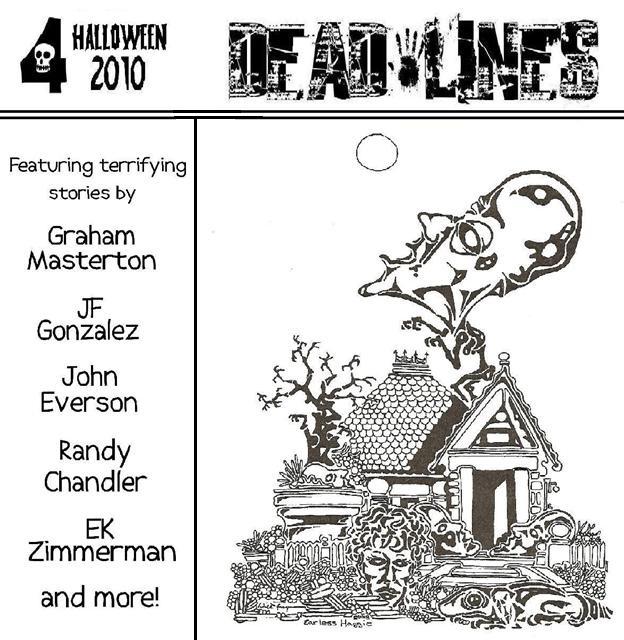
The current issue of Dead Lines e-zine contains my story Beneath Blackhorn Pier as well as tales by Graham Masterton, Andy Weeks, John Everson, Kevin Sheehan, J.F. Gonzales, Matthew F. Riley, Randy Chandler and EK Zimmerman.

It’s interesting to see this tale again; it was written a few years ago and appeared in a very small press publication called Scorched Wings, under the original title of “The Miracle”. It’s a deliberately bleak story, and I don’t know if I could – or would want to – write with that mind-set again. Hope you enjoy it.

Review – The Amicus Tributes of John Llewellyn Probert

0

Fans of old-school British horror will fondly remember Amicus studios. Popular in the 60s and 70s, Amicus favoured modern portmanteau anthologies such as Asylum, From Beyond the Grave and Tales from the Crypt, providing an alternative to the saucy period gothic of Hammer. If you’re a fan of these movies, or just enjoy intelligent, wry and entertaining horror fiction, then these two books from Gray Friar Press are certainly for you.Faculty“The Faculty of Terror” and “The Catacombs of Fear” are standalone collections, each bound by a sumptuous framework story. In the former, a young man is invited to dinner at a creepy university building one damp night where storytelling is to be the order of the evening. In the latter, a nervous priest arrives at his new post in a sinister black cathedral, and must learn the shocking experiences of his parishioners.
The tales transport us to a wide array of locales, such as a rain-lashed urban office block, an isolated cottage in the Welsh valleys, and an illegal surgeon’s lair in the back streets of Calcutta. We meet all manner of characters, including a beautiful wheelchair-bound ballerina, a group of murdered asylum seekers, and a ghost in a photo booth. I tried, but couldn’t for the life of me pick a favourite story. Every single one is an expertly-crafted slice of macabre.

Catacombs

The author writes with a crisp, educated prose that moves the tales along at a confident pace towards their final twists. Some of them conclude with dark humour, others with moments of true horror, both poignant and shocking. The twists themselves are in the spirit of the Amicus films, but wonderfully inventive and easily avoid well-trodden horror punchlines.I particularly enjoyed it that music features prominently in several of these stories, be it in the form of composers, musicians or instruments (including the most grisly church organ ever created). As the old Amicus films were beautifully scored, this adds an appropriate element of theatre and also a layer of authenticity to the text.

I can only hope the author pens another installment. John Llewellyn Probert’s imagination is a national treasure, and perfectly suited to this brand of horror. He gets away with lurid and cruel material with his eloquent, delightful tongue – he isn’t afraid to tell a tale right down to the bone – but there are no cheap shots. It’s unusual for such traditional technique and atmosphere to be merged with modern content. It’s even more unusual that it succeeds so mightily.

Complete with genuinely interesting introductions, interviews and story notes, these books are available from the publisher below. Be brave and give your spine a well-deserved tingle. You won’t be disappointed. Just amused, disturbed and very glad that you discovered them.

Gray Friar Press

John Llewellyn Probert

Review – “Apeshit” by Carlton Mellick III

1

I normally only review current releases for the Hellforge, but I enjoyed this 2008 beauty from Eraserhead Press too much to let it sneak by without fanfare.

Stop me if you’ve heard this before…

Six teenagers go to an isolated cabin for a party weekend of booze and sex, only to discover themselves being stalked by a mutant freak lurking in the woods.ApeshitFamiliar? Of course it is. The author is an unapologetic fan of bad slasher B-movies, and this book is his indulgence. The problem can be that parodies of this kind often end up as a checklist of clichés masquerading as homage. But not here. We have Carlton Mellick III at the helm, and his imagination is far too out of control for that.
Much, in fact most of the content wanders from this beaten path. The author has countless nasty and hilarious tricks up his sleeve, but I’m not going to let on what they are. After all, the back cover blurb had the decency not to spoil anything for me. And to be honest, that is the only remotely “decent” thing about Apeshit.

The original idea was for a screenplay, which would be stunning if there’s anybody out there with the balls to film it uncut. The prose creates an appropriate cinematic feel, being comprised of short sentences and told in the present tense. This can be a risk, but it clearly comes naturally to the author.

But the real strength is the characters. The six teens – your average bunch of horny jocks and pretty cheerleaders at a glance – are so intriguing and damaged that we barely need any murderous slayers lurking in the woods. There’s so many neuroses, deformities and vile festishes bubbling beneath their clean-limbed exteriors that after a while, the mutants aren’t necessarily the main focus. They become just one thread amongst many, and the pace is powered by sharp dialogue as well as action. This author shines when nailing the subtle nuances of human interaction, and there are times when I was surprised by the level of insight and maturity in such a proudly “fucked-up” book, to quote the back cover.

One element of Apeshit I particularly admired, was that the idea of it being a parody fostered a deceptive sense of security. But there are times when the black humour takes a back seat to the horror, and this played cheeky mind games with my comfort zone. It’s a device I hadn’t yet encountered in the author’s work, and it added a welcome edge to the experience.

Other than a couple of annoying text errors (I do wish these books were more thoroughly proof-read) I have no complaints. The elements are combined with the skill of a bestselling author, and at 170 pages of well-spaced text, it doesn’t outstay its welcome. Like any good showman, it leaves you wanting more. While considerably less bizarro than much of Carlton Mellick III’s canon, it soon descends into an outrageous gorefest, constantly surprising you with new highs (or lows!) of twisted imagination. And once you’ve got your breath back, the explanatory epilogue neatly ties up this sick little package.

The back cover declares it is perhaps one of the most fucked-up books ever written. For much of it, I thought “Nah, it’s not that bad”. By the end, I thought “Actually, maybe they’ve got a point…”

If you’re a little tweaked in the head, buy it and enjoy. Then give it to your mum for Christmas.

Carlton Mellick III

Review – “The Sixth Black Book of Horror” edited by Charles Black

2

Edited as always by Charles Black, Volume Six is the latest in this series from Mortbury Press. As a new reader, I was led to believe that these anthologies were old-school in the tradition of the wonderful Pan Books of Horror. That is certainly true. There are twists and knowing winks. There are ancient churches, derelict houses, creepy old shops, sprawling countrysides, and several of these tales feature a funeral. But the tropes are just the garnish, and the stories themselves pack a real contemporary punch.

Black 6

There are 15 tales hustling for your attention beneath the frosty cleavage on the cover, and I’ll briefly mention a handful that through their brilliance, refuse to get out of my head.

The opener – “Six of the Best” by John Llewellyn Probert – is a grisly treat. It centres around a bunch of sly characters filming a Most Haunted style television documentary about ghosts that were murdered in especially horrific ways. The writing is bacon-slicer sharp, there’s satire and black humour by the truckload, and a devilish twist that made me grin – but thankfully not groan.

“Traffic Stream” by Simon Kurt Unsworth concerns the plight of a driver who gets lost on his way to a meeting, and begins to encounter sinister and progressively dangerous traffic. It’s a gripping tale, the ordeal expertly conveyed through a series of increasingly manic phonecalls received by the person who awaits him.

I particularly enjoyed “The Doom” by Paul Finch. This features a young priest whose rustic church reveals a secret: behind a crumbling wall lies an ancient piece of hellish, ecclesiastical art depicting the 7 deadly sins. The priest meets a curious visitor who seems fascinated with the work, before confessing the terrible reasons for his interest. Despite the classic horror setting, this is a contemporary story – delivering the best of both worlds – and offers thought-provoking themes regarding sin, moral choice and consequence. And it certainly has the most powerful and desperately helpless conclusion of all the stories in this book.

“Gnomes” by Mick Lewis is a blast. We follow a couple who take some magic mushrooms and decide on a trip to the cinema, an adventure soured by an escalating paranoia towards garden gnomes. A hallucinogenic experience is difficult to write without sounding fake, or simply boring the reader to tears, but the author dodges this pitfall, and “Gnomes” grabs the interest and doesn’t let go. It offers welcome moments of humour, but like a genuine bad trip, the advancing darkness will not be stopped. Eventually, like the protagonists, you will be questioning what’s real in this engaging mix of uneasy chuckles and malevolence.

For me, another peak is “Bagpuss” by Anna Taborska. Definitely the most sobering story on offer, we find Emily, a lonely, anxious girl who moves to the countryside with her single mom and beloved cat. The POVs of the protective girl and little Bagpuss himself are beautifully rendered, as is the weary heart of her neurotic mother. This is a distressing tale, with some incredibly poignant and fragile scenes. There is no humour to temper the tone, so I suppose it depends on the reader’s tolerance of mood as to whether they will derive enjoyment from it.

I’ll also offer a quick thumbs-up to Craig Herbertson for his “Spanish Suite.” Involving a confectionary salesman, a Spanish village funeral and a corpse, the sick finale made me guffaw on public transport and startle the lady in the next seat.

There are certainly no undeserving stories – all are written to a professional standard – but there are times when the quality dips slightly. Although well told and ultimately harmless enough, Alex Langley’s “The Red Stone” – regarding a rural slab of rock that has been the scene of many an atrocity – seemed almost too old-school with its textbook twist. There’s a similar problem with “The Switch” by David Williamson, a thrilling tale of a prison escapee whose luck takes a turn for the worse. It’s enjoyable, but the mechanism is rather worn. This anthology also doesn’t quite end on the high that it deserved. The final story, “Keeping Your Mouth Shut”  by Mark Samuels, featuring a stuggling writer turned scream-queen stalker, seemed to lack a coherent focus. While entertained, I was gently confused.

But these complaints are minor. This is an unapologetic tome of horror – both spooky and lurid – with an unusually high level of writing. And while there is much to fondly compare with the Pan books of the 60s, 70s and 80s, that isn’t to cheapen what else has been achieved here. The 6th Black Book of Horror isn’t merely a derivative homage, it’s a fresh, colourful anthology for the cliche-wary audience of now.

Recommended.