The cover of this recent offering from Rainfall Books didn’t lure me. While perfectly appropriate for the novel’s setting, and fair play for spurning cliché, it seemed rather bland. But within a couple of pages, I’d immediately warmed to Mark West’s literary world.

Conjure features Beth Hammond and her boyfriend Rob, a newly pregnant and cash-strapped couple from London who win a short break in the cheap, British seaside resort of Heyton. We meet Beth on her way home through the bustle of a London rush hour, and discover that she has a gift. She can see dead people.
The other characters are gradually introduced, their reassuringly average lives drizzled into the mix, which makes a pleasant change from books that bellow from the first paragraph, terrified that you might lose interest. But Mark has the cool confidence of a storyteller who doesn’t have to resort to tricks to snare a reader.
Once Beth and Rob travel to the coast, we soon learn that there is more to Heyton than the pier, the rides and the fish and chips. The town has a chilling history that quite literally won’t stay buried.
Despite the initial lack of action, Conjure fosters suspense from the outset and nudges it up as the novel progresses. The back story of the malevolent spirit – a wronged and murdered woman – who threatens our pregnant protagonist is presented in neat, almost teasing little doses, often in the form of visions that come alive from the page.
Mark excels at dialogue and characterisation – real people we come to know – and these unconnected folk slowly merge, at first barely brushing past each other in the plot until they are entwined. The setting is perfect, and reminded me of several faded resorts: old fashioned and hard-up, but soldiering on with a stiff but weary upper lip. I particularly enjoyed the gothic cinema. It’s a wonderful place that I would love to visit, and now actually feel as though I have.
Mark also has the knack of making relatively trivial things seem important – the way they are in real life – such as when a man driving a JCB accidentally damages an iconic war memorial in the centre of town. By making us care about lesser troubles, the moments of brutal horror that lurk around the corner have infinitely more impact.
Conjure flaunts some genuinely spooky moments. A scene in which Beth is trapped inside a toilet cubicle made me writhe and I could barely wait for her chance to escape. When a spontaneous holiday snapshot captures the ghost on film, it was descibed in such a way that it raised goose-pimples down my arms. The ghost uses mind control and amnesia, and the confusion of its unfortunate puppet – a tough, local family man – is expertly portrayed. It becomes difficult for the reader to judge the perpetrator, despite the depths of his crime. Overall, the supernatural element works so well because the author merges it with fears we understand such as abduction and infanticide.
This is a strong short novel written in sharp prose. The plot is somewhat generic, but it is well executed and avoids cheap twists. The tale builds up to a finale that manages to feel classic yet original at the same time and concludes with a tasty uppercut, just in case you’d forgotten who was in charge.
At only 140 pages, it’s possible to finish in one sitting, which is a good job. Just one more chapter, then it’s time to get some sleep, I kept saying to myself as the night advanced. But Conjure had other ideas.
 I’ve been a fan of Carlton Mellick III for about six years and while his untamed imagination and textured prose has never been in doubt, I sometimes found the characters in his early work a little samey, and the stories slightly overlong.
 Centred around the isolated town of Hopkin’s Bend, the hideous inhabitants are preparing for their annual holiday feast, and no prizes for guessing what, or who, is on the menu.
 Today I received my contributor copy of Dark Jesters, an anthology of humorous horror.
 That story was “Heads” in We Fade to Grey, an anthology of horror British horror novelettes of which he was also the editor. A supernatural descent of a tale, I was immediately struck by two things.
 Hungry for more, I purchased “Dirty Prayers” (Gray Friar Press) and “How to Make Monsters” (Morrigan Books) and demolished them with glee. These are wildly imaginative collections, infused with horror in the purest sense of the word, but also tremendous humanity. We meet broken people, shrouded in guilt, love, anger, rejection and loss, and we feel their fear and pain. As Tim Lebbon has pointed out, Gary’s writing has soul.
 We live in a world populated by the damaged, and much of Gary McMahon’s world seethes with anger. He is a writer whose patience with ignorance or stupidity has run dry, and his craft has no time for the beaten path. You would think that this would be depressing reading, but the stories have such colour and vibrant life, despite the subject matter and the terrible trials that weigh down our long-suffering protagonists, that the end result almost seems hopeful. But only almost. The author has a refreshing aversion to happy endings.
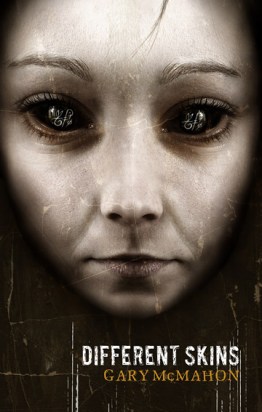 In “Even the Dead Die”, London is a seething hive of threat, and an early metaphor sums up the metropolis: “overcrowded streets filled with vacant, directionless zombies who see nothing past the bubble that surrounds them”.
 I met Allyson (and acquired this collection) at a ghost story reading she organised just before Halloween last year, in a pub on the edge of the Yorkshire moors. I’d dipped into it a couple of times last winter, but then the book disappeared into one of the many teetering stacks that decorate this house and I only rediscovered it the other day. I’m glad I did.
 I had read Mr Bestwick’s acclaimed apocalypse novella “The Narrows” last year, so my hopes were high, and I was more than happy. This a real mixed bag of atmospheric scenarios – historical, apocalyptic, urban, remote, supernatural – and something for everyone. Well, okay, not everyone.
 Welcome to the Hellforge